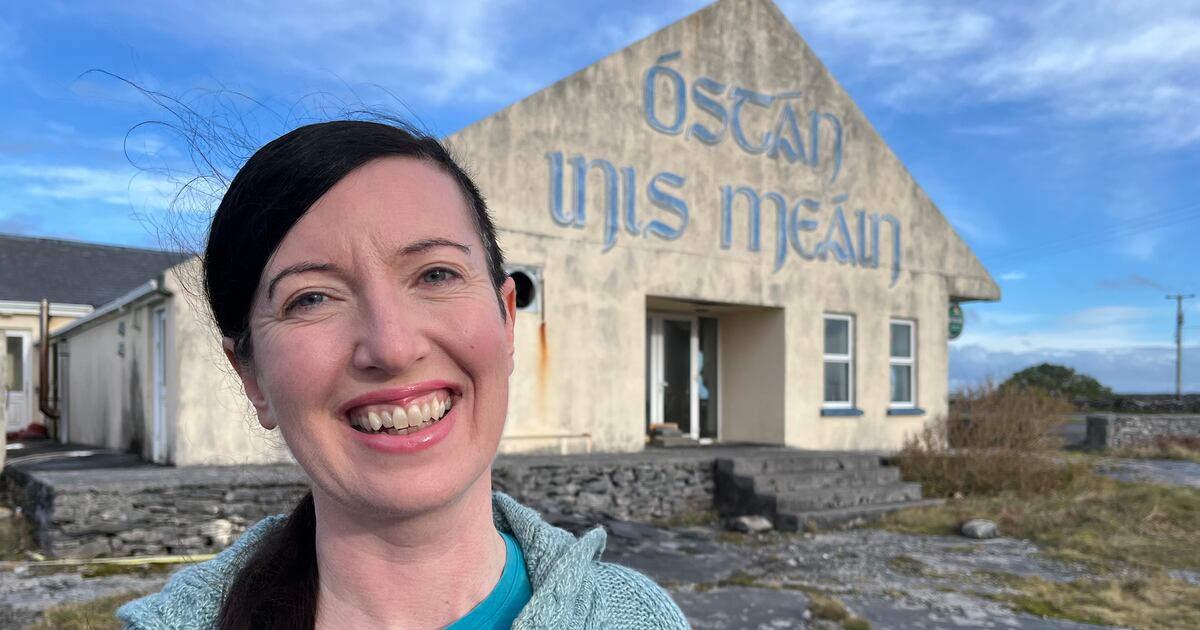
Award-winning harper Úna Ní Fhlannagáin did not know she would buy an abandoned hotel when she moved to the island in 2020Musician Úna Ní Fhlannagáin: 'I went for the culture, the customs and the language, but I stayed for the people.' Óstan Inis Meáin, a former hotel on the middle island of the three Aran Islands, has a ghostly character when visited today. Dust-covered bar stools, an abandoned tambourine and a visitors’ book – with the signatures of tourists from across the globe – are among the items left behind: evidence of a once vibrant hub of hospitality, ceol agus caint.Now the derelict building is getting a new lease of life thanks to musician Úna Ní Fhlannagáin, who became the unlikely owner of the property after a public auction late last year.The award-winning harper, composer and singer was invited to visit the island in 2020 to work on a series of videos exploring the history of the Irish harp. She was only meant to stay for a week, but she is still living on Inis Meáin five years later.READ MORE“I went for the culture, the customs and the language, but I stayed for the people. They’re resourceful and fascinating. I found a tribe,” Ní Fhlannagáin says.Like most visitors to the island, she couldn’t avoid seeing Óstan Inis Meáin, which is located near the geographical centre of the island. It first opened as a 10-bedroom hotel in 1999 and was closed for a period before reopening in 2011. Páraic and Gobnait Ó Fátharta then operated it under a three-year lease.“We had a wedding between a woman from the island and a man from Limerick, with a huge marquee and around 400 guests from all over the country and abroad. Those were three days that I barely slept,” Gobnait says.The Ó Fáthartas fulfilled their lease term hoping to give something back to the island where they were born and raised. They hoped another operator would continue the business, but no one came forward. The building eventually closed, marking the beginning of a long period of abandonment.Óstan Inis Meáin. Photograph: Ciarán MacChoncarraige The hotel's bar. Photograph: Ciarán MacChoncarraige “My only memory of that hotel is of it being closed – an eyesore, really. For older islanders, the memories are very different: visitors, activity, life,” says Pádraig Ó Foghlú, development manager for the island’s development company, who has lived on Inis Meáin for the past two years.A property developer might have broken the building into smaller apartments or housing units, but Ní Fhlannagáin had different ideas. She developed a business plan and, when the property came to auction, she placed the successful bid and became its owner in May 2025.“I immediately thought: cultural centre. The heritage here is rich and alive, but it needs care. I remember standing there one night, before the building was even for sale, and thinking: even if I fail, I’ll know I did the right thing by trying.”Óstan Inis Meáin. Photograph: Úna Ní Fhlannagáin Photograph: Ciarán MacChoncarraige The planned cultural centre will offer courses in Irish, music, traditional arts, heritage and island life. Ní Fhlannagáin hopes it will host island-led events, provide local employment and attract visitors who engage meaningfully with the community rather than passing through.The building, set on more than five acres, includes a large diningroom, bar, dance space and 10 bedrooms, all of which will be refurbished to accommodate participants in courses and residencies.Ní Fhlannagáin experienced the intensified accommodation crisis on Inis Meáin first-hand, moving seven times in 2½ years to remain on the island.“While short-term rentals support tourism and bring economic benefits, second-home ownership is a different issue. On islands where housing is scarce, a home bought solely for holidays is one unavailable to permanent residents, making it harder for fragile communities to thrive now and survive in the future,” she says.Her plan has strong local backing. Ó Foghlú says the island development company recently published a five-year development plan shaped through consultation with residents, and Ní Fhlannagáin’s project is included within it. “Once a project is included there, it becomes much easier to advocate for it nationally, particularly with bodies like Fáilte Ireland,” he says.Photograph: Ciarán MacChoncarraige Photograph: Ciarán MacChoncarraige A public competition is under way to find a name for the centre, which is scheduled to open in 2027.Asked where she sees herself five years from now, Ní Fhlannagáin says her main goal is to stay sane. Beneath the joke, is a commitment to sustainability and cultural preservation.When she first came across the abandoned hotel, she says: “I was struck immediately by what a tragic waste of resources that was. A building that’s allowed to decay to the point of uselessness has already cost the earth so much.“We can’t afford to let them die.”IN THIS SECTION
The musician who is refusing to let a landmark derelict building ‘die’ on Inis Meáin
Full Article
Original Source
Read the full article at Irishtimes →KhanList aggregates and links to publicly available news content. We do not host full articles from third-party sources. Always verify important information with original sources.