
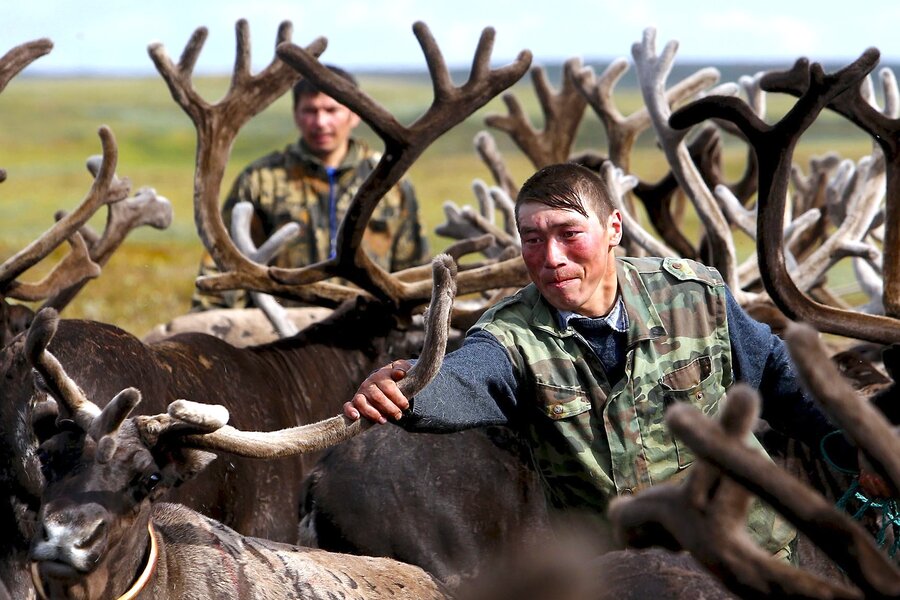
The summer of 2026 hasn’t just been a time for pastoral relaxation in the great outdoors; it’s also been a season of, and for, pastoralists. Global events have brought together hundreds of representatives from communities whose lives and livelihoods are built on pastoral or nomadic herding traditions.On Monday, the sixth World Nomad Games kicked off in Kyrgyzstan, a former Soviet republic in Central Asia. Hundreds of participants are competing in horse races and horseback wrestling, falconry, and archery, among other events.Meanwhile, over the preceding two weeks, at a conference in Mongolia – where about a third of the population is nomadic – pastoralists from around the world advocated for rights to public grazing lands and freer movement.The United Nations has designated 2026 as the International Year of Rangelands and Pastoralists – a sign of the movement to recognize pastoralists’ roles and rights as contributing citizens and sources of practical expertise and cultural pride. It denotes an evolving humility and respect among governments and scientists who are seeking ways to incorporate the traditional approaches into a modern system long defined by distinct boundaries, increasing urbanization, and regulated resource access.The Mongolia meeting, Le Monde pointed out last month, marked a shift from viewing nomadic groups and their practices as “a driver of land degradation” to recognizing their “many benefits: maintaining landscapes, preserving biodiversity, preventing fires, adding value to regions and enabling adaptation to climate change.”The world’s estimated 500 million pastoralists have fine-tuned the skill of living off the meat, dairy, fibers, and hides produced by their herds of sheep, cattle, camels, yaks, reindeer, and llamas. And they’ve done this while regularly on the move – across the Arctic regions of North America and Scandinavia, the steppes of Russia and Central Asia, mountains of South America and South Asia, and the arid reaches of Africa and the Middle East.As countries have pursued economic growth and industrialization, pastoralism was seen as antiquated and inconvenient– as a system to be “modernized,” sometimes forcibly. Now, the challenges of severe weather and desertification present risks of similar forced responses, including mandatory restrictions on herd sizes and herders’ movements.But in other quarters, there’s recognition that the potential threats of climate change can be turned into opportunities for community cohesion and repair. In southern India, for example, villagers are allowing – and even paying – herders to use their land in exchange for dung, the natural fertilizer that farmers need to produce higher-value organic crops.At the conference in Mongolia, nomadic representatives sought ideas as well as funding to help protect their livelihoods. Alongside that, as the environmental news site Mongabay reported, they sought something less tangible – official acknowledgment of what they have to offer through their accumulated knowledge in adapting to changing landscapes.Such explicit and shared recognition among humankind has inestimable value.
The moving lessons of nomadic herders
Full Article
Original Source
Read the full article at Csmonitor →KhanList aggregates and links to publicly available news content. We do not host full articles from third-party sources. Always verify important information with original sources.