
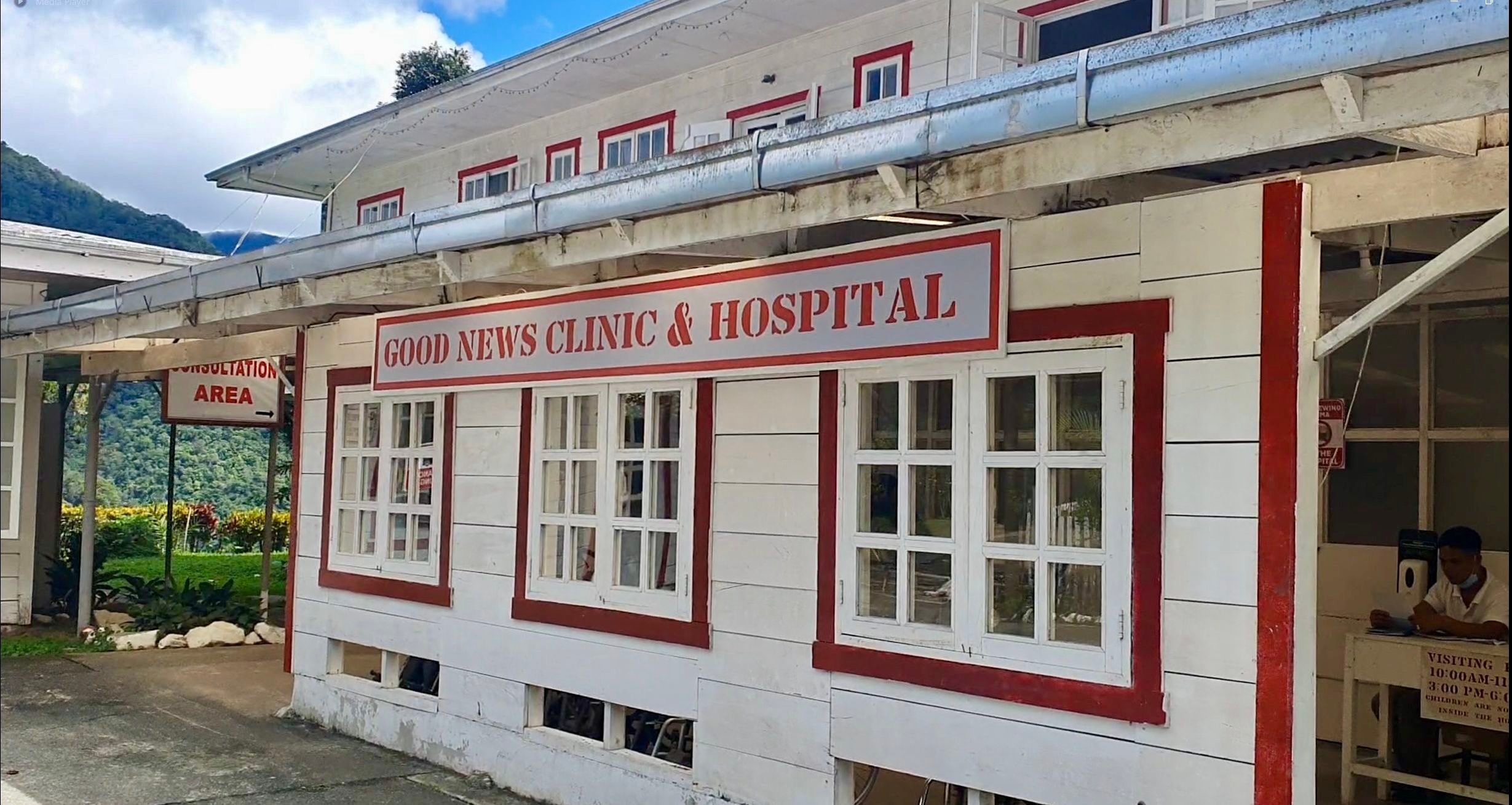
BAGUIO CITY, Philippines – On the morning of October 15, 1998, in the mountain town of Banaue, Ifugao, 12-year-old Carol Abayao was asleep when the mountain came crashing into her family’s home. A landslide triggered by heavy rains buried the house in mud and earth. Her mother, two brothers, and maternal grandmother were killed. Carol survived. Another brother, who happened to be outside, escaped the disaster. Carol, trapped inside, has little memory of how long she remained beneath the debris before rescuers found her. She remembers the mud, the confusion, and the strange sensation of waking from what seemed like a dream. She was taken to Good News Clinic and Hospital, a small Christian mission hospital in Banaue, where surgeon Dr. Antonio Ligot attended to her injuries. She was later transferred to another facility for further treatment. Her recovery was long. She needed assistance moving around and spent time in a wheelchair before she could walk again. But there was something far more difficult than learning to walk. For some time, Carol believed that the rest of her family might also have survived. The adults caring for her struggled to tell her otherwise. When the truth finally came, she had to confront a loss no child should have to bear. She was in her second year of high school. Her teachers allowed her time to recover, and eventually she returned to her studies. Life went on, although much of the life she had known was gone. What she could not have imagined then was that the hospital where she had first received treatment would one day be entrusted to her care. Today, at 41, Dr. Carol Abayao is the medical director of Good News Clinic and Hospital, the only hospital in Banaue. She is also its only full-time resident physician. And keeping the hospital running may be the greatest challenge of her medical career. “It’s hard. It’s hard,” she told Rappler during a lengthy interview. Her responsibilities extend well beyond treating patients. She must also help keep the institution financially afloat, recruit medical personnel, improve services, and make decisions that affect the lives of people who have few alternatives when serious illness strikes. “I only have 24 hours in a day,” she said. Most of those hours, she is also on call. Dr. Carol Abayao speaks with an elderly patient at Good News Clinic and Hospital. All photos courtesy of Good News Clinic and Hospital The hospital stands in a municipality celebrated around the world for the Banaue Rice Terraces, where generations of Ifugao farmers have carved astonishing agricultural landscapes into the mountains. The terraces have drawn visitors for decades. But beyond the postcard views is the less romantic reality of living in a place where geography can turn medical emergencies into dangerous journeys. Good News has been serving Banaue since 1956, when Dr. James Irvine, an American physician and former military medical officer, established the mission hospital under the Far East Gospel Crusade. The institution later came under Filipino management and continues to operate as a non-stock, nonprofit Christian hospital. Its mission combines medical care with spiritual ministry, a commitment reflected in the prayers, Bible readings, and personal support offered by its staff. For residents needing hospital care, however, its importance is also practical. Good News handles medical and pediatric cases, normal deliveries, and some emergencies. It provides laboratory, X-ray, and ultrasound services, although complicated cases must be referred elsewhere. The nearest higher-level hospital, Ifugao General Hospital in Lagawe, is approximately an hour away by road. Patients requiring more advanced treatment may need to travel farther, including to hospitals in Region 2. In the Cordillera, an hour’s journey is not always an hour. Heavy rains, landslides, and road conditions can complicate travel, particularly when a patient needs urgent care. An undated archival photograph shows Good News Clinic and Hospital nestled in the mountains of Banaue, Ifugao. Carol knows this geography intimately. She grew up here, lost her family to it, and eventually chose to return to practice medicine. But hers was hardly a straight path to becoming a doctor. After high school, Carol enrolled in veterinary medicine at Benguet State University. She spent three years studying before changing direction and pursuing nursing in Manila, graduating in 2007. Her childhood experience had influenced that decision, although she had not yet imagined herself becoming a physician. Like many Filipino nurses of her generation, she struggled to find stable employment. She volunteered in Mayoyao, Ifugao, and later returned to Manila for intensive care training at the Philippine Heart Center. She considered working abroad. Australia was among her options, and she had begun preparing her application. Then her father became ill. Carol returned home to help care for him. When he died in 2012, she found herself grieving once again. This time, she withdrew to the family farm. She grew vegetables and rice, leaving behind, at least temporarily, her plans for a nursing career. It was during a visit to Good News that she encountered Ligot again. The surgeon who had cared for her after the landslide was still serving at the hospital, where he and his wife, Sylvia, had worked since 1988.He encouraged Carol to return to nursing. She joined Good News in 2013, working at the institution that had been part of her life since childhood. There, she saw how the shortage of doctors affected patients. The hospital could provide basic care, but its limited resources meant that people sometimes had to travel elsewhere for treatment. She began considering medicine. Ligot encouraged her, but there was a problem. She did not have the money. Medical school required years of tuition, books, living expenses, and other costs. She had already lost both parents, and her siblings had responsibilities of their own. Still, she decided to try. In 2015, Carol entered medical school, supported by relatives, friends, and people who believed in what she wanted to accomplish. Some helped with tuition, while others contributed toward everyday expenses. She remembers assistance coming even from people she barely knew. Dr. Carol Abayao, born and raised in Banaue, wears traditional Ifugao-inspired attire. She completed medical school in 2019, finished her internship in 2020, and passed the physician licensure examination in 2021. Afterward, she entered government service at Conner District Hospital in Apayao. She also attempted neurology residency training at East Avenue Medical Center in Metro Manila, but health difficulties and the demands of training eventually led her to leave the program. She continued practicing as a general physician. Through those years, Good News remained part of her life. Whenever possible, she returned to Banaue to serve as a reliever. Then, as the hospital faced another leadership transition, she was asked to come back permanently. The decision was difficult. A government position offered greater employment security. Good News was a small private mission hospital still recovering from financial losses during the COVID-19 pandemic. Patient visits had fallen sharply in 2020 and 2021 as people feared contracting the virus in medical facilities. The hospital’s revenue suffered, adding to longstanding difficulties in maintaining staff and equipment. Leaving government service meant exchanging relative stability for a hospital that needed more resources than it could comfortably afford. Yet Carol could not entirely separate the institution’s future from her own history. The people at Good News had cared for her when she was a child. Ligot had encouraged her to become a doctor. And the community she had grown up in still needed physicians willing to stay. In January 2025, she formally assumed the position of medical director. She now carries two responsibilities that would ordinarily demand separate people: treating patients and helping manage the hospital. Dr. Carol Abayao, medical director of Good News Clinic and Hospital in Banaue, Ifugao, examines a patient. Three other doctors serve as relievers when their schedules permit, but they work elsewhere and are not permanently stationed at Good News. An interim hospital administrator assists with management. Even so, much of the clinical responsibility remains with Carol. Her ambitions for the hospital are substantial, though hardly extravagant. She wants more doctors, better equipment, additional diagnostic services, and the ability to treat more patients without sending them to facilities hours away. She says the Department of Health has approved an increase in bed capacity from 18 to 25 just this year. More beds, however, mean little without the personnel to attend to the patients who occupy them. “We need more doctors,” Carol said. Finding them is another matter. Rural hospitals struggle to attract physicians who may have better-paying opportunities, more advanced equipment, and easier access to professional development elsewhere. Good News must also maintain affordable charges while meeting operating expenses. As a nonprofit mission hospital, it relies on income from medical services, PhilHealth reimbursements, donations, and support from churches and other benefactors. Carol wants to keep fees manageable for patients, many of whom have limited financial resources. But affordability has a cost, too. Salaries must be paid, supplies replenished, and equipment maintained. Faith sustains the hospital’s mission, but faith alone cannot pay every bill. Carol makes no attempt to romanticize the workload. She admits that exhaustion sometimes catches up with her. When it does, she withdraws for a while, finding time to pray, reflect, and seek advice from people she trusts. She has learned that caring for others requires recognizing her own limits. Despite the difficulties, she sees reasons to keep going. The present-day Good News Clinic and Hospital in Banaue, Ifugao. Patient numbers have increased since she returned, she said. She is careful not to assume that the increase means more people are becoming ill. Perhaps residents are regaining confidence in the hospital. Perhaps improvements in its services have encouraged more people to seek care. She does not claim to know. What she does know is that the hospital has begun expanding its services, and she wants that progress to continue. “I am hopeful,” she said. Her faith remains central to how she understands the unexpected course of her life. Looking back, she sees a series of detours that eventually brought her to the place where she now serves. There was veterinary medicine, nursing, the possibility of working overseas, the years of grief, and the time spent farming. Then medical school, government service, and the decision to return to Banaue. She believes God led her here. But she also knows that the future of Good News cannot rest on one physician’s determination. The hospital needs doctors willing to serve, supporters prepared to help sustain its operations, and resources that would allow more patients to receive treatment without leaving their community. For almost seven decades, it has provided medical care in a place where distance can determine how quickly help arrives. Carol wants to make sure it continues. On October 15, 1998, rescuers pulled a young girl from the wreckage of her family home and brought her to Good News Clinic and Hospital. Twenty-eight years later, she is the doctor responsible for caring for people who come through its doors. The hospital was there when she needed it. Now she is doing everything she can to make sure it will be there when someone else does. – Rappler.com
The mountain took her family. Now she is fighting to save the hospital that saved her.
Full Article
Original Source
Read the full article at Rappler →KhanList aggregates and links to publicly available news content. We do not host full articles from third-party sources. Always verify important information with original sources.