
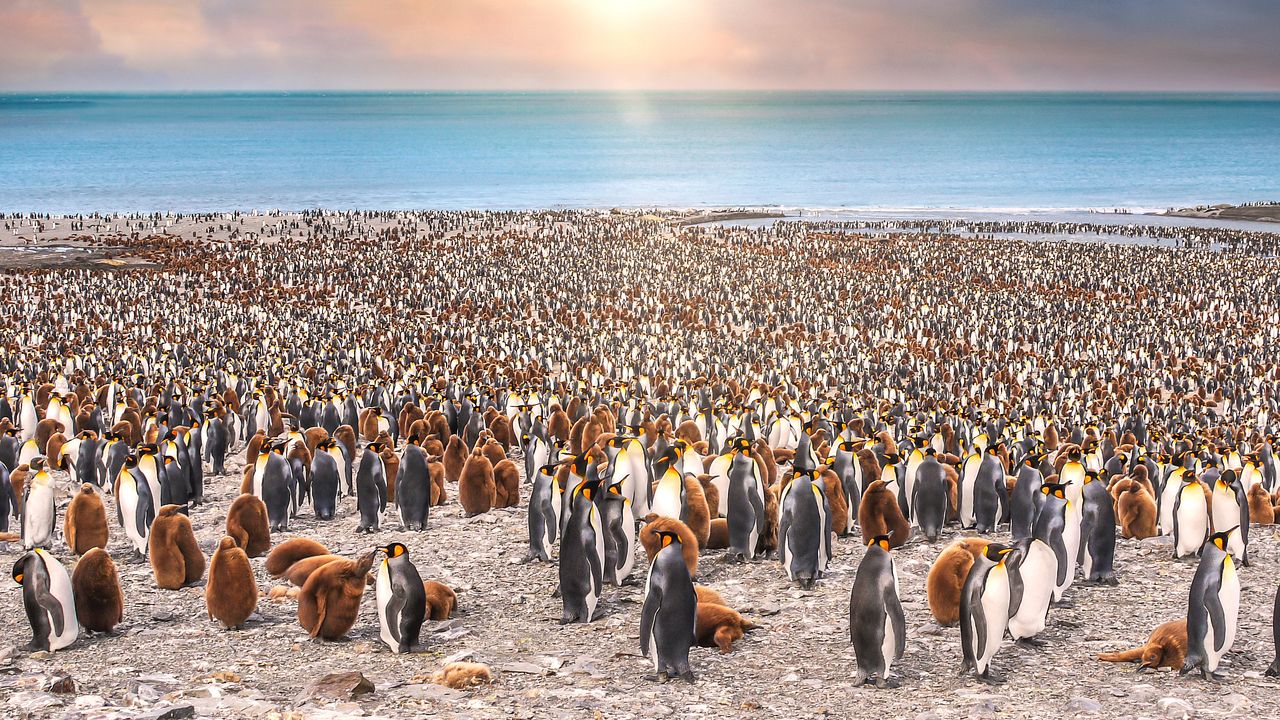
For those who crave distance, silence, and landscapes that feel almost lunar, these far-flung corners of the world are as remote as it gets.Cheryl RamalhoReaching the most remote places on Earth takes more than just a plane ticket—it takes patience, endurance, and often a string of connections that make the arrival feel like an achievement in itself. These are places where airports are rare, ships arrive only a handful of times a year, and the communities you meet are outnumbered by wildlife. What they offer in return is a kind of distance that feels almost impossible in the modern world—skies free of light pollution, landscapes shaped by extremes, and the rare quiet that comes from being far beyond the usual travel circuit.Why do we seek remoteness?Journeys to places like these are rarely simple, but that difficulty is part of the allure. They remind us what travel feels like when the destination is hard-won, when the act of arriving carries its own reward. In the Kerguelen Islands, there are no hotels or tour buses, only wind, sea, and wildlife. In Russia's Oymyakon, for example, just stepping outside is an act of endurance. And on South Georgia, hundreds of thousands of penguins gather on beaches once scarred by whaling.In a world where so much feels accessible, true remoteness has become rare. These are the most remote places on Earth that shift our sense of scale and remind us that there are still corners of this planet where distance is intact.An aerial view of the Kerguelen Islands under a cloudy sky WirestockKerguelen Islands, Southern Indian OceanNicknamed the “Desolation Islands,” this French territory sits marooned in the southern Indian Ocean, approximately 1,865 miles from Madagascar. Few places feel so utterly cut off. Volcanic cliffs plunge into storm-lashed seas, while king penguins and elephant seals crowd the beaches in their thousands. Nobody lives here permanently—only rotating teams of scientists, engineers, and unconventional travelers. What surrounds you is a world sculpted by wind, sea, and stone, where humanity has left little mark.How to get there: The French supply vessel Marion Dufresne II sails from Réunion Island several times a year. The voyage takes around six days.Ellesmere Island mountaintops bathe in light as the sun begins to peak over the horizon. Elen11Quttinirpaaq National Park, CanadaOn the northern tip of Ellesmere Island, just shy of 500 miles from the North Pole, Quttinirpaaq lives up to its Inuktitut name: “top of the world.” It is a place of extremes—glaciers stretch for miles, jagged peaks rise from polar deserts, and the summer sun never sets. Muskoxen graze the tundra, Arctic wolves hunt in silence, and traces of ancient Inuit encampments remind you how long people have endured at this latitude. Few visitors make it here, but those who do find a landscape that feels infinite.How to get there: Travel first to Resolute Bay in Nunavut, then connect by charter plane to Tanquary Fiord, open only in the summer months.Ittoqqortoormiit, Greenland in the summer sun imageBROKER/Thomas KraemerIttoqqortoormiit, GreenlandFew places capture the human will to survive like Ittoqqortoormiit, a settlement of around 450 people perched at the edge of Scoresby Sound, the world's largest fjord system. Wooden houses painted red, blue, and yellow dot the snowy cliffs, while rhythms of life here still follow the seasons: hunting and fishing sustain families, sled dogs line the streets, and in winter the sea ice seals the town off from the outside world completely. The surrounding waters carry drifting icebergs, and it's not unusual to see polar bears wandering the coast.How to get there: Reachable by helicopter from Nerlerit Inaat Airport, itself connected by small aircraft from Reykjavik, Iceland.The town of Longyearbyen, Norway Paul SoudersLongyearbyen, NorwayLongyearbyen, in the Svalbard archipelago, is the northernmost town of its size in the world. Despite its isolation, it's surprisingly lived-in, with cafés, a craft brewery, and even a fine-dining restaurant. Beyond town, reindeer roam freely, glaciers carve the landscape, and the Global Seed Vault safeguards the world's crops in a frozen hillside. Here, summers pass in endless daylight; winters in an unbroken stretch of night.How to get there: Daily flights connect Oslo and Tromsø to Svalbard Airport, making it one of the more accessible remote places.Thousands of adult and juvenile king penguins standing together on St. Andrews Bay Cheryl RamalhoSouth Georgia, South Atlantic OceanA remote island once known for whaling, South Georgia is now a sanctuary where wildlife has reclaimed the land. More than half a million king penguins gather on its beaches, while elephant seals occupy the shore in extraordinary numbers. Rusting relics of abandoned whaling stations remain, and the grave of polar explorer Ernest Shackleton—the Anglo-Irish Antarctic explorer who led three British expeditions to the Antarctic—lies at Grytviken, a pilgrimage for history enthusiasts. After decades of ecological strain, including the introduction of reindeer by whalers, conservation projects are now restoring the island’s native habitats and protecting its fragile ecosystem.How to get there: No airports exist—visitors arrive by expedition ship, usually as part of cruises departing from Ushuaia, Argentina.The McMurdo Station in Antarctica under the midnight sun James MooreMcMurdo Station, AntarcticaOn Ross Island, McMurdo Station is the largest research base on the continent, supporting around 1,000 people each summer. It has been the launch point for many of Antarctica’s most important expeditions, from early 20th-century journeys led by Scott and Shackleton to modern scientific studies on climate change and glaciology. The surrounding landscape—glaciers, volcanic peaks, and the vast Ross Ice Shelf—has shaped much of what we know about the polar world. Travelers can’t stay at McMurdo, but expedition cruises to the Ross Sea sometimes include landings nearby, offering the rare chance to stand at the centre of Antarctic exploration.How to get there: Expedition cruises to the Ross Sea depart from New Zealand or Australia, with limited charter flights from Christchurch supporting specialist itineraries.The Pitcairn Islands boatyard Michael DunningPitcairn Islands, South Pacific OceanHome to just under 50 people, the Pitcairn Islands are one of the world’s least populated territories. Settled by the HMS Bounty mutineers in 1790, the community is still made up of their descendants. Life moves at a slow rhythm, shaped by the island’s rugged volcanic terrain and the surrounding Pacific waters. For visitors, the appeal lies in the intimacy: hiking to hidden caves, diving into crystalline waters, and being welcomed by almost every resident.How to get there: Fly to Tahiti, then on to Mangareva in French Polynesia. From there, a supply ship makes the 32-hour crossing to Pitcairn several times a year.A herd of Cashmere (Pashmina) goats in the Changthang Plateau guenterguniChangthang, Ladakh, IndiaHigh on the Tibetan Plateau, Changthang is a high-altitude desert where the air is thin and the landscape seems endless. Nomadic Changpa herders graze yak and goats across sweeping plains, while saltwater lakes like Tso Moriri and Pangong Tso shimmer beneath snow-capped peaks. Black-necked cranes, wild asses, and even snow leopards are spotted here, adding to its sense of undisturbed isolation.How to get there: Flights run from Delhi to Leh, followed by an overland journey across rugged mountain passes into the plateau.This article was originally published in Condé Nast Traveller Middle East.Hana Al-Khodairi is the editorial assistant at Condé Nast Traveller Middle East. Shaped by her Iraqi heritage and Dubai upbringing, she's drawn to the intricate connection between people and places. Having explored more than 20 countries, Hana has a deep curiosity for culture, adventure and storytelling ... Read MoreMore hotels nearbyUltima Oasis Camp: First GuestOvernight adventures deep into Antarctica, with top food and even a spa $$$ | Antarctica, Antarctica,A rare opportunity for on-land immersion in Antarctica.
The Most Remote Places on Earth You Can Actually Visit
Full Article
Original Source
Read the full article at Cntraveler →KhanList aggregates and links to publicly available news content. We do not host full articles from third-party sources. Always verify important information with original sources.