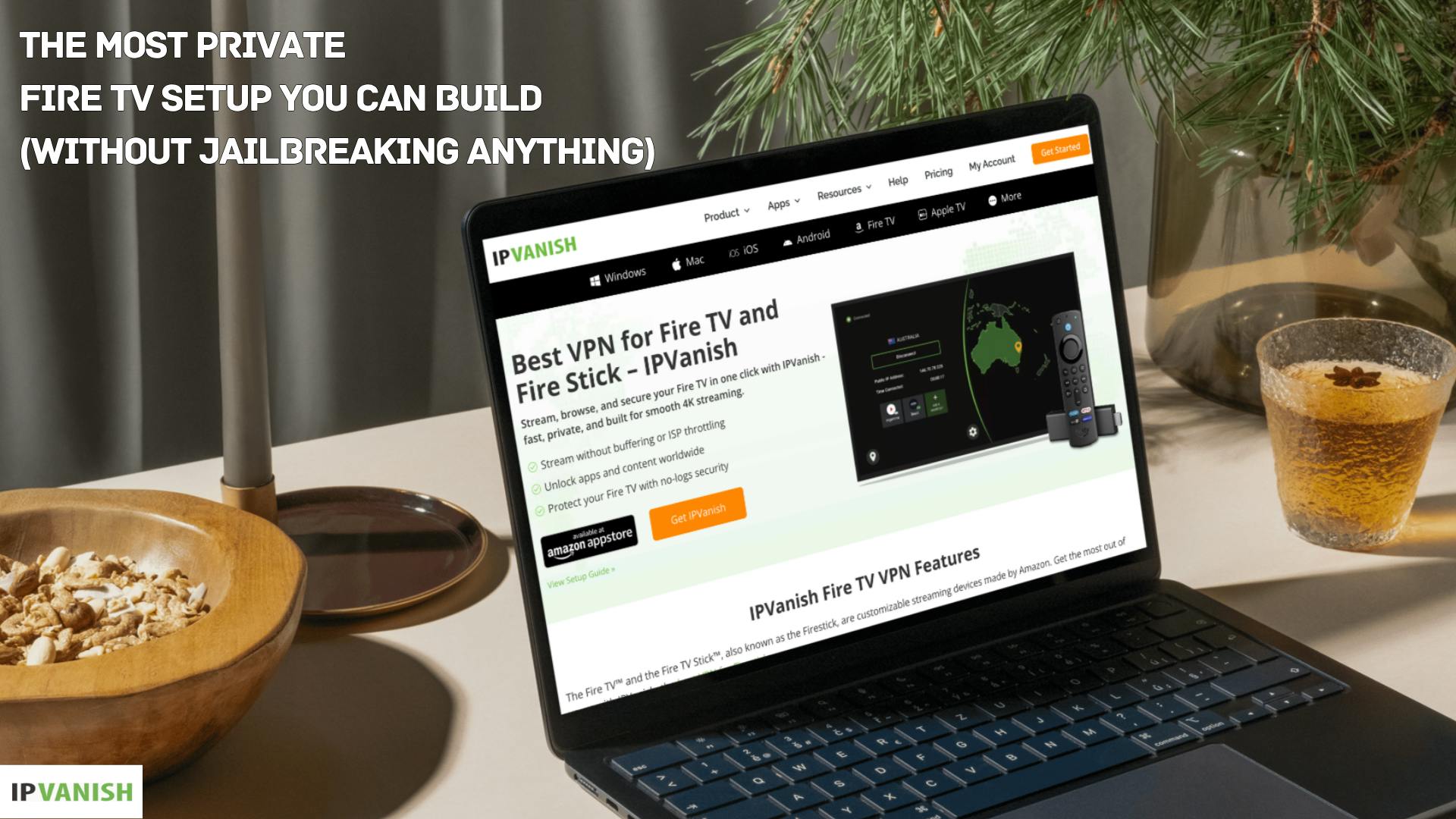
I first noticed it when an ad for a show appeared on my Fire TV home screen a few hours after I had searched for it on a completely different device. Not enough to set off alarms, but just enough to make me open the settings out of curiosity.What I found was worse than I expected. My Fire TV had been quietly logging everything since day one: which apps I opened, how long I stayed, and how I moved, all tied to a single Advertising ID, building a profile behind the scenes.None of this required a special permission prompt or a sketchy third-party app. It was all switched on by default, and Amazon openly states that it uses this data for marketing and product improvement.The good news is that most of it can be turned off, and the tools to do it are either already in your settings or one download away from the Amazon Appstore. This guide covers the exact steps: shutting down Amazon's built-in tracking, installing a VPN that protects what the settings can't reach, and setting everything up so it runs automatically without you having to think about it again.What your Fire TV is actually collectingFrom the moment you log into Fire TV, your data is tracked without any extra apps or permissions. It’s a default setting from Amazon and mainly collects three things from you.First up is device usage data.This is basically the Fire TV OS tracking which apps you open, how long you stay in them, and how you move around the home screen. Amazon openly says this data is used for “marketing and product improvement purposes,” and it’s switched on by default.Then there's app usage data. Amazon sees this even inside third-party apps.Even when you’re inside apps like Netflix or YouTube, Fire TV still registers that you opened them, how long you watched, and when you jumped out. The content stays inside those apps, but your usage pattern doesn’t stay private from the system itself.And finally, there’s the Advertising ID.Think of it as a permanent tracker tied to your device. Apps can read it and use it to build a profile of what you watch, when you watch it, and how often you come back.The good news is you can turn this off in Settings. That stops Amazon from using your activity for ads and profiling. Your Fire TV will still work normally, and the basic system data will stay on, but the behavior tracking becomes optional.Why can't you just install a browser extension?On a laptop, blocking trackers is fairly easy. You install uBlock Origin, it runs inside your browser, and tracker requests start getting filtered before they leave the page. However, Fire TV has no browser layer. Apps like Netflix, YouTube, and Tubi run independently and send requests directly to the internet, which means there’s no central place to plug into, no extension system, and no shared filter point where that traffic can be controlled.And this isn’t just a Fire TV thing. It’s the same gap across every smart TV platform. So you can’t just “add something” to block tracking the same way you would in a browser.That's why fixing this has two layers: the settings Amazon gives you and a VPN that covers what those settings can't reach.Why Amazon built it this wayAmazon sells Fire TV devices at or near cost because the hardware was never the business model. Your behavior is. Amazon's advertising revenue reached $56.2 billion in 2024, nearly double the figure from three years prior, and a significant portion of that engine runs on behavioral data collected from devices exactly like the one sitting under your TV.The more Amazon knows about what you watch, when you watch it, and how you move through content, the more precisely it can target ads across its platform. Turning off those tracking settings won’t hurt Amazon much, but it does make you a less valuable data point in that system.Locking down your Fire TV: five steps that actually matterYou can lock down your Fire TV by turning off Amazon's built-in tracking settings, installing IPVanish directly from the Amazon Appstore, setting it to connect automatically on startup, and using split tunneling to keep streaming apps running smoothly. No jailbreaking, developer mode, or APK sideloading is required.Step 1: Turn off the tracking in settingsStart with what Amazon actually gives you control over. Open Settings, go to Preferences, then Privacy Settings. All three toggles are in the same place.Just switch each option off one by one:Device Usage Data: Switch this off, and Amazon stops building a map of how you move through the home screen. This is the broadest toggle and the most directly tied to ad targeting.Collect App Usage Data: This one surprises most people. Amazon logs which third-party apps you open and for how long, even when those apps have nothing to do with Amazon. Switching it off closes that gap.Interest-Based Ads: This resets the Advertising ID tied to your device. You will still see ads, but they will be generic rather than built around your watch history.What they don't do is protect your traffic from your ISP, stop Netflix or YouTube from running their own trackers, or block outbound requests at the network level. Turning off Amazon's switches only covers Amazon's tracking. Everything else is still wide open.Step 2: Install IPVanish directly from Amazon Most VPN guides for Fire TV eventually send you into developer mode or have you sideload APKs. None of that is necessary here. IPVanish is available directly in the Amazon Appstore, so installing it takes about two minutes and works exactly like downloading any other app on the device.Here is how to get it:From the Fire TV home screen, go to Search (the magnifying glass icon)Type "IPVanish" and select it from the resultsHit Download or Get, and let it installOpen the app and sign in with your IPVanish account. If you don't have one yet, create it first at IPVanish.comOne subscription covers unlimited devices. Your Fire TV, phone, laptop, and any other screens in the house all run on the same account with no per-device fees.Step 3: Set it to connect on startupThe most common VPN mistake is forgetting to turn it on. You open a show, start watching, and only realize ten minutes in that the VPN is sitting there off. IPVanish solves this with auto-connect. Once enabled, the VPN connects the moment your Fire TV boots up, before anything else loads.To set it up, open IPVanish on your Fire TV, go to Settings, and enable "Connect on Android Startup." Fire TV runs on a modified Android system, so that is the label you will see. Then pick the server you want it to connect to by default, and you are done. If a streaming app ever acts weird over the VPN, there is a workaround without switching everything off. That is what split tunneling covers next.Step 4: Use Split Tunneling to keep streaming fastSometimes Prime Video glitches on a VPN, even though it is Amazon's own app running on Amazon's own device. It is not something you did wrong. The app detects VPN traffic and blocks it.Split tunneling lets you route specific apps outside the VPN while everything else stays protected. Prime Video gets a direct connection and works normally. Your other streaming apps and background traffic stay encrypted.The fix is straightforward inside the IPVanish app.Navigate to Settings, open Split Tunneling, toggle it on, and select the apps you want to exclude from the VPN tunnel. Most people only need to add Prime Video. If another app causes the same issue later, add it to the same list.One thing to keep in mind: anything you exclude connects directly to the internet. Your ISP and Amazon can see that traffic, so only leave out apps you are genuinely comfortable leaving exposed.Step 5: Enable threat protection to block tracker requestsEvery app on your Fire TV sends its own requests to the internet, so there is no single point where you can intercept and filter them all. Threat Protection is how IPVanish solves this. You can turn it on, and it’ll start filtering DNS requests in the background. So every time an app tries to connect to something, your Fire TV first has to look up where to go. If that request points to a known tracker or ad server, it gets blocked before the connection even happens. It works across the entire device regardless of whether it is Netflix, YouTube, or Tubi. You are not configuring anything per app.But with all that, there is also a limit. Ads that are built directly into video streams won’t go away. Since they come from the same source as the content, you'll still see them.What this setup does and doesn't doWith the settings tightened, the VPN running, and Threat Protection on, here is exactly what you have and haven't solved.What this setup handlesWhat it doesn't handleYour ISP can't see what you're watchingFire TV's basic operational telemetry still reaches AmazonAmazon's ad targeting loses most of its signalAds stitched into video streams won't disappearTracker and malware requests get blocked before connectingNetflix, YouTube, and other apps run their own analytics a VPN can't touchThis doesn't turn your Fire TV into a completely invisible black box. What it does is cover everything you can realistically control without rooting the device or touching developer settings. For most people, that's the right trade.Get the most private Fire TV setup with IPVanishIf you have followed all five steps, your Fire TV is in a meaningfully better place than it was out of the box. Your ISP sees encrypted traffic. Amazon's ad engine loses most of its signal. Tracker requests get cut before apps even connect. That is not a perfect setup, but it is the most you can realistically do without rooting the device.IPVanish handles the VPN, auto-connect, split tunneling, and Threat Protection from a single app downloaded directly from the Amazon Appstore. Plans start at $2.19/month on the two-year plan, and every plan comes with a 30-day money-back guarantee if it is not the right fit.Try IPVanish risk-free with a 30-day money-back guarantee.Frequently Asked QuestionsDoes IPVanish work on Fire TV without sideloading? Yes, it does. IPVanish is in the Amazon Appstore, so installing it works exactly like downloading any other app on the device. Search the name, hit download, and sign in. There is no need to configure developer mode or APK files, and the whole setup takes about two minutes. Will using a VPN slow down my streaming?Using a VPN will not noticeably slow down your streaming on a decent connection. Speed depends on the server you connect to, and IPVanish lets you sort servers by load and ping, so picking a fast one takes seconds and keeps buffering out of the picture.Does a VPN stop Amazon from tracking me on Fire TV?No, a VPN does not stop Amazon from tracking you completely, but it handles a significant part of it. It hides your traffic from your ISP and masks your IP address. Amazon still collects some device-level data through the Fire TV OS, which is why disabling the tracking settings in Preferences covers that layer separately. Together, the two changes give you meaningfully better coverage than either one alone.What is Threat Protection, and how is it different from a VPN? Threat Protection is a feature that blocks requests to known trackers and malicious domains at the DNS level, before your device connects to them. A VPN encrypts your traffic and masks your IP address. Both run at the same time and cover separate ground, which is why having them both active matters. Can I use IPVanish on multiple devices?Yes, IPVanish works across unlimited devices on a single subscription. The same account that protects your Fire TV also covers your phone, laptop, tablet, and any other Fire TVs in the house. No per-device fees, no limits on simultaneous connections.Do I need to do this if I already pay for a streaming subscription? Yes, because paying for a streaming subscription does not protect your data. A subscription buys you content access and has nothing to do with what your ISP sees, what Amazon collects, or what third-party trackers pull from your device while you watch.
The Most Private Fire TV Setup You Can Build Without Jailbreaking
Full Article
Original Source
Read the full article at Hackernoon →KhanList aggregates and links to publicly available news content. We do not host full articles from third-party sources. Always verify important information with original sources.