
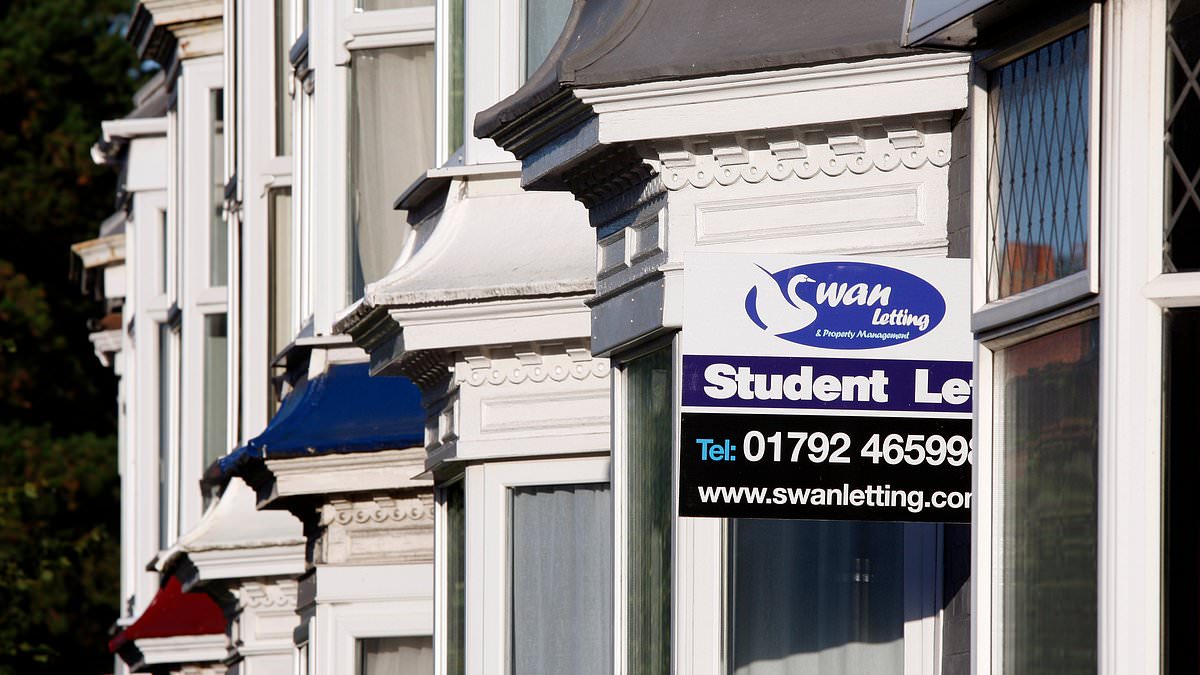
The new academic year is about to begin, meaning hundreds of thousands of students are headed to university for the first time, or returning after the summer break. Unless they are staying at home, they all need somewhere to live – and that presents a huge opportunity for private landlords. The constant churn of tenants and potential for wild parties mean renting to students isn't for the faint-hearted. But landlords could be tempted by the fact student lets offer some of the best returns on the market, according to data from buy-to-let mortgage lender Paragon Bank.Some are struggling to make the numbers stack up in the mainstream market amid higher mortgage rates, upkeep costs and service charges alongside more regulation and a less friendly tax regime.While the average rental yields for typical buy-to-let rental investments are around 6 per cent, student rentals in some locations can yield over 9 per cent.The yield is the percentage an investor can expect to make back on the purchase price of their property each year.For example, a 5 per cent yield on a £200,000 property would amount to £10,000 per year in rental income, or £833.33 per month. Student digs: Properties in popular student postcodes generate average yields of 7.32% compared to 6.86% for non-student postcodes, according to Paragon BankWhere are student lets most lucrative? Paragon Bank has shared data with This is Money based on the properties it has provided mortgages on in popular student postcodes. It shows that Stoke-on-Trent offers landlords the strongest rental yields among the UK’s leading university locations.The city, which serves the University of Staffordshire and nearby Keele University, recorded a student property yield of 9.42 per cent. This is based on average annual rental income of £14,222 and a typical property valuation of £150,982.Plymouth ranked second, generating a typical yield of 9.27 per cent. Student properties in the city delivered average annual rental income of £35,224, against an average valuation of £379,881.Cities with Russell Group universities also feature prominently in the top 15 rankings. Liverpool, Cardiff, Edinburgh, York, Leeds, Nottingham, Sheffield, Durham, Exeter and Southampton all appear among the 15 highest-yielding locations. Student landlords in Liverpool, home to the University of Liverpool and Liverpool John Moores, can typically expect to achieve a yield of 8.86 per cent, based on annual rental income of £26,399 and an average property valuation of £297,951.Cardiff student lets produce average returns of 8.27 per cent while Edinburgh follows closely at 8.23 per cent. York and Leeds each generated yields above 8 per cent. But property experts say the decision to invest in student property should not be taken lightly. 'Student property is a specialist market,' said Louisa Sedgwick, managing director of Mortgages at Paragon Bank. 'Landlords need to understand local demand, the type and quality of accommodation students require and the responsibilities associated with managing shared homes.' Chris Sykes, a mortgage adviser at MSP Financial Solutions says:'Although the headline rents are higher, student lets will often go through more wear and tear than a professionally let house of multiple occupancy.'I remember my own university days. My house that housed eight of us was always a mess - no matter how many cleaning schedules I pinned to the fridge. 'Students will have parties, they may cause noise complaints with neighbours, smoke residue inside a property is a frequent one too – so I’d imagine the insurance side of things is more expensive also.'Sykes also says student landlords are nervous about the implications of the Renters Rights Act. Under the new rules, all properties are now let on 'periodic' or rolling tenancies, which means landlords are not allowed to tie tenants in for a fixed term, such as one year. This means renters can end a tenancy whenever they like, as long as they give the landlord two months' notice.Like other renters, students have previously had to sign contracts for a whole year more – even though academic terms typically start in September or October and run until June.Now, students could decide to exit a tenancy at the start of the summer, leaving landlords with an empty property for three months until the next year's students arrive.While the Act includes provisions to allow purpose-built student accommodation to be exempt from the switch to assured tenancies allowing them to stick with fixed contracts, landlords with ordinary flats or houses don't have this advantage.'I know a number of my clients that have student let properties are nervous about the effects the renters rights act will have on the market,' adds Sykes.'The rules are different for purpose-built student let properties and halls of residences but what investors will generally be looking at are houses, flats or houses in multiple occupation that can be let to students, but wouldn’t class as purpose built.' Solid return: Student landlords in Liverpool, home to the University of Liverpool and Liverpool John Moores, can typically expect to achieve a yield of 8.86%Student standards are also much higher than they once were, according to Michael Zucker, chartered surveyor at north London estate agency Jeremy Leaf & Co.'Nowadays, students expect a high standard of accommodation including good Wifi, enough workspace in each room and a communal living and kitchen area with adequate facilities and storage for all occupants,' says Zucker.'Basic student digs which were prevalent in the 20th century will no longer cut the mustard. Provision of en-suite shower rooms will enhance the rental value. 'Good accessibility to places of study is of course essential, while including bills for communal heating and hot water in the rent will avoid arguments.'When it comes to mortgage lending, the situation is more complex as well, which typically means slightly higher rates and fees.'Due to the generally higher wear and tear, higher risk of damage, some lenders steer clear of any properties that would be let to students exclusively,' says Sykes.'A mortgage for a student let isn’t much more complicated than a normal HMO mortgage, it’s just about choosing the right lender and making sure the property has the right licenses.'Best mortgage rates and how to find them Mortgage rates have shot up again due to inflation triggered by the conflict with Iran reversing hopes that the Bank of England would cut rates. This means those remortgaging or buying a home face higher costs.That makes it even more important to search out the best possible rate for you and get good mortgage advice, whether you are a first-time buyer, home owner or buy-to-let landlord.This is Money's partner L&C can help you with its fee-free mortgage service.> Compare mortgage rates> Find the right mortgage for you To help our readers find the best mortgage, This is Money has partnered with the UK's leading fee-free broker L&C.This is Money and L&C's mortgage calculator can let you compare deals to see which ones suit your home's value and level of deposit.You can compare fixed rate lengths, from two-year fixes, to five-year fixes and ten-year fixes.If you’re ready to find your next mortgage, why not use This is Money and L&C’s online Mortgage Finder? It will search 1,000s of deals from more than 90 different lenders to discover the best deal for you.> Find your best mortgage deal with This is Money and L&C Mortgage service provided by London & Country Mortgages (L&C), which is authorised and regulated by the Financial Conduct Authority (registered number: 143002). The FCA does not regulate most Buy to Let mortgages. Your home or property may be repossessed if you do not keep up repayments on your mortgage.
The most lucrative locations for student lets... including one where landlords make a% return
Full Article
Original Source
Read the full article at Dailymail →KhanList aggregates and links to publicly available news content. We do not host full articles from third-party sources. Always verify important information with original sources.