
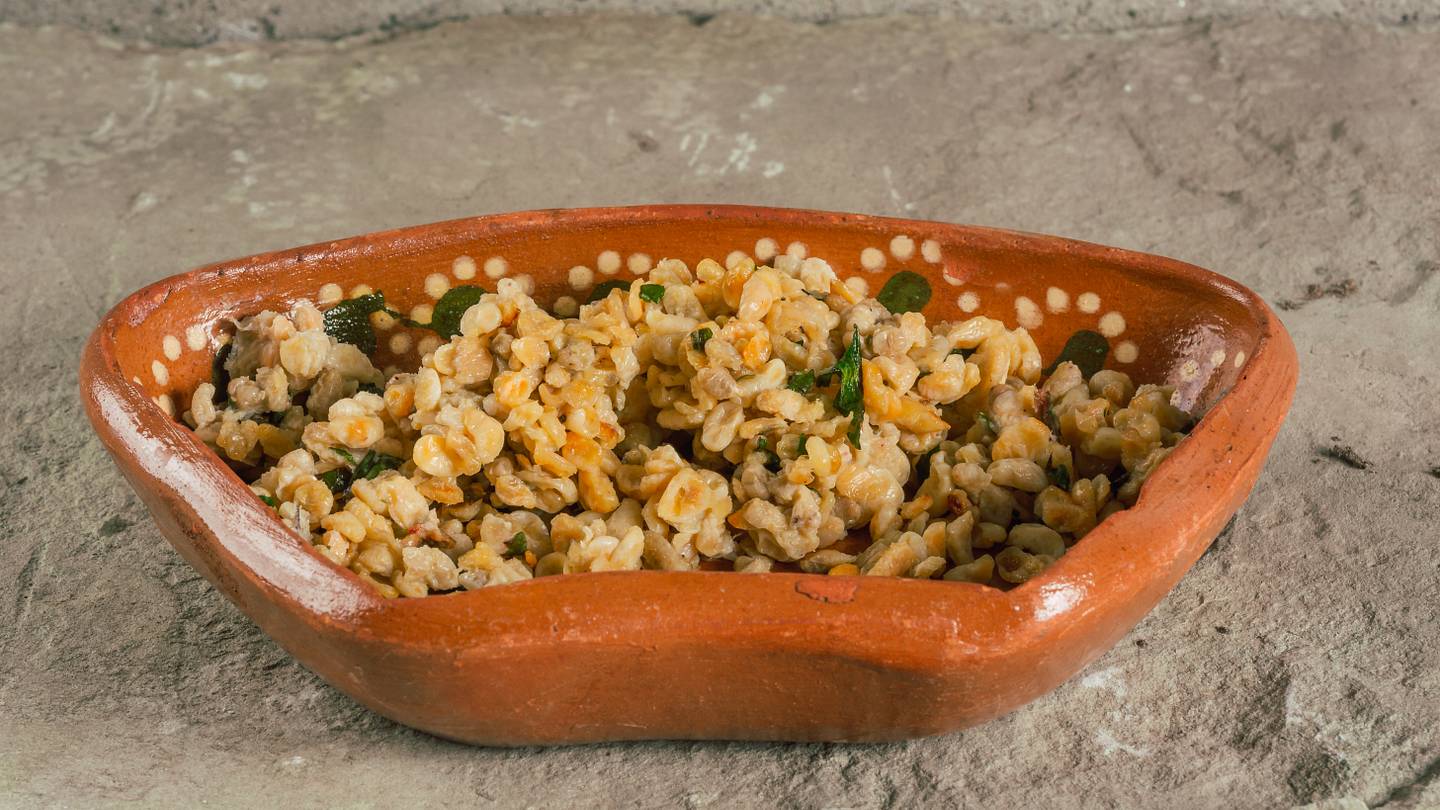
Caviar from an all-inclusive might sound like an oxymoron. With an ounce of mid-tier caviar running about $200—roughly the cost of a night at a resort of the same caliber in the Caribbean—you wouldn't expect to find it on a menu. But the kind I dared to try at Secrets Moxché Playa del Carmen—"Mexican caviar," which isn't actually fish eggs at all—most definitely changed my mind on the matter.The Caviar of the DesertButtery, slightly nutty, and a perfect match for toasted pumpkin seeds, escamoles are the edible larvae and pupae of ants. Unlike sturgeon roe, acquiring these delicate orbs requires conquering colonies of venomous ants rather than the belly of the beast. The name comes from the Indigenous Nahuatl words azcatl, meaning "ant," and molli, meaning "stew," which gives surprisingly accurate insight into how escamol is still prepared all these years later.Workers leave a field after harvesting escamoles in Ejido Laguna Seca, San Luis Potosí, Mexico. | Bloomberg/GettyImagesWhile the caviar you now eat with a mother-of-pearl spoon started off as peasant food in 12th-century Russia, the "caviar of the desert" (another moniker for escamoles) was once a celebrated delicacy among Aztec emperors. From the protein's prestigious history to its current place on high-end tasting menus, its value all comes down to how the food is foraged. As its upwards of $100-per-pound price tag suggests, harvesting escamoles can be tricky. The process leads straight into the underground tunnels of the velvety tree ants of Central Mexico, Liometopum apiculatum. Although these nests sit surrounded by the roots of agave and maguey plants, getting your hands on escamol is a lot more challenging than harvesting tequila or mezcal. When done sustainably, the ants and nest are preserved while the larvae are carefully scraped out by traditional escamoleros in the springtime.Making Mountains Out of AnthillsWhile this wasn't my first dance with ants on the dinner plate, trying the escamol taco in Playa del Carmen made it much harder to ignore the reality of eating insects than the ground-up chicatana ants blended into the chile mayo on the famous baby corn dish at Pujol, a Michelin-starred institution in Mexico City. Back at the resort, sautéed and paired with epazote—a pungent Mexican herb—and pepitas on a warm corn tortilla, it was just one bite of the seven-course taco tasting at its Mexican restaurant, Dos Almas. Yet getting past the anthill my mind had turned into a mountain to taste a centuries-old tradition—way outside my usual taco order—stuck with me.One of the courses from the seven-course taco tasting at Dos Almas at Secrets Moxché Playa del Carmen. | Secrets Moxché The rest of the tasting menu leaned just as heavily into local Mexican flavors without playing it safe. Alongside the ant eggs, the meal moved through a crisp taco dorado stuffed with pork and potato and topped with hamachi tartare and green onion oil, a smoky taco brasero piled with lobster and chipotle mayo, rich pork belly under an Oaxaca-style manchamantel mole, and my favorite, a steak taco on a queso-encrusted flour tortilla topped with charred avocado—each paired with regional spirits from mezcal to licor de elote (corn liqueur).Beyond the Hotel BuffetIt was the kind of meal I usually associate with "traveling" over "vacationing"—hunting down hard-to-get reservations and street food instead of settling for whatever is on the hotel buffet. Over a decade ago, my first trip to a Cancun-area all-inclusive cemented the idea that subpar food was just part of the deal. So when I found Secrets Moxché through Apple Vacations, I expected the usual perks of an easy beach trip—bundled flights, airport transfers, zero legwork—not food I'd actually write home about.Aside from the few pounds I gained over the long weekend, what actually surprised me was how much Indigenous history and culture made it onto the property, rather than getting watered down for an American palate. Beyond the upgraded tasting dinners, the resort runs a year-round program called "Roads Through Mexico" that brings regional folk art, live music, and local bites onto the immaculately manicured grounds. Catching it during Día de los Muertos drove the point home: you don't always have to leave the resort gates to get a real taste of where you are.Read More:
The Most Expensive Eggs in Mexico Don't Come From Fish
Full Article
Original Source
Read the full article at Mentalfloss →KhanList aggregates and links to publicly available news content. We do not host full articles from third-party sources. Always verify important information with original sources.