
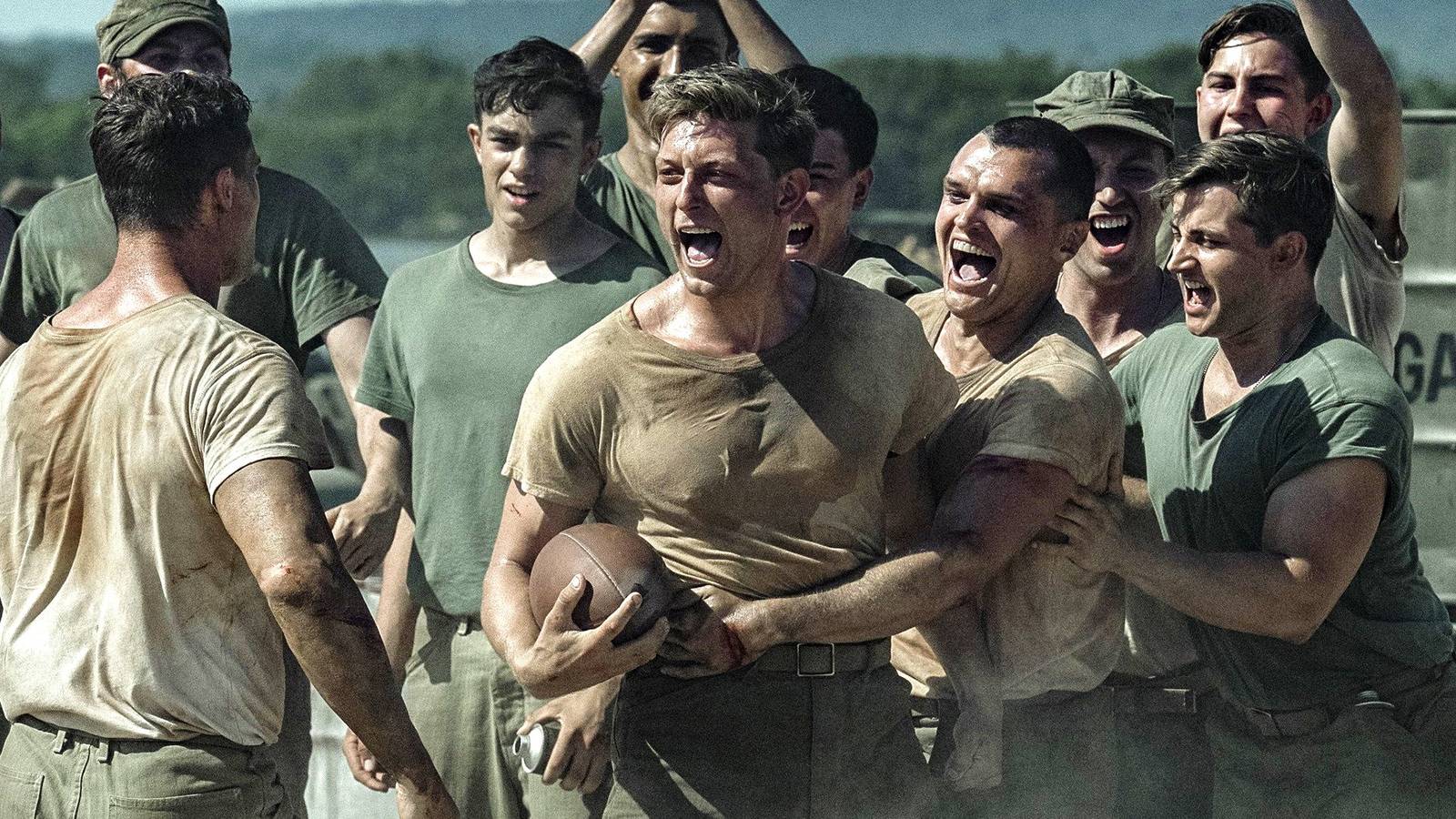
Published Nov 26, 2026, 10:01 AM EST Cooper Hood is the Associate Editor for all new movie releases, in theaters and on streaming. In addition to writing articles about these titles and upcoming releases, he also oversees content planning for each, ensuring that ScreenRant continues to cover major releases for months after their release. He has written various reviews for ScreenRant that appear on Rotten Tomatoes, coordinated Oscars and San Diego Comic-Con coverage, appeared on CNN to talk about Mission: Impossible - The Final Reckoning, and done select interviews with talent over the years. Netflix's The Mosquito Bowl tells a remarkable true story that blends football with war, honoring the lives of four real men who fought in World War II. The film revolves around former college football stars John McLaughry, Tony Butkovich, Dave Schreiner, and Bob Bauman as they join the war and participate in a friendly football game before the invasion of Okinawa. Since The Mosquito Bowl is based on a true story, the accuracy of its depiction of the real-life people and events is fairly called into question. There are some core aspects to what really happened that the film could not and would not change, such as names of people involved or (in most cases) their tragic fates. Director Peter Berg has a strong history of tackling true stories with great care, but as happens with practically all movies based on real events, some changes had to be made. The Mosquito Bowl's true story changes range from manufacturing drama between the real-life heroes to altering the order of real events so Nicholas Galitzine's McLaughry, Ray Nicholson's Butkovich, Tom Francis' Schreiner, and Bill Skarsgård's Bauman have more time together. 8 The Main Characters Weren't In The Same Marines Regiment The entire premise of The Mosquito Bowl revolves around John, Tom, Dave, and Bob all joining the United States Marine Corps and serving together in the same regiment. The movie depicts them as all being part of the 4th Regiment, allowing them to fight side-by-side in battle and on the football field, which strengthens the camaraderie between the four young men. In real life, Tom was the only one not part of the 4th Regiment. He was assigned to the 29th Regiment instead. While both regiments were part of the 6th Marine Division, this put John, Bob, and Dave within the same battalion, while Tom was part of a different one. So, instead of these four men all participating in war together, it is more likely that Tom had a separate experience from the others. This also means that while the WWII ensemble movie shows all four of the main characters playing on the same team in the Mosquito Bowl, Tom was actually on the opposite team as John, Bob, and Dave. While it could have been fun to see Tom go against the other characters on the beach game, The Mosquito Bowl clearly felt it was better narratively to have them all together. 7 The Four Men Weren't At The Tarawa Beach Battle The Mosquito Bowl drops the four men into battle for the first time when they go to Tarawa's beach. It proves to be a rattling experience for these guys, one where they learn firsthand what it is really like to be in war. However, none of them were actually there in real life. The Battle of Tarawa took place from November 20-23, 1943. The U.S. Marine Corps stormed the island behind the strength of the 2nd, 3rd, 4th, and 5th Marine Divisions. The 6th Division that John, Tony, Bob, and Dave belonged to was not present. John, Bob, and Dave were off fighting elsewhere at this point, while Tony's location is tied to another The Mosquito Bowl true story change. 6 Tony Butkovich Didn't Enlist Right After Pearl Harbor It is true that all four of these men joined the Marine Corps, but The Mosquito Bowl alters the timing so Tony can be with the others. Bob, Dave, and John all enlisted in the Marines by the end of 1942, just a year after Japan's bombing of Pearl Harbor. The Mosquito Bowl makes it look like they enlisted a bit quicker, but Tony's changes the most. In real life, Tony didn't join the Marines until 1944. He became a trainee during 1943, but he continued playing football at Purdue through October of that year. He was transferred to the Marines to continue his training before the season ended. This also means he was deployed before the Cleveland Rams drafted him 11th overall in the 1944 NFL Draft, which The Mosquito Bowl depicts as happening a full year earlier and ahead of him going to training. 5 Dave Schreiner & Tony Butkovich's Rivalry Is Made Up The Mosquito Bowl spends a good amount of time exploring a rivalry between Dave and Tony. They don't like each other from the start, with Dave having a specific disdain for Tony after he set Purdue's touchdown record against him. Yet, this is complete fiction. There is no record of Dave and Tony having a hatred for one another. In fact, Dave and Tony never even played against each other in college. Dave's final season at Wisconsin was in 1942, and Tony was at Illinois at the time. By the time Tony did play Wisconsin in 1943, Dave had been selected in the 2nd round of the 1943 NFL Draft by the Detroit Lions. 4 John McLaughry Went To The NFL Before Deploying Dave wasn't the only one in The Mosquito Bowl who got some NFL experience before joining the Marines. John was drafted by the New York Giants in the 3rd round of the 1940 NFL Draft. He played one season for the team, appearing in nine games. The Mosquito Bowl omits this detail, electing to push back the timeline of John's football career. The movie shows him still playing for Brown University in 1941, even though his last game in real life happened two years earlier. Additionally, the film doesn't mention that John's athleticism also led him to be an Olympic competitor as a hammer thrower in 1936 and 1939. 3 The Mosquito Bowl Ended With A 0-0 Tie After putting the men through the dog days of war, The Mosquito Bowl gives them a chance to get back to playing football. The movie portrays a rather exciting game that includes multiple touchdowns from Butkovich and George Murphy, including a final pick-6 that ends the game in a tie. While it is true that the intended game of two-hand touch evolved into tackle football, all the touchdowns are fabricated. The real Mosquito Bowl ended in a scoreless tie. The Mosquito Bowl quite clearly changed this aspect of the true story to make the game more entertaining for viewers. 2 Tony, Dave, & Bob Didn't All Die In The Same Battle The Mosquito Bowl doesn't change any real person's fate, leaving John as the lone survivor of the main characters, while Bob, Dave, and Tony all die during the Okinawa invasion. However, the film does take some creative liberties with the facts of their deaths, most notably being that they all died on the same day, on the same battlefield, and (in Tony and Dave's case) together. In real life, these men died over the course of a few months. Butkovich was the first, dying on April 18, 1945. Bauman died next on June 6, 1945. Scheiner was killed two weeks later on June 20, 1945, just two days before the Battle of Okinawa ended. As part of The Mosquito Bowl's ending, John is seen at the Wisconsin football field where Dave and Bob played collegiately. He digs a hole in the ground using his knife and is shown burying each of their identification tags, along with Tony's. It's a touching way to end The Mosquito Bowl, but there is no record of this happening. Given the circumstances of their deaths, it's unlikely that John ever came to possess each of their dog tags. But considering how the movie focuses on the brotherhood formed between the men in war and on the field, it is easy to see why the film would make up something like this to wrap up the story. Release Date October 30, 2026 Runtime 127 Minutes Director Peter Berg Writers Mark L. Smith, Peter Berg Producers Brian Grazer, Peter Berg, Alexander H. Gayner Cast Nicholas Galitzine John McLaughry Brent Comer George Murphy
The Mosquito Bowl's 8 Biggest True Story Changes
Full Article
Original Source
Read the full article at Screenrant →KhanList aggregates and links to publicly available news content. We do not host full articles from third-party sources. Always verify important information with original sources.