
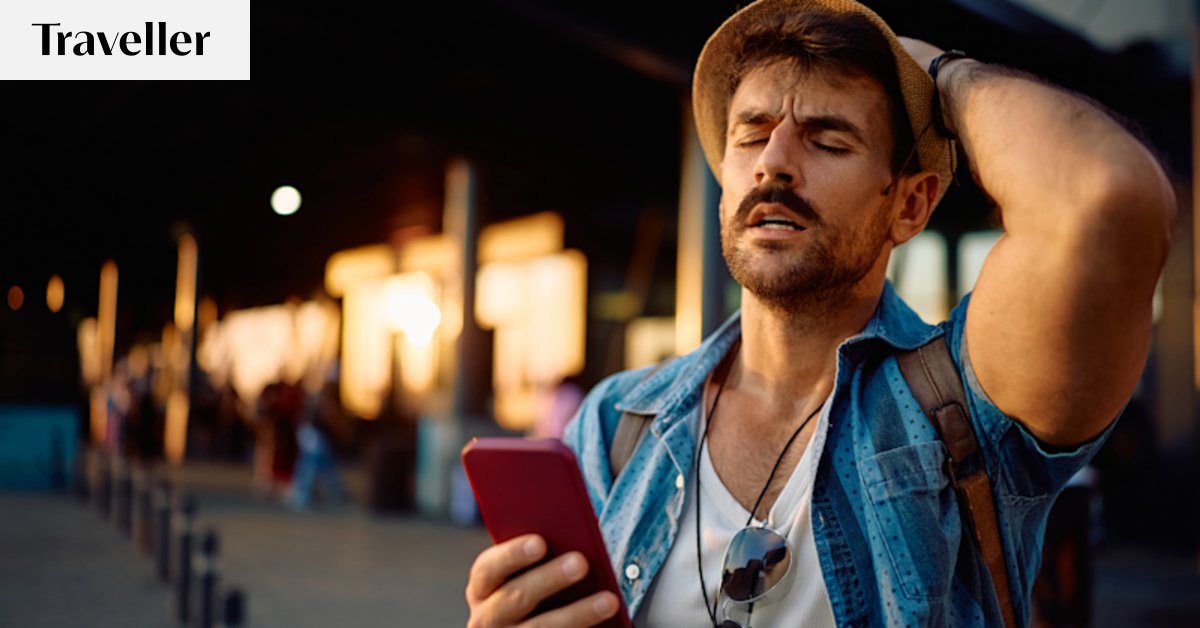
OpinionTravel writerNovember 4, 2026 — 5:00amNovember 4, 2026 — 5:00amIndulge me for a second here. Allow me to cast back to a simpler time, when travel scams were conducted face to face, when you could often look the person stealing from you in the eye as you forked over your cash.The year is 2006, and I’m in Asia for the first time. This is literally the first day I have ever spent on the Asian continent, and an enterprising young resident of Hanoi has already clocked my naivety and is manoeuvring his way into my good graces.Yes, I’m the kid who’s been reading Anthony Bourdain’s swashbuckling tales of visiting Vietnam and eating a still-beating cobra’s heart – right here in Hanoi, it turns out – not to mention his memorable interactions with Vietnamese people, so I’m ripe for the picking. When this guy starts chatting to me and suggests we have lunch together at a snake restaurant, I can’t believe my luck.But things quickly unravel. I’m whisked on a scooter into the far outskirts of Hanoi, into increasingly sparse suburbia. I’m set up in an empty restaurant where the owner parades a series of live snakes across the tiled floor and encourages me to choose my lunch.Modern-day scammers … beware telcos charging travellers hundreds in confusing global roaming fees.iStockI’m not so swashbuckling anymore, and turn down the whole live snake in favour of a few hastily negotiated spring rolls and a beer. And the bill, when I get it, is astronomical, almost comical. More than $100 for a lunch that should have cost about $3. But I’m stuck, and alone, and so I pay it.Sign up for the Traveller newsletterThe latest travel news, tips and inspiration delivered to your inbox. Sign up now.That was 20 years ago. I got scammed again recently, just a few weeks ago in a real blast from the past, but the tale isn’t nearly so adventurous.I was travelling to Kenya via Dubai, where I touched down and turned my phone on and saw a message quickly pop up: “Hi there, your Optus Roaming Pass is now active. You’ve got 1GB of roaming data and unlimited standard talk and text to use in 24 hours in eligible destinations…”That was a little strange, because I already have 2GB of roaming data included in my phone plan, and then I get an extra 2GB – not 1GB – for $10 a day if I go over that. And I obviously hadn’t gone over that. Still, I didn’t have time to figure it out, and decided maybe it had been sent in error. Or maybe it would cost me $10. Annoying.So I headed into Deira City to get some food and stay in touch with my family. But then a few hours later, ping! “Hi there, you’ve spent approximately $50 outside of your plan’s monthly inclusions…”What? How could that be possible? It must be a mistake. And then two hours later, ping! “Hi there, you’ve spent approximately $100 outside of your plan’s monthly inclusions…”“The scammers to watch out for aren’t the wily chancers in your destination of choice. They’re large corporate entities, and for the most part what they’re doing is entirely legal.”I finally switched to flight mode, still wondering what was going on. I looked into it when I got to Nairobi: Optus had changed my phone plan. Without telling me. Suddenly, I didn’t have 2GB of roaming data included each month. I had none. And instead of having more than 100 countries included in my Optus Roaming Pass, I now had 35 – and the UAE was not one of them.So despite the message telling me my Optus Roaming Pass was now active, unbeknownst to me, I wasn’t in a country that was covered. So every WhatsApp message to my family, every scroll through social media was costing me an extravagant amount of money.It’s amusing in a way, the neat synergy of this experience with the snake meal in Hanoi. Both cost me about $100 I shouldn’t have had to pay. But they were enacted by vastly different entities.This is the thing with modern-day travel: the scammers to watch out for aren’t the wily chancers in your destination of choice. They’re large corporate entities, and for the most part what they’re doing is entirely legal.I haven’t been approached by an old-school scammer in years. But almost every time I pay a bill overseas, the EFTPOS terminal asks if I want to pay in local currency, or in my own currency. Dynamic conversion is a scam, a massive rip-off enacted upon trusting travellers who think paying in their own currency will be safer and cheaper.It is not.ATMs offer this dynamic conversion as well, not to mention slugging you sometimes with huge fees just to spit you out some cash. There are all sorts of hidden costs to look out for if you don’t want to be ripped off.Hire-car companies try to scam you with unnecessary insurance up-sells and even fake damage reports. Hotels add extra costs like “resort fees” to cover usage of facilities that most people would expect would be included in their room rate.And of course phone companies will charge huge amounts of money for services such as data roaming that clearly don’t cost those companies much at all.It makes you pine for the good old days of face-to-face cons, when you felt like you really got to know the person who was relieving you of all your money, which was at least going into a local community rather than bumping up the share price for investors back home. And now you don’t even get lunch.Ben Groundwater is a Sydney-based travel writer, columnist, broadcaster, author and occasional tour guide with more than 25 years’ experience in media, and a lifetime of experience traversing the globe. He specialises in food and wine – writing about it, as well as consuming it – and at any given moment in time Ben is probably thinking about either ramen in Tokyo, pintxos in San Sebastian, or carbonara in Rome. Follow him on Instagram @bengroundwaterConnect via email.From our partners
The modern-day travel scammer isn’t a petty thief, it’s your telco
Full Article
Original Source
Read the full article at Smh →KhanList aggregates and links to publicly available news content. We do not host full articles from third-party sources. Always verify important information with original sources.