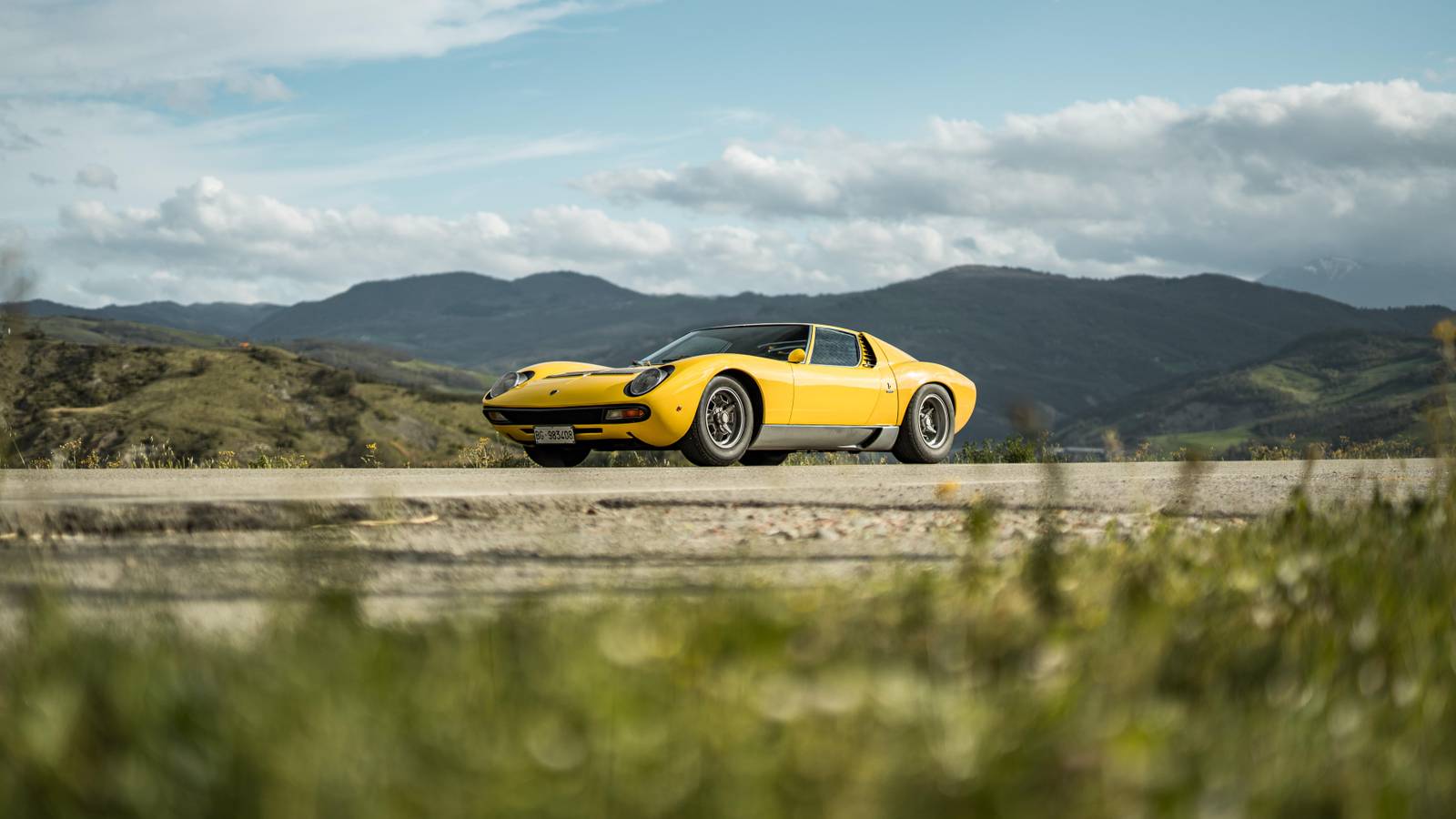
Published Jul 31, 2026, 6:00 PM EDT Based in the Motor City, Carl Anthony is the Automotive Lead at How-to-Geek and the host of AutoVision News Radio, a podcast that focuses on future vehicle technology, including next-generation ADAS innovations, electrification, and software-defined cars. A broadcaster by nature, he has appeared on popular podcasts and radio shows, including Wrench Nation, Cars Yeah, The Car Doctor, and Digital PR Explained. Carl’s frequent appearances on MotorMouth Radio (WHPC 90.3 FM) over the last decade have made him a trusted resource for car enthusiasts, while his hosting of the AutoSens Insights series continues to spotlight the latest automotive technologies. Prior roles include serving as a new vehicle launch and dealer trainer for Ford, Honda, Mercedes-Benz, and Volvo. Carl was a senior product specialist on Chevy's National Truck Team, an experiential marketing program that travels the United States, and a respected member of the FCA (now Stellantis) national auto show team, where he served as the resident expert for consumers on the Dodge Charger and Challenger. Before the automotive industry, Carl was a disc jockey, producer, and programmer at several popular Midwest radio stations, including KIWR, KEZO, KJAN, and KELO-FM. He is a graduate of Iowa Western Community College in Council Bluffs, where he dual-majored in the Electronic Media studies program, earning an Associate of Applied Sciences degree in both radio and television broadcasting. Lamborghini spent the early 1970s trying to fix a problem most carmakers would have envied: a car that was already a legend yet still had room to improve. That car was the Miura, and “the fix” became the Miura SV, the model Lamborghini credits with starting a naming tradition it still uses today. Lamborghini recently marked the 55th anniversary of the Miura SV's release, detailing how the car came together and why the badge has stuck around for as long as it has. The Miura debuted in 1966 as the Miura P400, the first production car built with a V12 engine mounted transversely ahead of the rear axle. Its layout helped make the Miura an instant sensation and a car many credit as the first modern supercar. The Miura S followed in 1968 with a round of refinements, but both versions carried the same weaknesses: lift at high speed and an engine and transmission that shared a single oil circuit rather than two separate ones. Where the Super Veloce idea began Engineering changes behind the Miura SV Lamborghini responded to the Miura S with the Miura SV, short for Super Veloce, or "super fast" in Italian. It arrived in 1971 and remained in production for only a short time, until 1973. Lamborghini engineers split the engine and transmission lubrication into separate circuits, widened the rear track, retuned the suspension, and added ventilated disc brakes. Some cars even received a limited-slip differential for better traction. Lamborghini also dropped the "eyelash" trim around the headlights for a cleaner front end and widened the rear fenders to fit larger tires. Those eyelashes, thin metal fins added by Bertone, the Italian design house responsible for the Miura's body, had wrapped around the headlight housings since the original P400 and were one of the car's most recognizable details. Removing them for the SV was a small change with an outsized effect, trading a decorative flourish for a more purposeful face. Lamborghini made one factory exception: the red SV Ferruccio Lamborghini bought for himself had the eyelashes. It remains on display at the family museum today. "With the Miura SV, Lamborghini brought the evolution of the Miura to its ultimate expression," said Stephan Winkelmann, chairman and CEO of Automobili Lamborghini. “Super Veloce has always represented the purest interpretation of Lamborghini performance: a combination of increased driving emotion, enhanced dynamic capabilities, and a distinctive character.” Lamborghini Miura SV, 1971 to 1973 Engine: 3.9-liter V12 Output: 385 horsepower at 7,850 rpm, 286 lb-ft. of torque at 5,500 rpm. Zero to 62 mph: 5.5 seconds. Top speed: over 180 mph. Curb weight: about 2,745 lbs. Price when new: 8,600,000 lire (roughly $13,800 in 1971 dollars, or about $114,000 today adjusted for inflation). Performance isn't the whole story Lamborghini describes rarity, personalization, and craftsmanship as the three pillars that give its cars lasting value, alongside the performance engineering that underpinned the SV badge. The company points to its current lineup as proof, with the Revuelto leading the V12 hybrid range, the Urus SE as its plug-in hybrid Super SUV, and the Temerario carrying the V8 hybrid torch. Meanwhile, the Ad Personam division, Lamborghini's in-house customization studio, spent 2026 building a two-car Temerario set, one of which featured woven wool inside a Lamborghini cabin for the first time. Each car pairs the material, called Gessato (Italian for “pinstripe”), with a different paint and interior theme, built around one owner's specific taste rather than a factory options list. The two cars, billed as Temerario Ad Personam, made their public debuts at the 2026 Goodwood Festival of Speed. It’s the same logic Lamborghini applied to the Miura SV in 1971. Where the SV badge pushes a car's performance engineering to its limit, Ad Personam pushes its craftsmanship to a comparable limit. Ad Personam started in 2006 and grew into a dedicated department in 2013, followed by its own studio at Lamborghini's Sant'Agata Bolognese headquarters in 2016. The vast majority of new Lamborghinis leave the factory with at least some personalized detail, whether that's a custom color, stitching pattern, or interior material. MSO from McLaren, Rolls-Royce Bespoke, and Bentley's Mulliner division have similar aims as Lamborghini's Ad Personam. Where the SV nameplate went next Lamborghini let the SV name sit unused for more than two decades before bringing it back for the 1996 model year. The Diablo SV would debut at the Geneva Motor Show in March 1995, an entry-level model meant to boost sales under new ownership. It launched with 510 horsepower and grew to 530 by 1999, still built around the same idea the Miura SV introduced, whereby you take an existing car and sharpen it. The badge went quiet again until 2015, when the Aventador SV arrived with 740 horsepower on a 110-lbs. weight loss diet compared to the standard car. No Huracan ever wore an SV badge; Lamborghini used other names, Performante and STO among them, for that car's hardest-hitting editions. Six decades after the Miura first put a V12 behind the driver's seat, and 55 years after the SV badge appeared on it, the name still means what it did in 1971: this is the version Lamborghini created without any compromises whatsoever.
The Miura SV arrived in 1971 for $13,800—and taught Lamborghini how to build its best cars
Full Article
Original Source
Read the full article at Howtogeek →KhanList aggregates and links to publicly available news content. We do not host full articles from third-party sources. Always verify important information with original sources.