
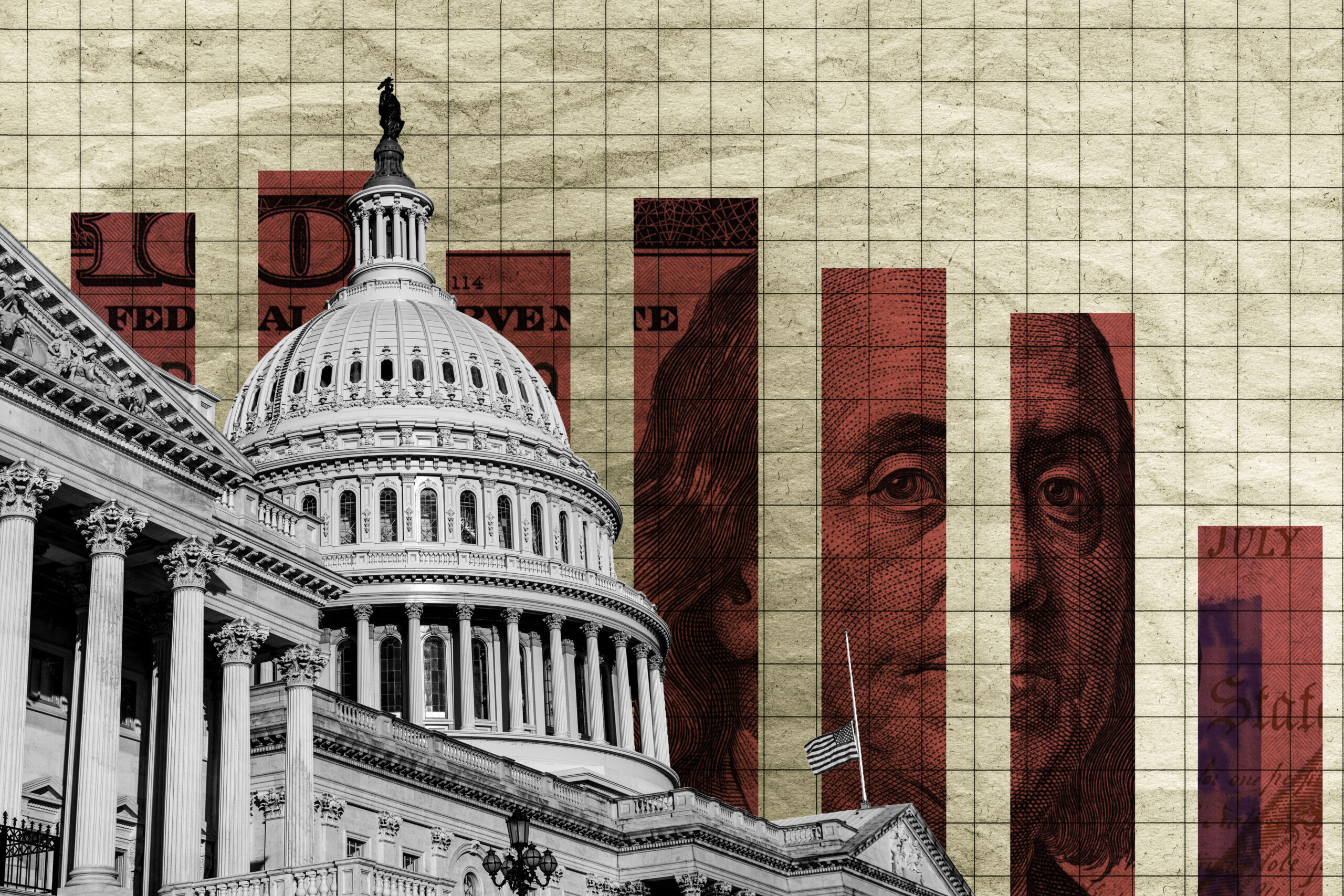
November 4, 2026 • 10:58 am ET Josh Lipsky and Bart Piasecki Now that the midterm political battle is done, it’s time for the fiscal fights. The Democrats’ strong majorities in both houses mean Washington will soon be gearing up for showdowns on the budget and the debt ceiling in the coming months. Both have massive implications for the US and global economy, and the risk of partisan gridlock as a presidential election cycle ramps up could threaten the creditworthiness of the United States. First up, the debt ceiling. The original debt limit was introduced in 1917 and followed by the current law in 1939. Since 1945, Congress has changed the debt ceiling 104 times, with President Ronald Reagan holding the record of eighteen debt increases. But the coming fight this summer may be different from any other. The current statutory debt limit of $41.1 trillion is projected to be breached in the first half of next year. That means by early spring, Treasury Secretary Scott Bessent could start taking “extraordinary measures” to move money around so the US government can keep paying its debts for as long as possible. It will set up a financial fight between the Democrats controlling Congress and President Donald Trump’s White House. None of that is new. Showdowns have played out time and again since the Obama administration. But what’s different are two things: First, Democrats have a strong mandate and comfortable majorities in both chambers. Second, global investors are already having some doubts about the credibility of US debt. The yield on the ten-year Treasury note crossed the psychologically important benchmark of 5 percent in September, and the history of debt ceiling fights shows that even when the world wasn’t worried about US debt, Washington’s dysfunction has caused yields to rise. So far, the bond markets are not sure how to react. After an initial decline in yields on ten- and two-year Treasury bonds overnight, the prices are back up again, meaning that the markets are pricing the fiscal risks up. The dollar tells a different story. The currency markets have decided to short the dollar against major currencies. With forty trillion dollars in debt and counting, it’s a bad time to give the world more reasons to doubt the fiscal sustainability of the US government. But that’s exactly where Washington may be headed in the coming months. As we have written before, it doesn’t have to be this way. In fact, the US is the only major economy in the world that operates debt limits like this. Most countries peg their debt limit to growth, usually a debt-to-gross-domestic-product ratio. As long as there is economic growth, the debt limit goes up automatically, giving even greater flexibility in debt management. So, why does the US stick to this nearly unique way of capping its debt? It gives Congress—and whichever party controls it—more negotiating leverage. And Congress is not interested in giving up that power. There is an escape hatch, however narrow. In the lame-duck session in the coming weeks, Congress could extend the debt ceiling and take the issue off the table for the new Congress. Markets would certainly breathe a sigh of relief. But that same lame-duck session has a dozen other things to tackle, including confirmations and continuing to fund the government, which technically runs out of money on December 11. Failing to pay the United States’ debts has never happened. But funding the federal government—as we saw last year with the seventy-six-day partial shutdown—is usually an issue where both parties are willing to at least temporarily cross the threshold. The lame-duck session will be the first test. The outgoing Republican majorities could pass a short-term continuing resolution to extend government funding into the new year, or they could try to lock in spending for the rest of the fiscal year, though any spending package will require Democratic votes in the Senate. Even if that happens, a budget fight is all but certain to occur later on in 2027. Republican spending priorities of course look completely different from the ones the new Democrat-controlled Congress will want—including on immigration enforcement, Medicaid, the Affordable Care Act, defense spending, and more. A bipartisan compromise may be possible during the lame-duck session with a hybrid spending package that funds selected agencies for the full fiscal year, but others on a shorter timeline to set up a deadline-driven fight on specific agencies in the new year. Given the size of the electoral wave, though, don’t expect Democratic leaders to give much before their new majorities are seated. Whichever path Congress takes during the lame duck, a standoff between the new Congress and White House seems unavoidable—especially as the presidential election cycle heats up. If the eventual compromise leads to more spending but no revenue increases or spending reductions, deficits will grow and the bond markets will react negatively—and the US will bump up against the debt limit even sooner. Washington is used to fiscal fights—but the coming cycle may be unlike any in recent history. The entire global economy will feel the impacts. Josh Lipsky is the chair of international economics and senior director of the GeoEconomics Center at the Atlantic Council.Bart Piasecki is an associate director at the Atlantic Council’s GeoEconomics Center. Image: U.S. economic crisis as markets crash. Concept showing a slowing market behind a black and white United States Capitol
The midterms are done. Time for the fiscal clashes to begin.
Full Article
Original Source
Read the full article at Atlanticcouncil →KhanList aggregates and links to publicly available news content. We do not host full articles from third-party sources. Always verify important information with original sources.