
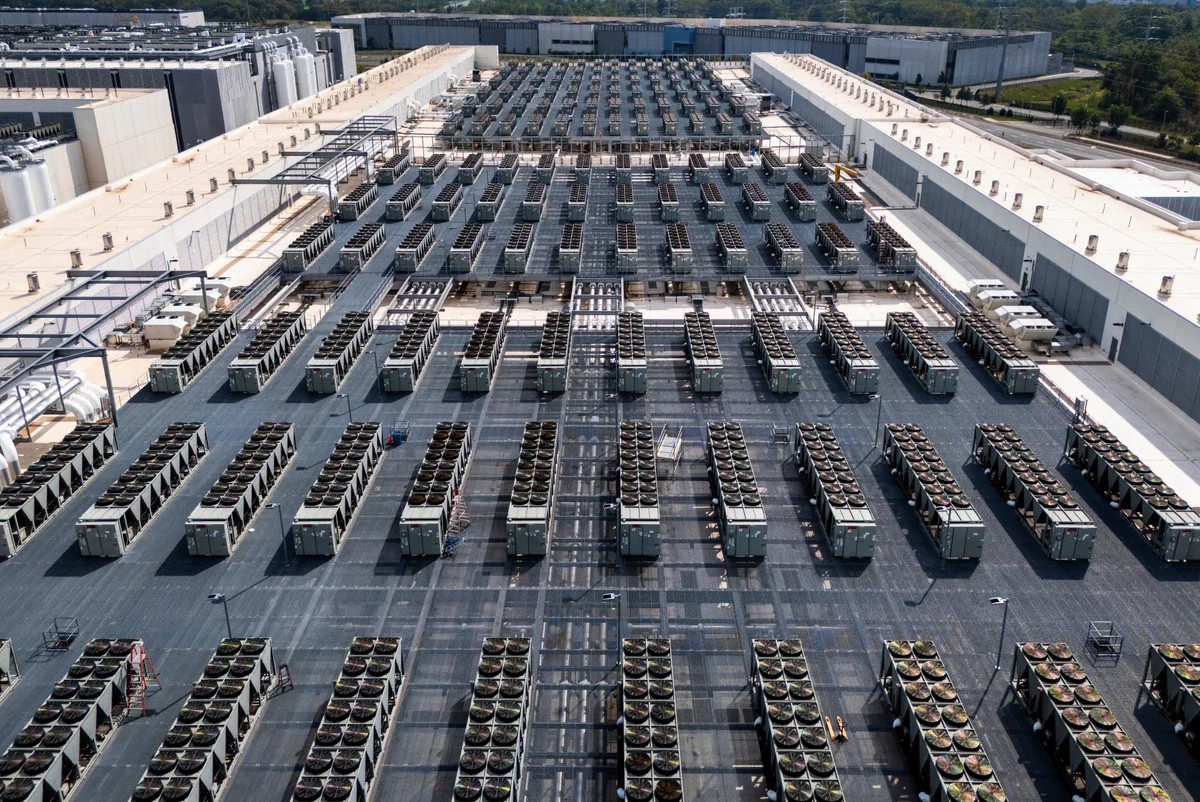
SINGAPORE – When it comes to the 2026 US elections, the congressional midterms draw most of the media attention. Will the Democrats take back the House? Can they get a majority in the Senate, too? For Asia, though, the outcome will not immediately affect the two issues that matter most to the region. The first is trade. Trump’s tariff policy will remain unchanged regardless of who wins. A Democratic Congress would have no more influence over Trump’s “America First” trade policy than the current one. Trump’s refusal to accept a trade deal with Canada on the eve of the midterms suggests he still believes his tariff policy is a winning strategy. “Tariffs are a deeply held belief for Trump which is unlikely to be changed by election results. Removing them would require a similar singular focus that Congress does not yet have,” said Deborah Elms, head of trade policy at the Hinrich Foundation. The second is the war with Iran. Neither Trump nor the Islamic Revolutionary Guard Corps will be impacted by who controls Congress, and the coming 120th Congress will shape the war’s trajectory no more than its predecessor has. This Tuesday’s elections will, however, significantly affect Asia’s AI growth trajectory, and the decisive contests are not the ones dominating headlines. They are the races for governor and state legislatures. Asian businesses and investors exposed to AI should pay far more attention to the governor races, because AI, and data centers in particular, has become one of the most critical issues in statehouse campaigns. “Data centers are going to exist,” said Kiki McLean, a campaign veteran familiar with governors’ races, said during an episode of the APAC Advisors 2026 Midterm Election series. “But local folks are going to have control of it and what they want when it comes in.” States and local governments decide if and where data centers get built, how they get power and water, and who pays for the grid. And those issues have arrived with grassroots political force across America. “We talk about October surprises in general elections … data centers have been it this year,” McLean said. “This is an issue that has jumped up on both sides. Local citizens are paying close attention to this.” The reason is plain: data centers’ effects are felt directly in local communities. Power bills are climbing, farmland is disappearing and voters affiliated with both parties are objecting. “You are talking about water. Pollution. Driving up energy costs, McLean said. “These are what the voters express. All this in the middle of an affordability crisis in the United States.” Politicians are flip-flopping with the shift in sentiment. In August, Texas Governor Greg Abbott, a Republican who had previously supported data center expansion, imposed a statewide moratorium on new projects as he sought a fourth term. Republicans and Democrats are bitterly divided on many, if not most, economic and social issues, but AI is aligning their positions. In Pennsylvania, Democratic Governor Josh Shapiro championed a US$20 billion Amazon data center investment in June 2025. After residents raised concerns about land use, noise, traffic and strain on the electric grid, the state changed course. Developers must now secure local municipal approval, sign community benefit agreements, and generate and pay for their own power, absorbing any resulting increase in energy costs. In California, Monterey Park became the first US city to permanently ban data centers. Asian businesses and investors should study these state campaigns, and what the brewing public backlash against AI means for them. Fewer data centers will almost certainly be built than once planned, a blow to any Asian economy counting on that demand for its exports. Community benefit agreements, which require data center developers to tie new projects to local job creation and shared revenue before approval, are now firmly on the table. Governments across the Asia-Pacific will likely feel compelled to follow suit. AI regulation will not end with data centers, the technology’s most visible physical manifestation. Voters will also demand that their representatives address the other two impacts of the Responsible AI trilemma: job losses and widening income inequality. To be sure, congressional campaigns and races deserve attention on this side of the Pacific. But for anyone involved in and dependent on AI’s continued rollout, the state races will have the outsized impact. As McLean said: “Data centers and AI became this year’s electoral perfect storm.” After the midterms, winning state governors nationwide will be mandated to mitigate AI’s impact. And AI’s political storm is likely headed next to Asia. Steven Okun is founder and CEO of APAC Advisors. He served in the Clinton administration and counts more than 25 years of experience across government and public affairs. Noemie Viterale is manager at APAC Advisors.
The midterm races Asia’s AI industry should be watching
Full Article
Original Source
Read the full article at Asiatimes →KhanList aggregates and links to publicly available news content. We do not host full articles from third-party sources. Always verify important information with original sources.