
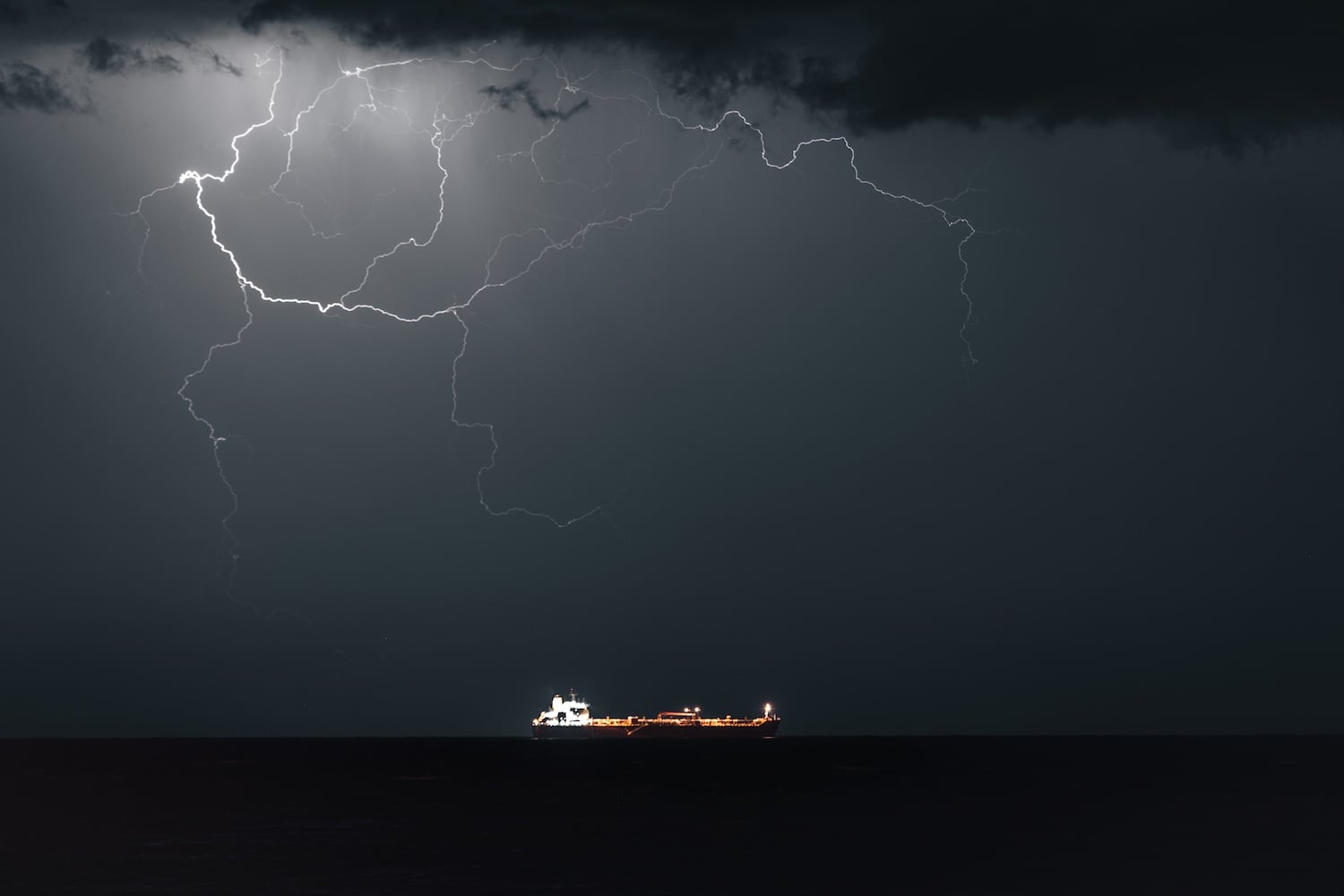
According to Steve Simon, Washington’s dreams of “transforming” the Middle East have failed in the past, are failing today, and, if we continue them, will keep failing. He’s right, but I don’t think that we will continue these efforts, and neither will anyone else. On the contrary, we are approaching the end of a century or more in which outside powers drove events in the region even when they couldn’t achieve their main goals. For the first time since 1919, what happens there will be primarily determined by the local actors themselves. The failed U.S.-Israeli war against Iran is a watershed event, but it is merely accelerating developments that have been apparent for some time. Increasingly, states in the Middle East are going to be on their own. The modern Middle East was heavily shaped by outside great powers. The victorious World War I allies carved new states out of the collapsing Ottoman Empire at the Paris Peace Conference in 1919, after making a lot of contradictory promises to various contenders during the war itself. Britain and France governed what is now Lebanon, Iraq, Israel, Syria, and Jordan for most of the interwar period, under mandates from the League of Nations, but the local inhabitants were increasingly restive even before World War II broke out and made it impossible for European powers to retain control. Saudi Arabia gained independence on its own, while Britain provided security for the smaller states in the Gulf. Active support from various outside powers—and especially the United States—was instrumental in Israel’s creation in 1948. Britain and the United States connived to topple the democratic government of Iran in 1953. And the Soviet decision to send arms to Egypt and Syria in the mid-1950s helped cause the 1956 Suez crisis and made the Middle East a central arena in the Cold War. According to Steve Simon, Washington’s dreams of “transforming” the Middle East have failed in the past, are failing today, and, if we continue them, will keep failing. He’s right, but I don’t think that we will continue these efforts, and neither will anyone else. On the contrary, we are approaching the end of a century or more in which outside powers drove events in the region even when they couldn’t achieve their main goals. For the first time since 1919, what happens there will be primarily determined by the local actors themselves. The failed U.S.-Israeli war against Iran is a watershed event, but it is merely accelerating developments that have been apparent for some time. Increasingly, states in the Middle East are going to be on their own. The modern Middle East was heavily shaped by outside great powers. The victorious World War I allies carved new states out of the collapsing Ottoman Empire at the Paris Peace Conference in 1919, after making a lot of contradictory promises to various contenders during the war itself. Britain and France governed what is now Lebanon, Iraq, Israel, Syria, and Jordan for most of the interwar period, under mandates from the League of Nations, but the local inhabitants were increasingly restive even before World War II broke out and made it impossible for European powers to retain control. Saudi Arabia gained independence on its own, while Britain provided security for the smaller states in the Gulf. Active support from various outside powers—and especially the United States—was instrumental in Israel’s creation in 1948. Britain and the United States connived to topple the democratic government of Iran in 1953. And the Soviet decision to send arms to Egypt and Syria in the mid-1950s helped cause the 1956 Suez crisis and made the Middle East a central arena in the Cold War. For the next 35 years, the United States and Soviet Union armed their respective clients, toppled (or tried to topple) regimes they perceived as hostile, and sometimes intervened directly, albeit in mostly limited ways and only for short periods. The United States and USSR also worked together to impose cease-fires to end the recurring wars between Israel and its neighbors, but joint efforts to fashion a broader regional peace were consistently sacrificed on the altar of great-power rivalry. The end of the Cold War didn’t end great-power meddling, but now it was the United States acting on its own. The first Bush administration organized the coalition that expelled Iraq from Kuwait in 1991, sponsored the Madrid Conference of 1991, took charge of (and mismanaged) the Oslo peace process, adopted a strategy of dual containment that helped pave the road to the Sept. 11 terrorist attacks, and then tried to transform the entire region by toppling Saddam Hussein in 2003. We all know how that misguided adventure turned out. U.S. President Donald Trump’s current war with Iran can be seen the last gasp of this hubristic endeavor, with Israeli Prime Minister Benjamin Netanyahu acting as cheerleader, a role he first assumed in 2002. (Regrettably, his forecasts back then were no better than his predictions in 2026). Like a flash of lightning, the war with Iran has illuminated the new strategic landscape. The failed U.S. interventions in Iraq and Libya (along with Russia’s inability to prevent the eventual toppling of Syrian leader Bashar al-Assad) reveals new limits to what outside military power can accomplish. Similarly, Iran’s ability to resist decades of U.S. pressure and acquire a large arsenal of missiles and drones, plus mastery of the nuclear fuel cycle, further underscore the declining efficacy of outside intervention. Saudi Arabia’s lavishly funded military couldn’t bomb its way to victory over the Houthis in Yemen, and Israel’s repeated and increasingly ferocious assaults against its various opponents did not prevent Hamas from mounting a major attack in October 2023 or fully eliminate either Hamas or Hezbollah. Even before the war with Iran, in short, the limits of military power (and especially when wielded by states outside the region) were becoming clear. Today, the combination of cheap but lethal drones and more sophisticated ballistic missiles has raised the cost of external military intervention to new heights. Not only did weeks of punishing air strikes fail to topple Iran’s regime, but the United States proved unable to protect its own bases in the region from Iranian retaliation. The damage to these facilities has made sustained military action in the region more difficult and expensive; for example, U.S. aircraft carriers cannot safely operate close to Iran, which reduces loiter times for attack aircraft and the payloads they can carry. Nor can the United States protect its local clients from being attacked, except by using lots of expensive interceptors (e.g. Patriot missiles) that are far more expensive than the missiles and drones they are shooting down and are in increasingly short supply. Nor are Patriots or systems like Israel’s Iron Dome impenetrable, especially when an adversary can fire lots of drones or missiles at once. The limits of airpower have been apparent for a long time (although that reality is often ignored by political leaders eager to “do something”), but these new technologies are also making ground invasions increasingly unattractive. As we have seen in Ukraine, assembling large ground units exposes them to deadly drone or missile strikes, which is why loose talk about the United States invading Iran is not to be taken seriously. Iran may be deeply divided, and its government may be unpopular, but the occupations of Iraq and Afghanistan should have taught Americans by now that trying to invade and control a country of 80 million people is a very bad idea. The bottom line is that the days when mighty great powers could intervene in the Middle East with near-impunity—as the United States did during Desert Storm in 1991—are behind us. A second trend—the declining importance of Middle East energy—will reinforce the first. That might seem like an odd statement at present, given the sharp rise in fuel prices caused by the war, but most of these price rises are due to limited refining capacity (a problem exacerbated by the Iran war and the war in Ukraine) and not the supply of crude oil itself. The relative importance of Middle East energy has been declining significantly since 1973, when a Saudi-led boycott sent prices soaring and led to long gas lines in the United States. Since then, the shale oil boom in the United States and broader global efforts to address climate change by reducing fossil fuel consumption have made Middle East oil less critical than it used to be. That is why Middle Eastern countries like Saudi Arabia and the United Arab Emirates are trying to diversify their own economies. They know that the days of oil and gas exports being able to pay all the bills are rapidly waning. Note: I am not saying that energy (and fertilizer) supplies from the Middle East will be irrelevant, only that they will be much less critical in the future than they have been in the past. In short, the need to intervene in the region to safeguard energy exports is declining while the cost of trying to do so is rising. Put these two trends together, and direct military involvement by outside powers is much less attractive. For the first time in more than a century, therefore, one can envision a Middle East whose fate is determined primarily by the peoples in the region and not by outsiders. Distant great powers will still have dealings with different Middle East states (such as selling arms, pursuing investments and trade arrangements, etc.) but local governments will have the initiative. What should we expect them to do? For starters, I’d expect a lot of good, old-fashioned balance-of-power politics, where ideologies and sectarian differences matter little and the need to keep the strongest powers in check will drive an ever-shifting array of regional coalitions. At the same time, such a pattern does not preclude renewed efforts to lower tensions between Iran, Saudi Arabia, the Gulf states, and others, and perhaps even to negotiate a broader security architecture for the region that doesn’t depend on great-power support. The United States will revert to its former role as an “offshore balancer,” reduce its military footprint there, and pursue more businesslike relations with everyone in the region instead of “special relationships” with a few. In other words, it will act more like China. And if outside powers are no longer willing or able to provide protection, then more Middle Eastern states will be tempted to acquire a nuclear deterrent and the risk of preventive wars to thwart such efforts is likely to grow, as well. One can also speculate on how these developments will affect the internal politics of some of these states. If Middle Eastern countries must rely primarily on their own resources and strategies for security and defense, they will have to get better at mobilizing real military power instead of just buying a lot of expensive toys from foreign defense contractors. But as King Farouk of Egypt or King Feisal II of Iraq could have told you, creating more potent military forces is risky in top-down societies ruled by privileged elites, because the guardians of their power may want more of a say in how things are run. For this reason, the emergence of a more autonomous Middle East could also usher in a new era of internal political turmoil. The bottom line: We may be approaching the end of foreign efforts to remake the Middle East, but don’t expect the region to become boring.
The Middle East Is Finally on Its Own
Full Article
Original Source
Read the full article at Foreignpolicy →KhanList aggregates and links to publicly available news content. We do not host full articles from third-party sources. Always verify important information with original sources.