
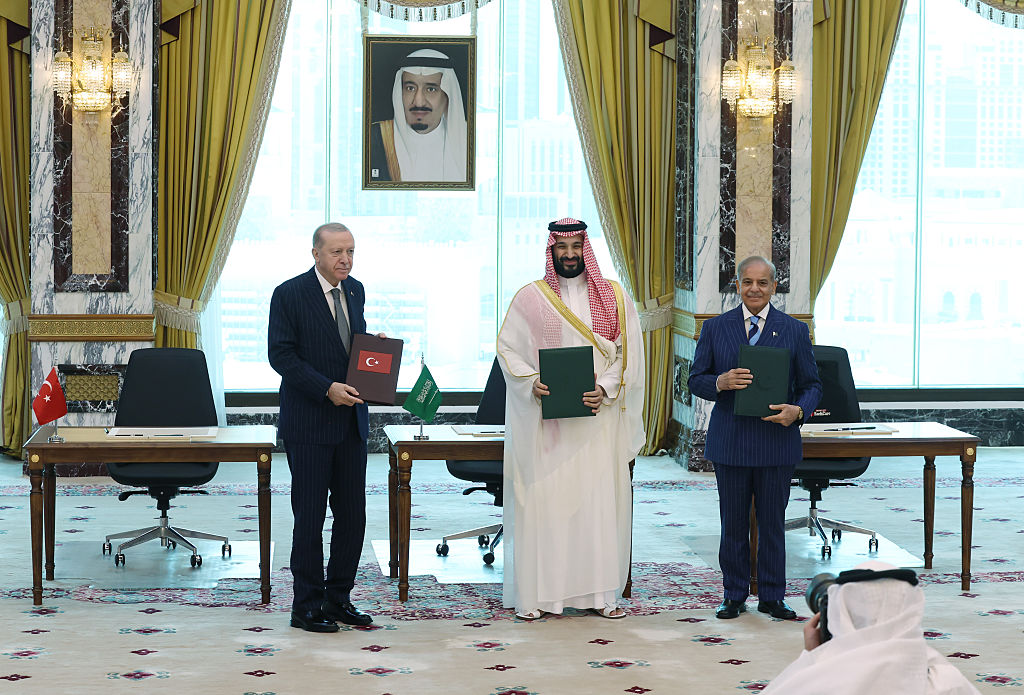
Your Sept. 19 editorial “The Saudis, the Houthis, and Israel” rightly argues that neither Pakistan nor Turkey will ride to Saudi Arabia’s rescue and that Riyadh’s best path forward lies in deeper cooperation with the U.S. and Israel. If ever there were a moment for the Mecca pact between Saudi Arabia, Turkey and Pakistan to prove its worth, it was the Houthi attack targeting Mecca, Islam’s holiest site and the pact’s namesake. Instead, Ankara and Islamabad offered little more than condemnation. The pact has only generated excuses for inaction. It promised that an armed attack on one member would be treated as an attack on all. Yet as Houthi attacks on Saudi Arabia intensified, Pakistan insisted that “more time is needed.” Turkey prioritized diplomacy while helping largely on “technical issues.” Saudi Arabia has yet to ask either country to join the fight. But even if it did, neither has much incentive to. Turkey maintains ties with Iran and has long provided a permissive environment for Iranian sanctions evasion and financing networks tied to groups such as Hezbollah and Hamas. Pakistan has even stronger reasons to stay out. It rejected a Saudi request to join the Yemen campaign in 2015, and its calculus has changed little since. Pakistan shares a volatile border with Iran, has sought to mediate with Tehran and has a large Shiite population that could become a source of domestic tension if Islamabad entered a direct conflict with Iran or one of its proxies. If these excuses hold in the pact’s first crisis, they will hold in the next. The Mecca pact is already failing its first test. Ahmad Sharawi is a senior research analyst at the Foundation for Defense of Democracies.
The Mecca Pact Has Become a Hollow Promise
Full Article
Original Source
Read the full article at Fdd →KhanList aggregates and links to publicly available news content. We do not host full articles from third-party sources. Always verify important information with original sources.