
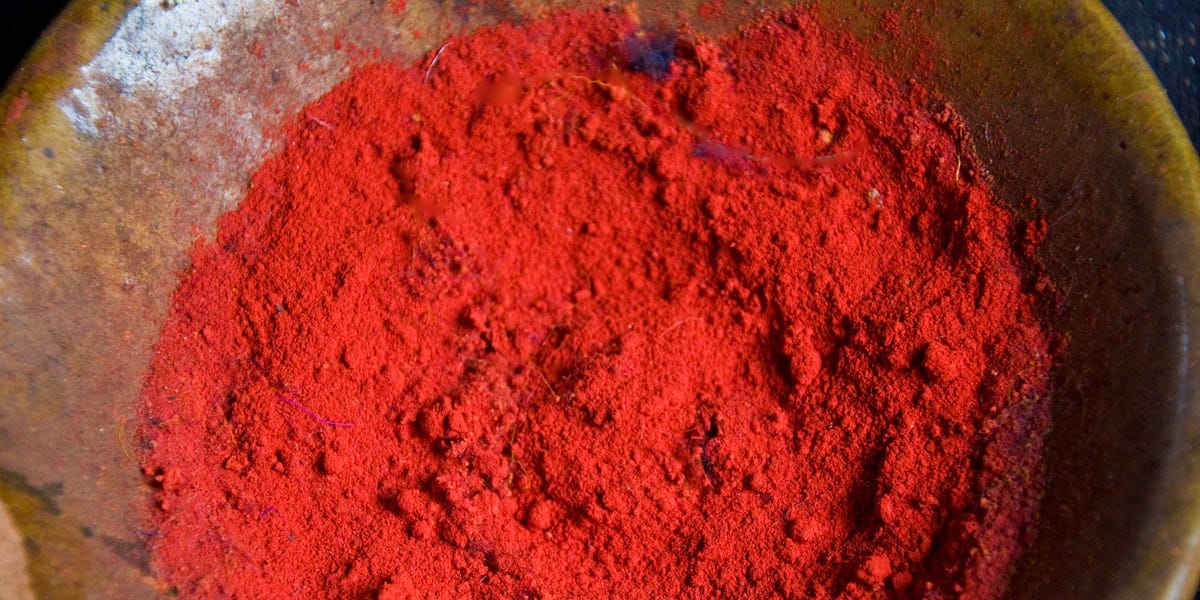
3 min readThe Maya people had a toxic relationship with the color red—quite literally, according to fresh research. The new analysis of the Yucatán Peninsula during the Maya era identified astronomically spiked levels of mercury, which might have contributed to the collapse of Maya culture.“The mercury data was crazy,” Matt Waters, an environmental sciences professor and paleolimnologist at Auburn University, said in a university statement about the unexpected discovery on the peninsula. “Off the charts. These mercury levels aren’t normal.”Matt Waters led a study published in Science Advances that explored sediment samples collected at two lakes—Lago Coba and Cenote Xcach—showing the intense spike in mercury (Hg) levels ranging from around 40 C.E. to 800 C.E.“We show that Classic Period Hg concentrations in sediment cores from two lakes on the Yucatán Peninsula exceeded modern sediment Hg toxicity thresholds by orders of magnitude for centuries during ancient Maya occupation,” the authors wrote, adding that the heightened pollution coincides with aquatic food collapse, “confirming that Hg toxicity was an additional environmental stressor for Classic Maya populations.”While Waters isn’t saying mercury caused the collapse of the Maya civilization, he also doesn’t want to ignore its impact. “It’s been confirmed that drought was an issue, deforestation was an issue, erosion was an issue, overpopulation was an issue, and feeding the population was probably an issue,” he said. “This study adds the impact of water quality. Let’s put that in the list. That’s what our study does. It establishes that list and moves it forward.”The study actually began as part of a National Science Foundation project focused on harmful algal blooms, but a then-graduate student and study co-author, Savanna Wooten, suggested also testing for heavy metals. Sediment coring from the lake bottoms pulled up mud from thousands of years ago that contained the intense mercury spikes during the Classic Maya Period, which were then followed by an abrupt decline.The powerfully high mercury concentration lasted for hundreds of years, and Waters believes the sudden change at the base level likely moved up the food web, impacting fish and other larger creatures. Not only would eating fish or drinking water have exposed humans to the toxic levels, but there may have even been fewer fish to catch. “They would have seen a strange color change in the water,” Waters told Live Science, “and a drop in its productivity, such as fish for protein.”Waters linked to a study he’d worked on with a team from the University of Florida in the late 1990s that found a gap in ostracod shells during a specific period from Coba, correlating the missing shell timing to the rise in mercury. Further investigation into the cores found that declines in biological markers occurred throughout. “The algae was killed,” he said. “The cyanobacteria, they tanked. Purple sulfur bacteria, vanished. The biological community completely changed.”The people “experienced this for decades and, in one case, for centuries.”The source of that mercury was cinnabar, they believe, a vibrant red mineral made up of 86 percent mercury that Maya culture viewed as a sacred pigment. “This was not like mercury raining down from the sky,” Waters said. “This was not a regional thing. It was concentrated.”Maya loved cinnabar, using the bright red in pottery, murals, temple walls, and burials. To keep up with demand, they heavily imported it, especially around Coba and Xcach. “It’s common knowledge that there was trade in obsidian, in jade, and beautiful stones, and weaponry,” Waters said. “I think this could start a conversation that cinnabar could have been a major trade commodity.”It may also show a highly toxic love affair that contributed to Maya struggles.Tim Newcomb is a journalist based in the Pacific Northwest. He covers stadiums, sneakers, gear, infrastructure, and more for a variety of publications, including Popular Mechanics. His favorite interviews have included sit-downs with Roger Federer in Switzerland, Kobe Bryant in Los Angeles, and Tinker Hatfield in Portland.
The Maya People Loved the Color Red. Scientists Say It May Have Helped Bring Them Down.
Full Article
Original Source
Read the full article at Popularmechanics →KhanList aggregates and links to publicly available news content. We do not host full articles from third-party sources. Always verify important information with original sources.