
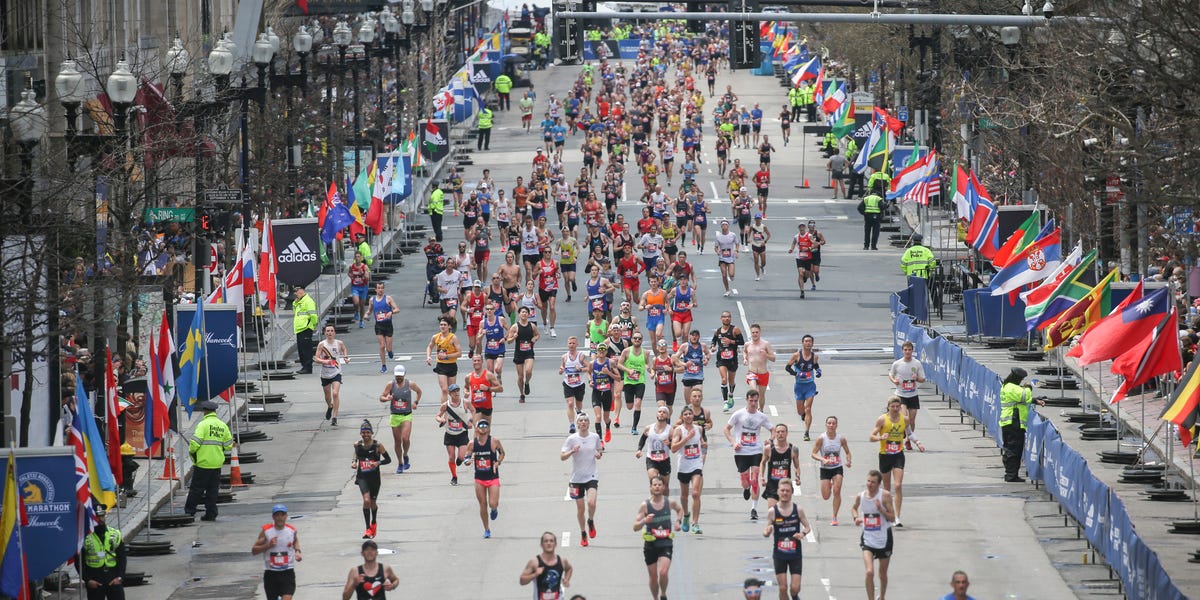
When it comes to marathon training, runners often chase more and more miles. Because more volume must equal faster times, right?Well, research on Boston Marathon participants suggests mileage isn’t the only—or maybe even the most important—factor in shaving time off your finish. You also have to consider the quality of those miles.To get the results, a team of sports medicine experts analyzed the training logs and finish times of 917 runners who completed the 2022 race, publishing their findings in Sports Medicine in September 2025.The research team examined a number of training variables (and their link to race finish times) in a group of experienced athletes: on average, 47 years old, with an average of nine years of training, with 16 marathons each under their belts, and logging about 40 miles per week. The researchers asked each runner to detail their training in the 12 months leading up to the race, then split the data into two windows: a base phase, from 12 to four months out from marathon day, and the final build, from four months out to race day.Overall, higher training frequencies and intensities over the entire year leading up to the race led to better performance outcomes compared to lower levels of training.But the training tweak that made the biggest difference in marathon finish times: Each extra quality session added per week shaved off 16 to 17 minutes, on average. That means adding one more interval session, tempo run, or similar workout per week in the year leading up to your marathon could lead to a major PR.What’s also interesting: In the last four months before race day, a one-day increase in cross-training sessions per week improved race times by six minutes. (The study didn’t look at types of cross-training, but researchers said they’d like to study that in the future.)The time spent running that led to the most improvement in marathon finish times, compared to training less per weekThe amount of time you can cut off your marathon finish for each additional quality session you add per weekThe amount of time you can cut off your marathon finish for each additional run you complete per weekThe amount of time you can cut off your marathon finish for each one-day increase in cross-training sessions per week in the 0-4 months ahead of race dayWhy Volume Still MattersVolume is still one of the most important aspects of performance, though. The fastest participants in this study ran more mileage, particularly in the base phase of training, and had higher training exposure (including quality sessions and cross-training).When comparing across individuals’ schedules in the 12 to four months before the race, running more than 10 hours per week predicted significantly better performance; every additional run per week was worth about three to four minutes off someone’s finish time; and adding just one kilometer per week of running was associated with about 30- to 40-second faster times.Other research agrees with the importance of volume: A 2021 study published in The Journal of Strength & Conditioning Research determined total distance clocked played a significant role in long-distance running performance, while another study, published in Sports Medicine in 2024, found that the fastest marathoners clocked 62 or more miles per week, compared to the average 28 miles per week. Both studies point out the importance of easy miles in building volume.“Higher volume leads to a higher aerobic base, and that’s the foundation from which we build everything,” says Alissa Kolarik, an RRCA-certified coach for Lift Run Perform. That base-building phase builds the muscular strength you need to go the distance, and strengthens your heart and lungs so they can handle the intensity of race-specific training.Most marathon training plans tend to progressively build volume (especially through the weekly long run) prior to race day, before greatly reducing training volume in the final few weeks.While overall higher training volumes (when comparing across individuals) in the four months prerace were associated with improved performance, lowering that training volume relative to the previous eight months (within one individual’s training history) was associated with the best outcomes.DOWNLOAD YOUR MARATHON TRAINING PLANWhen Dropping Mileage Pays Off in PerformanceIn the final four months before the race, runners who decreased their total number of weekly runs compared to what they were logging in their base phase ran an average of three minutes faster than those who maintained or increased the frequency of their sessions. Reducing training frequency in the 16 weeks before race day actually contributed to a faster marathon as well.These findings demonstrate just how variable marathon training can be. “Oftentimes, people just think ‘oh, if I’m going to run a marathon, I’m going to run 60 miles every week,” says study author Alexandra DeJong Lempke, an assistant professor of physical medicine and rehabilitation at the Virginia Commonwealth University School of Medicine. “But that doesn’t really account for all the other nuances.”“We were a little bit surprised that the highest training volume was really happening in the 12-to-four-month block and that was associated with better times,” says Lempke. “Volume isn’t always the answer.”“If you build a really big base during that 12 to four months, your body gets really habituated to the demands of the training,” Lempke explains. “Then having that relative reduction in the four to zero months leading up to the race is what’s going to be key so that you’re not just completely running yourself ragged, but giving your body time to adapt and then taper into the race.”The “less is more” mentality can be a game-changer for some athletes, says Kolarik. “If your times are not going the way you want them to go and you’re running high mileage, you really should look at pulling back,” she says. “Pulling back can be the thing that pushes you forward—when you’re able to hit every single session on fresher legs, that’s going to do a lot more for you.”What to Do to Personalize Your Marathon Training ApproachThere’s no one-size-fits-all approach to training; while doing X might work for one runner, doing Y instead can better serve another runner. If someone wants to lower their finish time, “the best thing they can do is first look at what they’ve been doing and what they can change,” says Kolarik.While this study isn’t a blueprint for athletes, it can encourage runners to take “a more in-depth look at what their current training program already looks like and think about what different qualities of those run sessions they can adjust,” says Lempke.For example, if you’ve been running five days a week, adding an extra day may help you level up; if you’ve only been doing a single speed workout per week, a second quality session could help improve your times.To get faster at the marathon distance, you’re playing the long game. Zoom out and look at your training year as a whole. Build big first, then refine. And if shaving three minutes—or more—off your marathon PR sounds appealing, then you might get there by running a little less but a little more intensely as you approach race day.Ashley Mateo is a writer, editor, and UESCA- and RRCA-certified running coach who has contributed to Runner’s World, Bicycling, Women's Health, Health, Shape, Self, and more. She’ll go anywhere in the world once—even if it’s just for a good story. Also into: good pizza, good beer, and good photos.
The Marathon Training Change Linked to a 16-Minute Faster Finish
Full Article
Original Source
Read the full article at Runnersworld →KhanList aggregates and links to publicly available news content. We do not host full articles from third-party sources. Always verify important information with original sources.