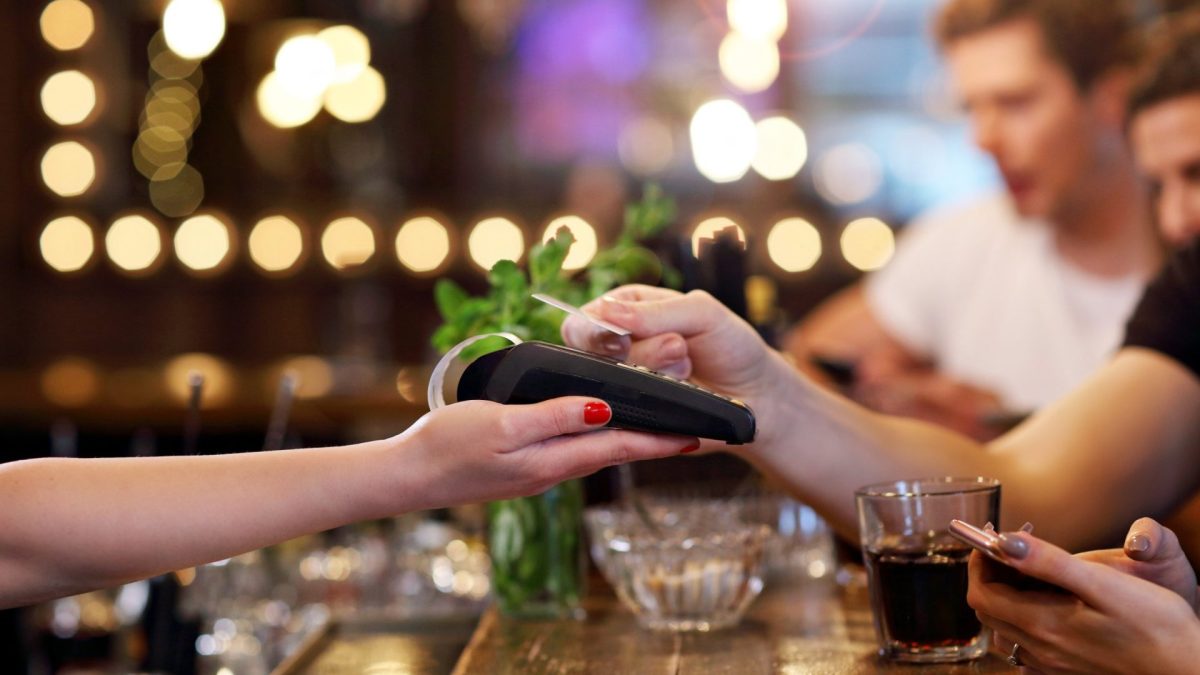
There may not be anywhere in the world that the well-travelled Brit feels more like an innocent abroad than in a coffee shop on Sunset Boulevard in LA. It wasn’t the dizzying choice between a lavender breeze latte and a Tahitian vanilla latte, or the option of a 20-hour cold brew coffee. All I wanted, in fact, was a muffin. The sales assistant put the muffin in a bag, handed it over with practised indifference, and then turned round the digital payment screen to face me. I was presented with three options. I could leave a tip of 18 per cent, 25 per cent or 30 per cent. What? Is this a joke? You want me to leave a gratuity for your outstanding service in putting a muffin in a paper bag? I haven’t even eaten it yet. This was the moment I realised that tipping culture in the US had, to borrow a famous Hollywood term, truly jumped the shark. Yes, there is also a (much smaller) box which indicates “No Tip”, but who’s going to turn their penny-pinching nature into a public event? Such is the tyranny of tipping in America, where the entire economy of the labour market has been offloaded on to the personal guilt of the customer. It is the opposite of a social contract. We do not pay proper living wages to our staff, so we have left it to you to make up the difference. For example, restaurant staff in most US states can be paid, perfectly legally, as little as $2.13 an hour, with the expectation that the generosity of customers brings their pay up to what we in Britain might consider a living wage. This means that a tip does not represent a bonus for good service – it’s a requirement on the part of the consumer to ensure that workers earn enough to feed their own families. It is an insidious and opaque system that allows businesses to get away with the hideous underpaying of their staff. And, like jazz, Coca-Cola, Halloween and McDonald’s, be sure that it’s coming here. The standard service charge at a British restaurant has, traditionally, been 10 per cent. And no one has ever minded paying that, or even more to reward service above and beyond. Now, many establishments routinely add 15 per cent to the bill (which they say is “discretionary”, but we all know isn’t, really) and then, when the credit card slip arrives, there sometimes is a space to add a further tip which, unless you’re paying attention, might mean you’ve paid twice for service. At least there is now a legal requirement in the UK for restaurants to share all of the money collected in tips to workers, and to do it in a “fair and transparent” manner. But “tiplflation” has definitely been exported here, and I don’t quite understand the logic behind it. Post-Covid, and for all sorts of understandable reasons, prices at restauarants have risen exponentially. So, even if the service charge was pegged at 10 per cent of the total bill, the pool of money raised for tips would grow accordingly. Of course, I want to feel that anyone who serves me in a restaurant, or cuts my hair, or drives me around, or grooms my dog is being rewarded properly for their labours. And I certainly don’t want to be considered a skinflint. But when tipping at American levels (30 per cent, for heaven’s sake!) becomes an obligation, it loses its impact. To the benefactor, it should be a conscious act of appreciation. And to the recipient, it should be a pleasant surprise that makes them feel good. But there is a sense that this pernicious aspect of modern American culture is making its way across the Atlantic. Some coffee shops in London now swivel a payment screen towards the customer with the expectation that they will add a tip. For what exactly? Asking whether you want chocolate on your cappuccino? We must resist the normalisation of digital tip prompts and, with it, the creeping assumption that every interaction deserves extra recognition. Generosity is a wonderful thing. It makes a person feel good. But I don’t think we should be coerced, even bullied, into it. That muffin was delicious, but I hated myself for paying 18 per cent extra for it.
The manipulative American habit we’re quietly importing
Full Article
Original Source
Read the full article at Inews →KhanList aggregates and links to publicly available news content. We do not host full articles from third-party sources. Always verify important information with original sources.