
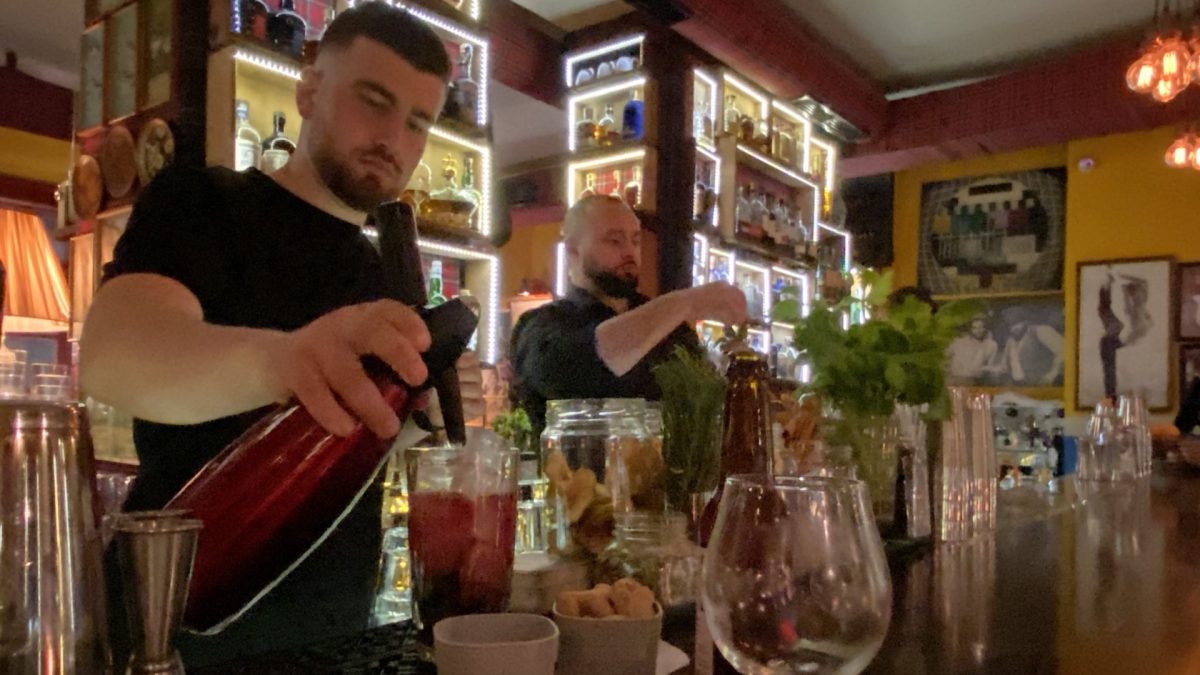
My first impression of Albania’s capital? Smoking while you drink, or eat, is more than acceptable in the city. When I shooed away an ashtray in a pizzeria, the waiter looked at me as though I had sprouted a second head. It felt like a hangover from another era in an otherwise fast-developing city. For around 50 years, until the early 1990s, Albania was closed off to the world. Decades later, Tirana is buzzing and Albania has become a popular tourist destination. The country saw visitor numbers grow by 85 per cent between 2019 and 2025, and its capital features on many itineraries. It’s still affordble, however. For instance, restaurant prices in Tirana are around 49 per cent lower than in London, according to cost-of-living database Numbeo. For now, Tirana retains plenty of character. The city’s parks, for example, are home to repurposed bunkers such as Rruga Abdi Toptani’s Bunk’Art 2 (filled with art installations highlighting past political persecution) and still serve as meeting places for huddles of older locals who gather around concrete chess tables. But I visited to enjoy one of its more recent attractions: a new generation of cocktail bars run by master mixologists with a passion for innovation. Tirana’s compact centre makes it easy to plan an evening of bar hopping, although some of its establishments take a bit of work to find. One night, I spent 10 minutes standing outside a nondescript building on Bajram Curri Blvd (one of Tirana’s main boulevards) wondering why Google Maps suggested my destination, Spy Speakeasy, was behind the metal door at the bottom of the stairs, despite the sign indicating that that was the entrance to a camera shop. I took a punt and knocked on the heavy door before a slot slid open to reveal a pair of eyes. I was asked the reason for my visit and replied (after some prompting) that I was there to fix a camera. This was the key phrase for the thick door to be slid open. Inside, candles stuffed into antique holders cast a warm glow over the bar, behind which was an apothecary-like display of bottles. My bartender at this Tirana speakeasy, which has its own “laboratory”, was Henry, whose cocktails cost around L700 (£6.50). A dapper dresser with a supersized beard, Henry was a skilled mixologist with a passion for local ingredients. On paper, my pisco, salted pineapple and honey-based Blotto didn’t really appeal, but its smoothness converted me. “That’s down to the whey,” explained Henry, who sources the ingredients from local farms. The pineapple is lacto-fermented in the lab, and the honey comes from North Albania. My next tipple, the Jake Walk, made with roasted apricots and vinegar, was another unexpected delight. From Spy Speakeasy, it was a five-minute walk to Nouvelle Vague, the first Albanian bar to appear on the World’s 50 Best Bars list (No 28, listed in 2025). This (ashtray-free) colourful bar felt more like a taqueria, with brightly painted walls and eclectic décor, including artfully arranged vinyl records. Its bartenders shared Henry’s passion for local ingredients, including raki, the fortified wine beloved by older Albanians but which has fallen out of favour with younger generations. “Working with raki can be hard because it’s got an alcohol by volume (ABV) of around 45 per cent,” said head bartender Mariol Djata. He admitted that this high ABV calls for the careful selection of mixers and other ingredients – ones which won’t mask raki’s flavour, but highlight its nuances. Mariol introduces drinkers to traditional spirits by adding curiosity-piquing ingredients. Take the Black Sabah, made with Turkish coffee, toasted corn, honey, raki and rum. “Sabah means ‘morning’ in Turkish,” explained Mariol. “Our language includes several Turkish words still used by older Albanians and we called it Black Sabah because there was a time when Albanians – like my grandparents – started their day with Turkish coffee and a raki shot.” Nouvelle Vague was the first Albanian bar to appear on the World’s 50 Best Bars list (Photo: Nouvelle Vague) In addition to inroducing an unexpected smoothness, the corn and honey enhanced the coffee’s chocolate notes. Mariol says that drinks like this are a great way to introduce people to raki, although he admits it’s a work in progress. Take the Nou Whey cocktail, made with hazelnut milk, tonka bean, elderflower and pear raki. Ingredients such as elderflower and tonka are often Mariol’s “in” when it comes to customers unfamiliar with acquired tastes, such as raki. They suggest more palatable flavour profiles. “Young people are still afraid raki of which is why we listed that as the ingredient,” he said. Other drinks offer a nod to what Albanians ate and drank while living under communism. “Poorer Albanians existed on bread and mountain tea,” said Mariol. Several of his concoctions contain fermented corn syrup, a cheap communist-era addition. My favourite was the gin-based English Climber (£8.31), made with mountain tea, which Albanians traditionally prepared at home using wild herbs. “Every Albanian household’s mountain tea is different,” said Mariol. He was recently invited to India for guest shifts at one of Goa’s best bars and thinks shared knowledge is key to the success of Tirana’s cocktail scene. Nouvelle Vague also invites mixologists from other countries to work guest shifts. Nearby Radio Bar is another (albeit much busier) bar changing Albanians’ perception of cocktails. Crammed full of knick-knacks and mismatched furniture, it offers an introduction to lesser-known flavours, whether that’s through the Algroni, a rosemary-infused Negroni, the Balkan Collins, which uses local blueberry jam for a tart twist on the Tom Collins, or the Fig Sour, made with Albanian whisky and fig syrup. Radio Bar, with its eye-catching decor, is popular among younger generations of locals (Photo: Radio Bar) The bar’s popularity is a sign of Albania’s growing cocktail bar scene, typically enjoyed by 20-something locals and tourists while older generations stick with the city’s longer-standing cafes and bars. The final proof that Tirana’s bar scene is one to watch came at my hotel, the Tirana Marriott. Heading downstairs for a nightcap, I was expecting the standard identkit hotel drinks list, but the Nomad cocktail, made with rose raki and mandarin, is outstanding. So, it turns out, is the Normandy Nocturne (£6.50), a mix of apple brandy, chocolate bitters and smoked coffee. I planned to attempt my own version back home. Perhaps, I thought, I’ll do as Mariol’s grandparents did and have one for breakfast. How to get there The writer was a guest of Tirana Marriott. Ryanair flights from the UK (Manchester, London, Liverpool and Birmingham) to Tirana start from £15.99, one way. Where to stay Doubles at the Tirana Marriott start from £140, B&B More information Demonstrations have been held in central Tirana in recent months. See the UK’s Foreign, Commonwealth and Development Office advice page for Albania for the latest updates. visit-tirana.com
The low-cost Balkan city break with some of the world’s best cocktails, for £6.50
Full Article
Original Source
Read the full article at Inews →KhanList aggregates and links to publicly available news content. We do not host full articles from third-party sources. Always verify important information with original sources.