
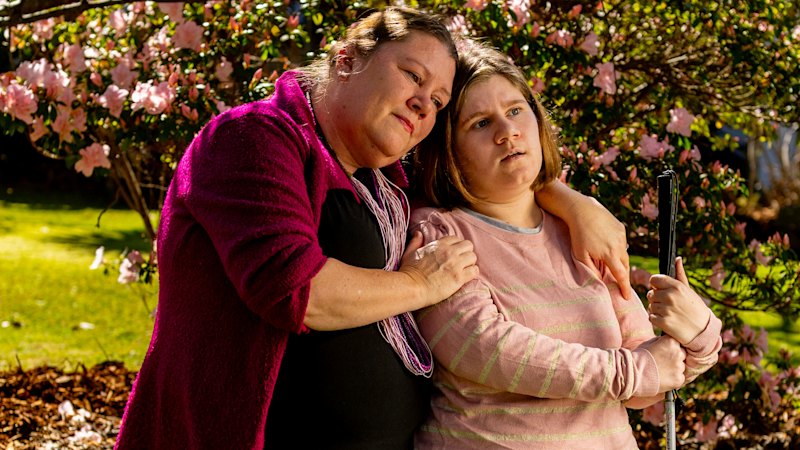
September 3, 2026 — 5:00amPsychiatrists and mental health advocates have accused the Minns government of hiding the true extent of staff and resource shortages affecting vulnerable patients in a long-delayed report that fails to identify the worst-affected areas.The state government quietly published its mental health gap analysis report on the NSW Health website on Friday afternoon, which they had promised would show which of the state’s Local Health Districts (LHDs) were underresourced so funding could be allocated appropriately.Amber Curry has found it challenging to access both disability and mental health support.Sam MooyThe report de-identified the LHDs and did not report their levels of unmet demand. They were instead benchmarked against the state average, rather than a target gold standard.“It’s basically created to make NSW look good,” University of Queensland professor of psychiatry Steve Kisely said. “I very much doubt it looks like that on the ground.”He said there would always be places above and below average. “What people want to know is: is the system working for them? Not whether the system is working as poorly as somewhere else.”The report said LHDs were de-identified “to ensure there is no perception that any area provides poor services compared to others”, and to enable publication without further Commonwealth approvals.BEING Mental Health Consumers chief executive Giancarlo de Vera said the report had not provided sufficient clarity on community need.“We know there are massive gaps,” de Vera said. “We need to know where they are, who’s affected and how much it will cost to fix, so the problem doesn’t get bigger.“District-level data should be published transparently and regularly for every region in Australia so we can find local solutions to local problems.”The report was published ahead of this Friday’s health ministers’ meeting between state and federal leaders, and a month before NDIS changes come into effect on October 1, when services such as psychosocial supports are expected to be cut or reduced for many people without state-based alternatives in place.It showed NSW had the second-highest level of unmet demand for psychosocial support among all states and territories. Psychosocial supports help people with mental health challenges function in society and address areas such as housing, employment and social supports.For Amber Curry, who lives with schizophrenia, accessing public support has been coloured by understaffing and a lack of resourcing in North Sydney, with private clinics ill equipped to deal with her severe symptoms.The Castle Cove resident estimated she has seen at least 20 public psychiatrists in the past five years.“There’s such a lack of continuity of care, Amber’s constantly having to repeat her symptoms and relive her story,” her mother, Sharon Grocott, said.A separate state government-commissioned independent report found 13 per cent of people who need psychosocial support could access it in Curry’s North Sydney LHD – below the 23 per cent statewide average. When Curry’s psychiatrist eventually recommended clozapine, a “last hope” medication, she needed to be hospitalised to trial it, and the family was left waiting six months for a bed. During this time, Curry was unmedicated, causing her symptoms to escalate.“The longer you leave psychosis, the harder it is to get back,” Grocott said of that period of acute illness, when most of the family were up with Curry at all hours of the night as she hallucinated snakes and intruders trying to stab her. “They don’t measure quality of life.”Amber Curry is facing a reduction to her psychosocial support package.Sam MooyCurry is legally blind and has difficulty walking, conditions her family believe were caused by the litany of anti-psychotics she trialled. Weekly art classes previously funded by the NDIS have become one of her only links to the outside world, and a key therapeutic tool.“Art class is a helpful break from [the voices],” Curry said. “It helps with stigma, with thinking ‘no one’s got what I have’.”According to the report, almost no mental health service in any Australian state or territory met the demand for services estimated by the federal government’s National Mental Health Service Planning Framework, which is under review.NSW was above the national average for hospital care but people with severe symptoms were more likely to have their needs met than those with moderate presentation.De Vera said community-based support could help save the government money by preventing symptoms from escalating. “We need all governments to recognise the value of social supports in preventing crisis because it saves lives.”NSW Minister for Mental Health Rose Jackson called the report an important first step, acknowledging concerns about its limitations and the need for greater investment.Jackson said the analysis was being used to guide funding decisions, including $3.3 billion for largely community-based mental health services, in the latest state budget.“This work is certainly not over – we are continuing to consult key stakeholders and local health districts to address findings and improve the analysis into the future,” she said in a statement.Start the day with a summary of the day’s most important and interesting stories, analysis and insights. Sign up for our Morning Edition newsletter.From our partners
The long-awaited report that left out the key detail patients were promised
Full Article
Original Source
Read the full article at Smh →KhanList aggregates and links to publicly available news content. We do not host full articles from third-party sources. Always verify important information with original sources.