
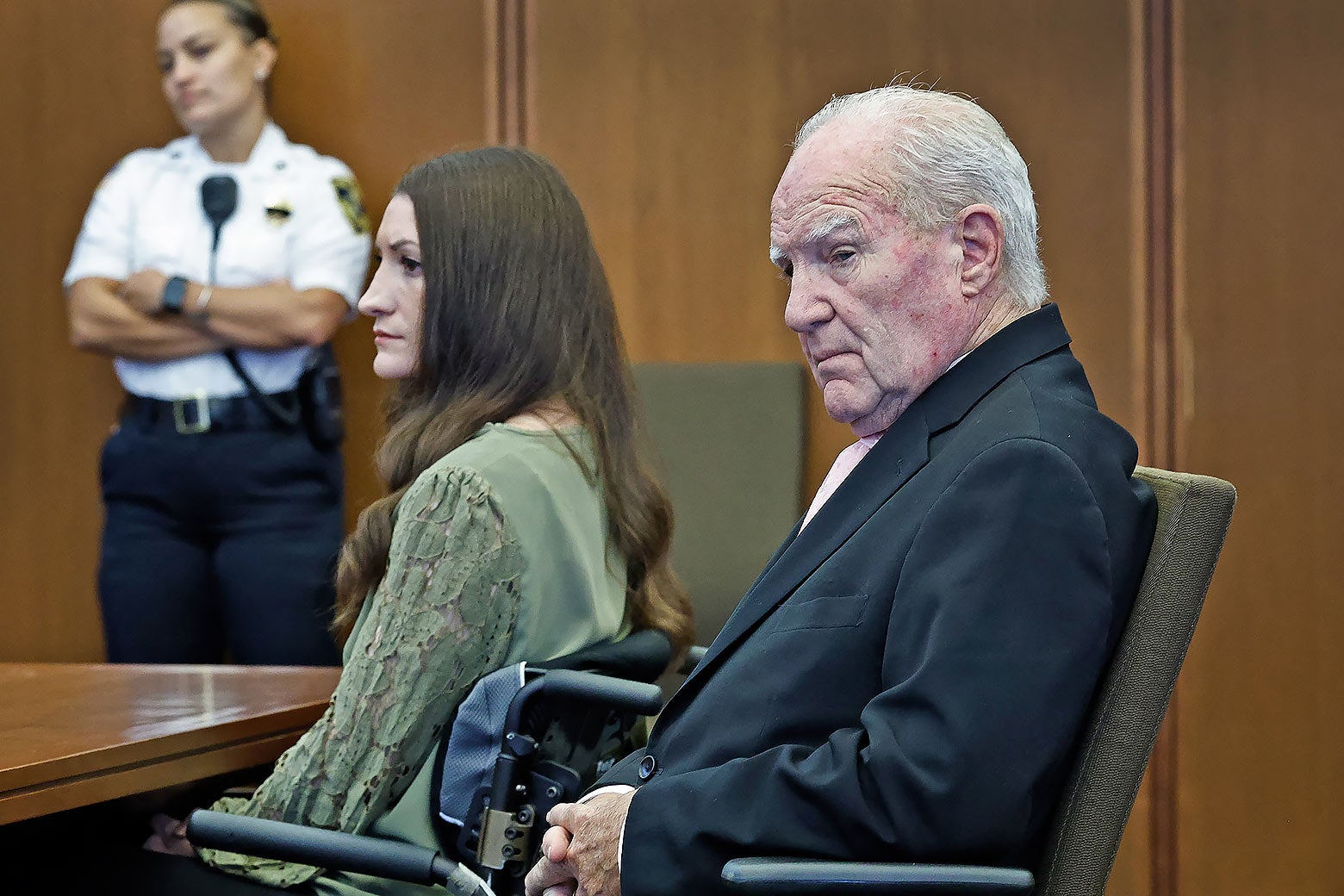
Jurisprudence After almost 40 hours of deliberations, the jury was unable to come to a unanimous decision—due to one holdout. By Enter your email to receive alerts for this author. Sign in or create an account to better manage your email preferences. Unsubscribe from email alerts Are you sure you want to unsubscribe from email alerts for Shirin Ali? Sept 04, 20265:09 PM Greg Derr/Pool/AFP via Getty Images Sign up for the Slatest to get the most insightful analysis, criticism, and advice out there, delivered to your inbox daily. The case of Lindsay Clancy has officially ended in a mistrial. The high profile murder case has consumed national media—for better and for worse— for weeks now, as a jury considered whether the Massachusetts mother intentionally took the lives of her three children or if her crime (and punishment) could be mitigated by reason of insanity. After the jury spent nearly 40 hours deliberating, the judge declared a mistrial on Friday afternoon. That means this case is far from over, with plenty of options—and questions— remaining about Clancy’s fate—and if and how the commonwealth of Massachusetts will try her again. For some broader context: Clancy’s case was exceptionally rare, as she pleaded guilty to strangling her three children back in 2023, but argued that she should not be held criminally liable because she was suffering from postpartum psychosis at the time. The prosecution argued she was able to parse right from wrong and preplanned to commit the atrocities at the Clancy family home. The jury, made up of nine women and three men, spent six days deliberating the case and twice sent notes to the judge indicating they could not reach a unanimous verdict. Clancy’s defense attorney suggested one sole juror admitted they felt there was reasonable doubt concerning her guilt, but refused to join the 11 jurors who were ready to find Clancy not guilty, per her insanity defense. On Friday, as Judge William Sullivan was announcing a mistrial, Kevin Reddington, Clancy’s defense attorney, asked to appeal his decision with the Massachusetts Supreme Judicial Court. Sullivan obliged, allowing Reddington one hour to file his appeal, but it ultimately failed with the state supreme court quickly holding a hearing and denying the application for an emergency stay. To unpack the other complicated details of this case’s non-ending, I spoke with Effie Blassberger, trial attorney at Clayman Rosenberg Kirshner & Linder who focuses on MeToo litigation, alongside white collar criminal defense. Here’s our conversation, lightly edited and condensed for clarity: Shirin Ali: The jury’s landing point in this case was described by Clancy’s attorney as an “intractable position.” What does that mean, specifically within the context of reasonable doubt? Effie Blassberger: It’s basically saying that one juror has this fixed view and it’s not moving. The judge sent the jury back to deliberate several times and the idea behind juror deliberations is you’re supposed to discuss the evidence with one another with candor, to openly listen. But it sounds like there was one juror whose position is intractable, that they have this fixed view that isn’t changing, no matter how much more deliberations continue. When it comes to reasonable doubt, if a juror actually believes there’s reasonable doubt, that’s supposed to work in Lindsey’s favor. That’s the whole point of the standard. Reasonable doubt isn’t something you just note and move past, it’s supposed to end the jury’s deliberations in the defendant’s favor. Reddington suggested that the holdout juror did acknowledge doubt, but still wanted to convict anyway. That’s his whole argument, that this one juror wasn’t following the law as instructed and he wanted to have him removed. But that being said, you have to keep in mind that we are getting this information secondhand, it’s a juror note that’s being interpreted and characterized by Reddington. This is not a note from the holdout juror. It’s coming from the point of view of jurors who are frustrated with this lone juror who is not agreeing with them and their characterization of this juror. How unusual is it for there to be one holdout juror that ends up overtaking a jury’s decision making like this? I think it’s less unusual than people think. Hung jurors do happen across criminal trials, obviously they are more rare and infrequent. However, when a jury hangs, it’s usually in this exact sort of situation where it’s not an even split, it’s one person who won’t move. It is also common and happens throughout every jury trial that jurors send notes. That’s how they communicate with the judge and the lawyers. Some of those notes might ask that they see certain evidence again, they might want to see certain transcripts, they might need the judge to instruct them on the law. Sometimes through questions that jurors are asking, both the judge and the lawyers might gain some insights into what the jurors are thinking in a particular case, and it certainly seems that that’s what happened here. My understanding is that Clancy’s attorney Kevin Reddington has, through these notes, come to his own assessment that, except for this holdout juror, there’s an 11 to one split leaning towards not guilty by reason of lack of criminal responsibility. We know Clancy’s attorney asked the judge to have this one holdout juror thrown out, but the judge said no. What considerations do judges make in these types of situations? It’s certainly rare that somebody’s trying to remove one juror at this stage of the case and it’s important why he’s trying to do that. The only way to do it is by saying: Look, this juror is not following his oath. He’s not able to follow the law. That’s my understanding that was gleaned from one of the juror notes. However, simply because the juror is holding out and not agreeing with other jurors, that’s not a basis to remove a holdout juror. It’s a very delicate balance here because this whole system works by respecting the integrity of the deliberations and the process. If this one juror just had strong convictions that happen to be different from everyone else, the law allows that and it’s not for a judge or anyone else to intervene after the jury has been instructed to try to come to a consensus. The judge’s only role here is to make sure that the jurors are following the law, and unless he had reason to believe that this juror was not following and applying the law, he was not going to intervene. If it was so clear cut that the juror was actually saying I have reasonable doubt, but I want to convict, then I think the judge’s decision about whether there was good cause to remove the juror would have been much more straightforward. But that’s clearly not what happened here. I don’t think it was as simple as Reddington, perhaps, is characterizing the note, or as the media is characterizing the note. Remember, Reddington seemed to think that, but for this lone juror, the verdict would have been in his client’s favor. He went down the only avenue that was available to him after he made his motion to appeal to the judge, and that motion was denied. My understanding is that it had a very low chance of success, but as a defense attorney you have to do everything that you can for your client and to exhaust every possible avenue, and he did that. Reddington’s appeal failed and Judge Sullivan officially declared a mistrial. What might the prosecution do next? There are three options. They can retry the case with a brand new jury. Or, they could negotiate some sort of plea deal with Clancy. My understanding is that there might be limitations on what pleas are available based on the counts that are in this case. The last option would be to not pursue this case further. My understanding is that the district attorney’s office hasn’t said anything publicly yet about how they intend to pursue. My sense is, given how much public attention that this case has gotten, they are going to retry her. It’s hard to envision that the prosecutors learned anything differently about this trial. Presumably these were the choices that they had before, they could have tried her or offered a plea deal, and I don’t think that the trial produced any new information that the prosecution learned that changed their view of this case. They believe that this was intentional and premeditated, and I think they’re going to stand by those beliefs. I don’t think the public attention is going to sway the prosecution, but finding a new jury who is impartial is going to be really challenging. Because this case has received so much media attention, I think in the future attorneys would try to screen this out during jury selection. You can ask questions to try to screen this out, and it’s worth pointing out that this is not the first time that there are cases that have received so much media attention. Those cases do get tried, but it’s certainly challenging. The district attorney presumably makes the final decision to retry Clancy. He’ll likely consult with others in his office, but ultimately it’s his decision to make about whether to retry the case. And he would try the same exact charges, but have a new jury. What happens to Lindsay Clancy now? She has been denied bail, so she’s been held in custody since 2023 at the Tewksbury State Hospital. Now that a mistrial has been declared, that does not equate to an acquittal. Nothing changes at least immediately in terms of where she stands, she’ll continue staying at Tewksbury State Hospital. Her lawyer might try to have her bail reconsidered, but the fact that there’s been a mistrial doesn’t really change Clancy’s circumstances. Crime Law Motherhood
The Lindsay Clancy Case Has Ended In a Mistrial. What Happens Now?
Full Article
Original Source
Read the full article at Slate →KhanList aggregates and links to publicly available news content. We do not host full articles from third-party sources. Always verify important information with original sources.