
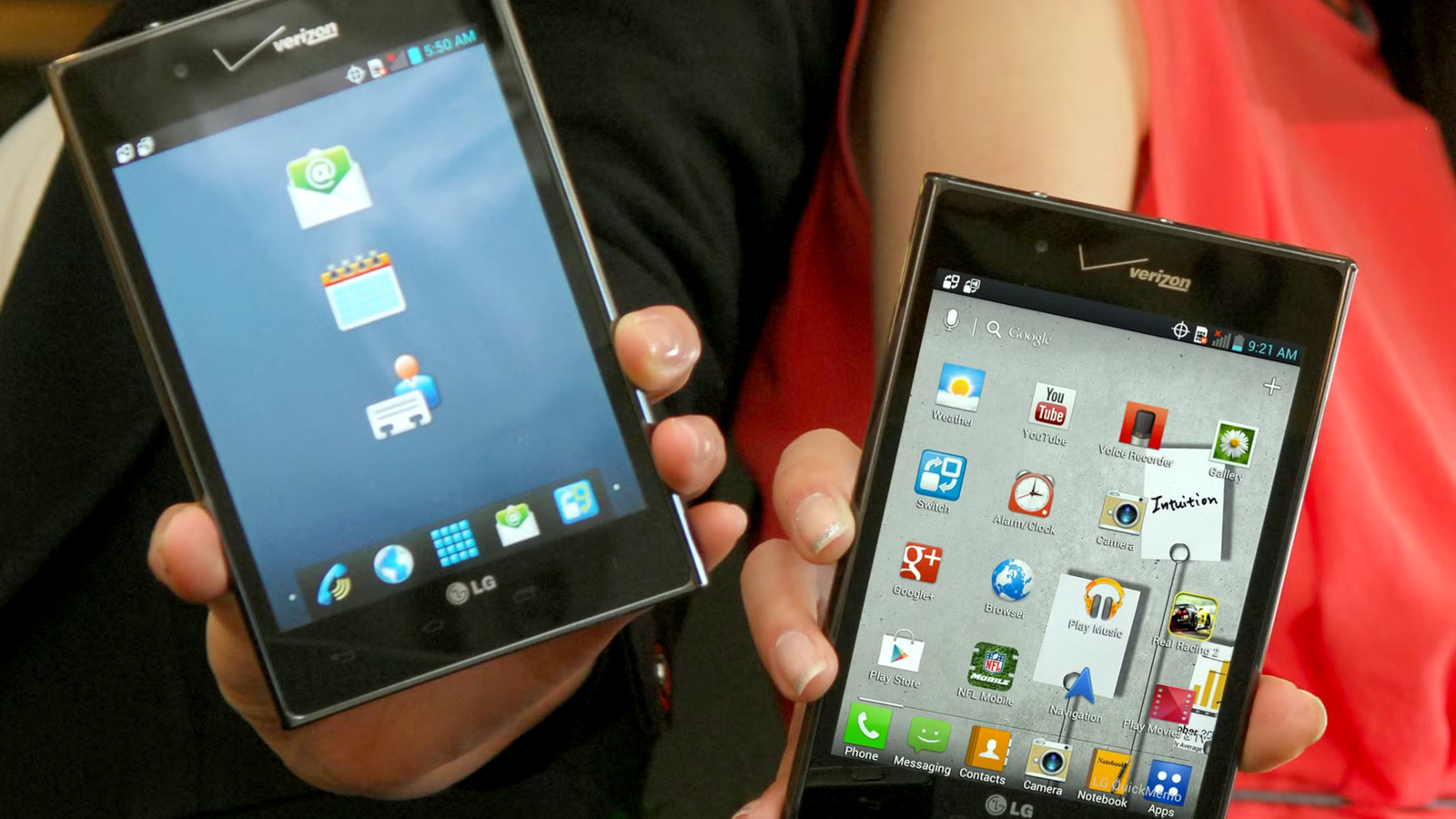
Published Aug 27, 2026, 11:15 AM EDT Ismar is a Senior Author at How-To Geek. He previously worked as a writer, editor, and general manager at a content agency before joining the team in 2023. He began his writing career in 2021 after completing a BA in English Language and Literature. Beyond How-To Geek, Ismar has contributed to Red Stag Fulfillment and Authority Hacker. He has also worked on various SEO projects to help clients improve their search visibility. Ismar has been around Windows PCs since the age of three, so friends and family naturally chose him as the resident tech support. His projects often involve tinkering, such as disassembling mechanical keyboards and gaming mice to mod his beloved gear. He also enjoys pushing hardware to the max through overclocking while staying on a reasonable budget. An avid gamer, Ismar has logged thousands of hours across various genres, including first-person shooters, RPGs, racing games, and roguelites. When he is not at his desk, he is probably exploring other people’s phones to discover their quirks and features or experimenting with the latest AI tools. In his free time, Ismar enjoys spending time with his wife, working out at the gym, playing guitar and bass, cooking gourmet meals, and traveling. Above all else, he’s a proud cat owner. Many of us still fondly remember and miss LG and its quirky Android phones. Although the brand has long been gone, some of the spirit of one particularly unusual phone from 2012 has made its way into the latest Samsung Galaxy Z Fold 8. I'm talking about the LG Optimus Vu, an unusual square-shaped phone from 2012. The LG Optimus Vu was a really weird phone for 2012 It made sense... on paper The LG Optimus Vu was a "phablet" Android phone that was released to compete against the original Samsung Galaxy Note, which was released a year before and proved to be relatively popular among enthusiasts. The Note took the 720x1280 resolution that was fairly common at the time and stretched it to 800x1280, giving the phone a 16:10 aspect ratio. While many users loved it, some criticized it, calling it an unwieldy, near-tablet-sized device that wasn't meant to be carried in a pocket. Potentially fearing the same kind of backlash, the LG Optimus Vu went in the exact opposite direction by releasing a phone with a slightly shorter but significantly wider 5.0-inch 768x1024 display with a 4:3 aspect ratio. Even for LG, this phone looked rather unusual. Although 4:3 was a common aspect ratio on computers, most flagship Android phones had shifted to the super-common 16:9 aspect ratio that many apps like YouTube rely on. LG's idea was to give the device more screen real estate for things like productivity, web surfing, and reading, all while keeping the device's overall footprint relatively pocketable. However, because phones at the time had massive bezels, it was just too wide to work. The Galaxy Note's 83mm width made it quite wide, but the Optimus Vu clocked in at a whopping 90.4mm, which just made it unwieldy for most people. Another unusual design decision by LG was to include stylus support while having no room on the device to store it. This was a major selling point for the Galaxy Note, which included a stylus that popped out from the bottom. While the Optimus Vu had an arguably more suitable aspect ratio for stylus-specific tasks like taking notes and drawing, having no place to store the stylus on board was a major drawback. If you wanted to use a stylus with your Optimus Vu, you'd have to carry it separately, which made it easy to misplace. The Optimus Vu’s 4:3 screen created more problems than it solved There was a good reason 4:3 phones never caught on Credit: LG 2012 was still quite early in the development of Android phones. While the system and apps were expected to handle a range of resolutions and screen sizes because of different-sized phones and the existence of tablets, nothing could have prepared developers for a one-off LG phone with a 4:3 aspect ratio. While LG's own apps were compatible, many third-party apps struggled to utilize the unusual aspect ratio. There were a lot of weird scaling issues, like stretched buttons and unutilized space. Even mainstream apps like YouTube weren't a great experience because the 4:3 aspect ratio is way more square than YouTube's 16:9 horizontal aspect ratio. A CNET review from the time noted that when watching YouTube on the Optimus Vu, you could either choose to grossly stretch the video to make it fit the screen or deal with huge black bars. And since the phone used an IPS display instead of OLED, these black bars were illuminated, which seriously hurt the experience. To put it bluntly, the aspect ratio gave you all the drawbacks of an unusually wide phone with almost none of the benefits because the software just wasn't ready. Samsung is now making the same screen shape work by folding it Samsung solved the Vu's problem many years later Samsung Galaxy Z Fold 8.Credit: Jon Fingas / How-To Geek After the release of the LG Optimus Vu, very few brands came out with their own versions of a 4:3 phone. LG followed it up with the Optimus Vu 2 and 3, but after LG dropped the idea, I don't think any mainstream Android brand came out with a 4:3 display for years. Until now. In a massive generational shift in philosophy, Samsung converted the Galaxy Z Fold 8's inner folding screen to a 4:3 aspect ratio. Rumors suggest that Samsung did this to beat Apple's upcoming foldable iPhone to the punch, which is also rumored to have this new "passport-style" shape. This shift makes a ton of sense. Going wide also makes the outer screen more usable for everyday tasks like taking photos and texting while keeping the phone's footprint slightly more pocket-friendly. And once you fold the display open, you get this mostly square-shaped display that's easy to use with both hands. The benefit is a massive amount of screen real estate for multitasking, reading ebooks, playing games, and various other tasks. And since this display is foldable, you don't have to struggle to put it in your pocket like you had to with the Vu. It goes without saying that software has improved by leaps and bounds since the days of the original Vu. Many apps can now dynamically scale to a tablet or two-pane layout, regardless of the display size. A 4:3 display actually makes sense on a regular slab phone now Modern bezels change the math Samsung Galaxy Z Fold 8.Credit: Jon Fingas / How-To Geek This might be a hot take, but I don't think a 4:3 display should be exclusive to expensive foldables. Many people don't have the budget or need for a folding phone, but they could still benefit from a regular slab phone with a 4:3 display. For starters, you'd get more screen area per diagonal inch without making the phone ridiculously tall. A 5.5-inch 4:3 display would be relatively short and pocketable while still giving you around 14.5 square inches of screen area for activities. For reference, the Samsung Galaxy S26+ has around 17 square inches. Unlike the LG Optimus Vu, though, a modern phone could achieve this without turning everyday use into an exercise. Phones have gotten much slimmer and more refined since the days of the Optimus Vu. If my math is right, a slab phone with a 5.5-inch 4:3 display would be around 75mm wide, roughly the same as a Samsung Galaxy S26+, but without all that extra height. That would give you a much smaller-feeling footprint that would be easier to keep in your pocket. For those of us with large hands, the benefits only scale from here. Typing on a wider 4:3 screen would give my thumbs more room and make them feel less cramped after a couple of paragraphs. Tasks like editing photos, multitasking, navigating, and potentially even gaming could also be more enjoyable on a wider display. The camera viewfinder and gallery could make better use of the entire screen, too, since smartphone cameras typically shoot in 4:3 natively. 4:3 isn't perfect, though. Aside from Nolan's The Odyssey, Most video content would suffer from massive black bars, which would make the videos appear tiny compared to a more traditional aspect ratio. This isn't really a problem on foldable phones, though, as they have massive screens to begin with. Additionally, a lot of apps rely on scrolling as a core part of the experience, and you'd have to scroll more because a 4:3 screen can't display as much vertical content. If your goal is to reduce the time you spend doomscrolling, though, I suppose that's just another benefit. The Optimus Vu might have been onto something I'm not saying that every Android phone should switch to a 4:3 display. There are still plenty of good reasons to prefer tall screens, and a square-shaped phone isn't the best fit for everyone. That being said, I can't help but wish that Android makers would start releasing more unusually shaped phones like the daring LG Optimus Vu. The Galaxy Z Fold 8 proves that the basic idea wasn't as crazy as it seemed; it just needed the right technology and software support. I'd love to see Android manufacturers experiment more and give us more options so that everyone can pick the aspect ratio they enjoy best.
The LG phone nobody wanted is making a comeback as the Samsung Galaxy Z Fold 8
Full Article
Original Source
Read the full article at Howtogeek →KhanList aggregates and links to publicly available news content. We do not host full articles from third-party sources. Always verify important information with original sources.