
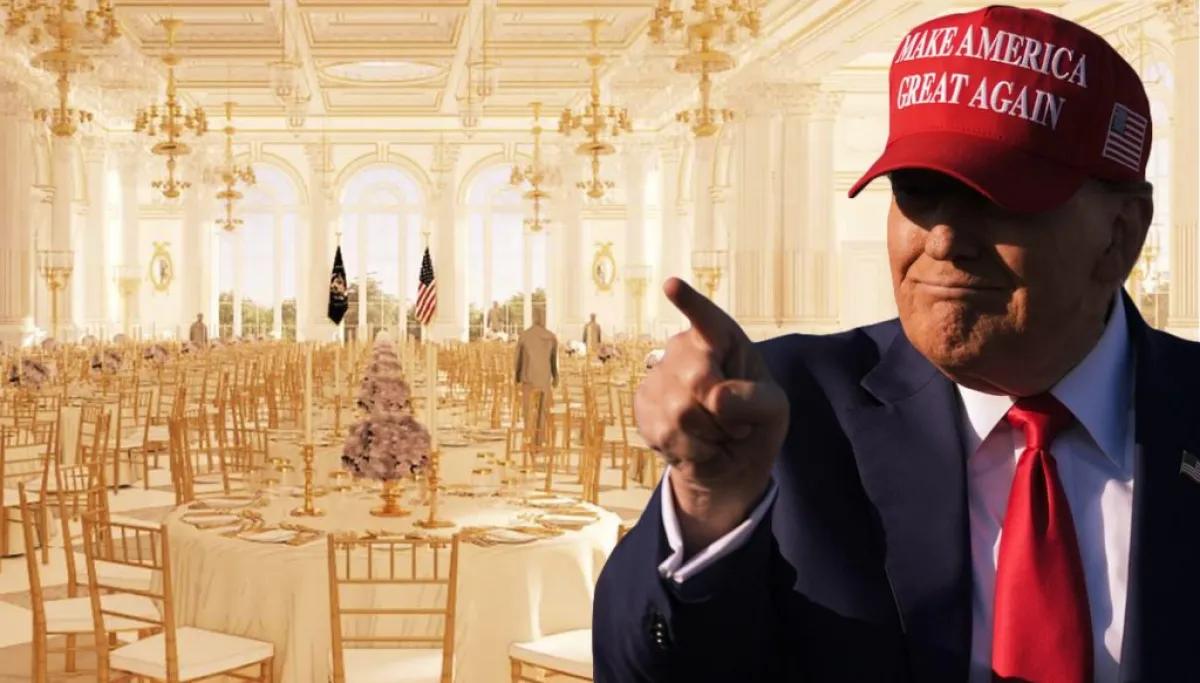
On the eve of the midterm elections, just before Halloween, former White House press secretary Katie Zacharia took to X to offer costume inspiration for anyone hoping to dress like her.Her Halloween “fit check” included a Veronica Beard blazer and skirt, which she helpfully noted were a “Size 00, even after four kids.” On her feet were Christian Louboutin Miss Z stilettos in lamb nappa leather, with four-inch heels. The shoes and blouse, she informed her followers, were sold out.The Louboutins alone retail for more than $1,000, while the designer suit costs at least as much. All told, the ensemble represented thousands of dollars in clothing, proudly flaunted by someone the president chose to be one of the most visible representatives of an administration presiding over an electorate increasingly anxious about making ends meet. Days later, Americans went to the polls and delivered not merely a blue wave, but a blue tsunami. Economic anxiety was cited by pollsters as the reason behind the political backlash. Voters struggling with the cost of housing, healthcare, groceries, and other necessities had little patience for a political class oblivious to their financial reality.The most famous words attributed to Marie Antoinette, France’s queen on the eve of the French Revolution, are “Let them eat cake.” She almost certainly never said them, but the phrase has endured for centuries because it so perfectly captures the indifference of a ruling class insulated from the hardships of ordinary people.Walk through the Palace of Versailles, with its gilded rooms, extravagant furnishings, and breathtaking excess, and it’s not difficult to understand how the excesses fueled resentment among a population for whom simply putting food on the table could be a daily struggle.Last week’s midterm elections offered an American version of that “let them eat cake” moment. As families grappled with unaffordable housing, rising health insurance premiums, and the cumulative burden of years of inflation, the woman chosen to speak for President Donald Trump was advertising the labels, prices, and exclusivity of her designer wardrobe. She was representative of an entire administration represented by gaudy gold trimming, over-the-top plastic surgery, and blonde hair dye.The problem wasn’t that she could afford expensive clothes. It was that she apparently couldn’t recognize how flaunting them might look to the Americans her boss was asking to keep his party in power.That inability to read the room extends well beyond the White House press office. In the weeks leading up to the election, Trump seemed preoccupied with the construction of his White House ballroom, the drama surrounding the John F. Kennedy Center for the Performing Arts, and renovations to the Lincoln Memorial Reflecting Pool on the National Mall. Even for those of us who live and work in Washington, the fixation on sprucing up the capital was a bit much. But for Americans struggling to pay their bills, watching the president obsess over Washington’s latest makeover while their own financial concerns went largely unaddressed was the height of political tone-deafness.But Americans aren’t just watching an administration flaunt its wealth while they’re struggling to make ends meet. They’re also watching the extraordinary corruption taking place in Washington, where access to the president and his inner circle has become a lucrative business.Just days after the election, the Washington Post reported that Laura Loomer, one of Trump’s closest outside advisers, had allegedly been paid thousands of dollars to post political messages on X without disclosing who was paying her.There is reason to be skeptical about why Loomer, of all people, was suddenly the subject of this exposé when it is well known that the practice is widespread among political influencers. Loomer was one of the most outspoken advocates of the war with Iran, a position that earned her plenty of enemies within the vice president’s coalition. It’s hard to believe that the timing of the story, coming just days after Republicans’ electoral drubbing, was entirely coincidental. There are plenty of people eager to make the election results a referendum on the Iran war, and Loomer makes a convenient scapegoat.Another conservative influencer, Alex Bruesewitz, revealed he himself had paid Loomer for tweets, and Loomer claims Bruesewitz was the source of the Washington Post’s story. Bruesewitz is now the subject of an exposé of his own, with the New York Times reporting this week that he received half a million dollars from Qatar.But focusing on Loomer or Bruesewitz misses the much bigger story. The problem isn’t one or two political influencers allegedly selling tweets. It’s an entire political ecosystem in which people with access to the president can make extraordinary amounts of money from that proximity.And Americans didn’t need to wait until after the election to see it.In September, ProPublica revealed that first son Donald Trump Jr.’s lavish wedding celebration had been partly paid for by Umar Kremlev, an oligarch with close ties to Russian President Vladimir Putin. Kremlev reportedly spent hundreds of thousands of dollars on the festivities on an exotic tropical island. The newlyweds described the arrangement as a generous gift from a friend (who doesn’t happen to speak English).For Americans who are struggling to pay for their own children’s weddings, the spectacle of a Russian oligarch picking up the tab for the president’s son was potentially radicalizing, and given the trouncing Republicans received even in deep red states such as Mississippi and Texas, perhaps it really was.In a post-election interview with Ross Douthat, President Trump was pressed about his family’s cryptocurrency business and whether foreign investors might believe that putting money into a company owned by the president’s family would buy them influence in Washington.TRUMP DOWNPLAYS GROWING WEALTH THROUGH PRESIDENCY: ‘YOU SHOULD’VE HAD STOCK’As Democrats take control of Congress, many more questions about corruption will likely swirl around Washington, which is exactly what voters intended this past Election Day.It’s one thing to tell Americans to eat cake while they’re struggling to afford bread. It’s quite another to make them wonder who’s paying for the cake, and what they’re getting in return.
The ‘let them eat ballrooms’ election
Full Article
Original Source
Read the full article at Washingtonexaminer →KhanList aggregates and links to publicly available news content. We do not host full articles from third-party sources. Always verify important information with original sources.