
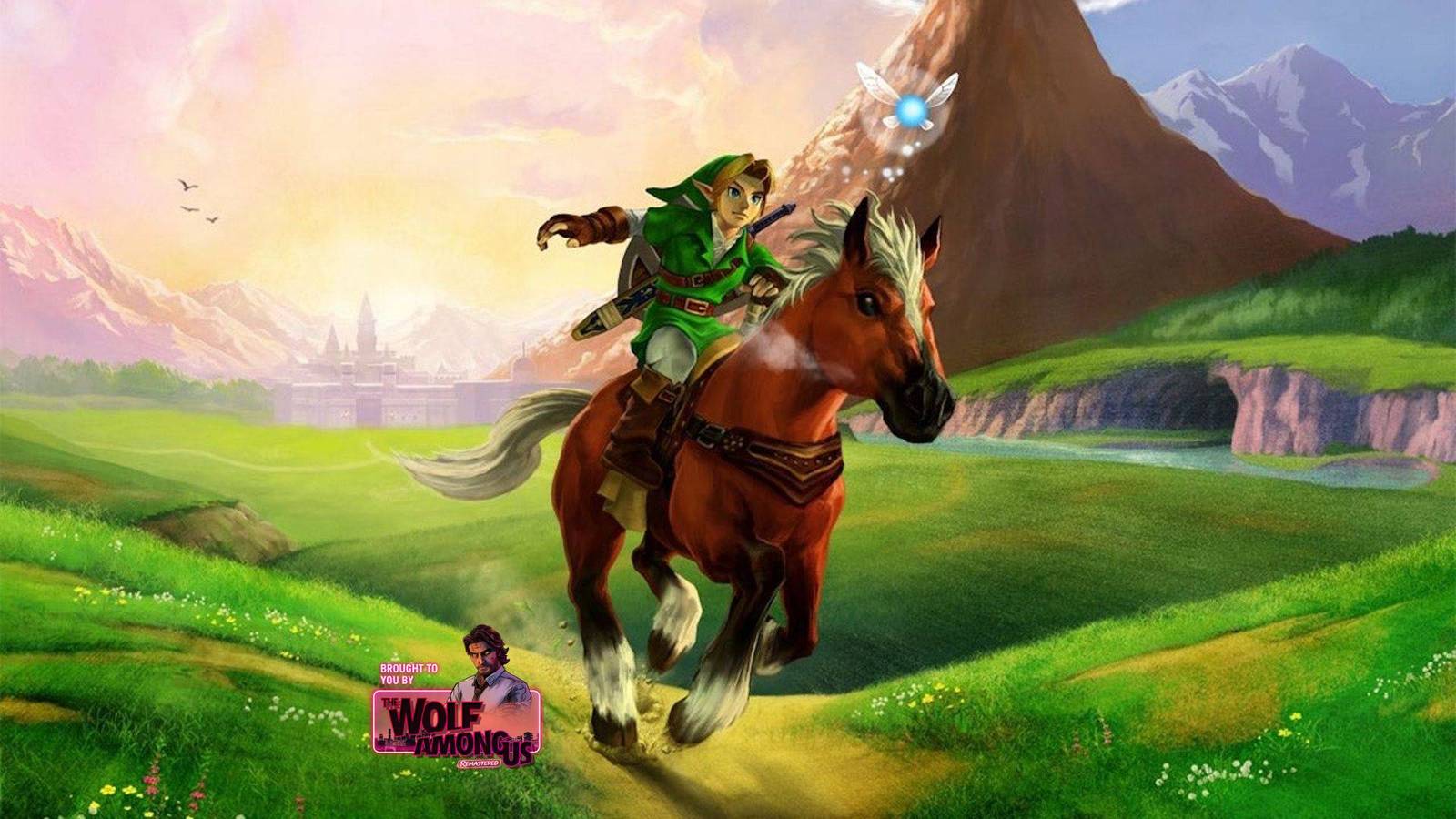
In the lead-up to the Ocarina of Time’s Switch 2 remake, I’ve spent a lot of time trying to nail down what makes the Legend of Zelda series so special. You could chalk a lot of its success up to pure design, as Nintendo has hammered out how to create a grand adventure game, whether it's working with pixels or an enormous 3D world. But any technical explanation for Zelda’s enduring success feels too cold and mechanical for a series that radiates warmth and joy; it simply doesn’t communicate how it feels to get lost in a Zelda game. I’ve only been able to understand that sensation over the years through literature rather than games. A great Zelda game can feel like a foundational text, like gaming’s version of The Odyssey. To fully understand the spirit of Zelda, you need to approach it more as a series of fairy tales rather than games. Nintendo EPD/Nintendo That comparison is baked right into the title of the series: The Legend of Zelda. Legend is the key word there, implying that each game chronicles some long-running folktale that has been passed down between generations. Each time you start a Zelda game, you’re reading a new story about the magical kingdom of Hyrule, filled with monsters and wonder. Though much has been made of the convoluted Zelda timeline, the clean slate nature of most Zelda games helps players accept that they’re playing through a series of tall tales. Link himself is key to that feeling, as he is presented as a perfect fairy tale hero. Baked into the setup of the series is the idea that Link isn’t so much a singular person, and more so a mantle passed down to different boys. There is always a Hero of Time in Zelda lore, just like there’s always a chosen slayer in Buffy the Vampire Slayer. It helps lend the feeling that Link is more of a folklore hero, a figure closer to the Pied Piper than Kratos. Image: Nintendo, Dark Horse If you really want to test how well the series holds up to a fairy tale framework, try describing the premise of each Zelda game starting with “Once upon a time.” Once upon a time, there was a boy without a fairy... Once upon a time, there was a kingdom in the sky… Once upon a time, there was a light world and a dark world… Heck, the entire premise of the creepy Majora’s Mask has the quality of a Grimms’ Fairy Tale. You can retell the events of just about any Zelda game as a bedtime story. That’s what I actually feel when I play a Zelda game, something that can’t be described by discussing technical design. It’s as if I’m laying in bed, as my mother reads me the tale about the boy who could turn into a wolf. For me, a lot of the Zelda series’ warmth comes from that sensation of being told a magical story that sparks my imagination; I even wrote my own Zelda stories when I was young, imagining unseen wars between the Gorons and Zoras. I still feel that way as an adult whenever I crack open a game like Tears of the Kingdom for the first time and strap in for a tale of mythical dragons and time-traveling princesses. Sometimes when I think about video games, I find myself asking which ones I want to share with my nieces one day. I imagine it’s a thought a lot of aging gamers have, considering that games were as formative to our development as storybooks were to our parents’ generation. I’m never sure how much magic they’ll find in Sonic the Hedgehog 2 or Pitfall! What I know for sure, though, is that I want to share Zelda with them one day. Those are timeless, magical stories that deserve to be passed down like folklore. That’s part of the reason I’m excited about the prospect of The Legend of Zelda: Ocarina of Time’s Switch 2 remake. A cynical part of me recognizes that it’s just a smart bit of business for Nintendo, but a more romantic part sees it as a retelling of my favorite fairy tale — one told in a way that younger generations might connect with better. So long as it keeps kids telling their friends on the schoolyard the story of the boy with a magical ocarina, I’ll welcome any return to Hyrule with open arms.
The Legend of Zelda Was Always Meant To Be Passed Down
Full Article
Original Source
Read the full article at Polygon →KhanList aggregates and links to publicly available news content. We do not host full articles from third-party sources. Always verify important information with original sources.