
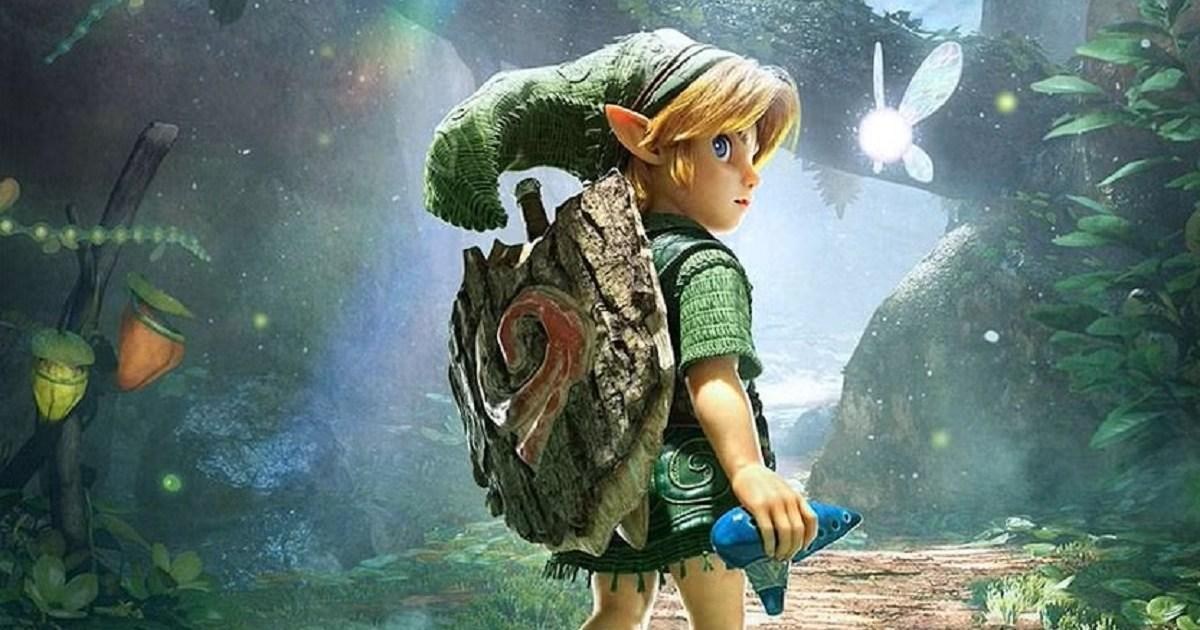
Zelda: Ocarina Of Time – the legend returns (Nintendo) One of the most celebrated titles of all time is remade for Nintendo Switch 2 but is Zelda: Ocarina Of Time still the best video game ever made? Reviewing a game as storied as Zelda: Ocarina Of Time is not easy. For years it was lauded as the best video game of its era and even today it’s lost little in the way of its original prestige. It was first released on the Nintendo 64 in 1998 and then got an extensive remaster (which Nintendo characterised as a remake) in 2011, for the 3DS. At that point the N64 version was already 13 years old but while certain elements did feel old-fashioned, it was still a hugely entertaining experience. It was helped by the small screen of the 3DS hiding the simplicity of the graphics, but the most obvious appeal of this Switch 2 remake is that it’s the most graphically impressive game on the system. There’s one element that has caused some controversy, which we’ll get to shortly, but overall the visual presentation is beyond reproach… assuming you accept that this is, more or less, a 1:1 remake. There are some very minor changes, of the sort that even ardent fans may not notice, but with only a few exceptions this plays almost exactly the same as the now almost three decades old original. And it’s a testament to what an incredible game that was, that despite so little fundamental change it’s still one of the best video games of this or any generation. We intend no hyperbole when we praise the N64 version, as one of the key takeaways from playing this remake is an increased admiration for the original game. Younger gamers will find it difficult to appreciate just what an impact it had as the first 3D Zelda, but this was only two years after Super Mario 64 and the concept of 3D video games, especially ones that allowed you the freedom to roam wherever you want, was still new. Concepts such as controlling a camera and orchestrating 3D combat had not yet been fully mastered and it was only Nintendo that tackled the problems head-on, paving the road for all that was to come afterwards. Ocarina Of Time is not open world in the modern sense of the word, as it’s patched together from a number of separate maps, but it was revolutionary at the time, especially the Hyrule Field hub that connects everything – which in 1998 seemed unbelievably vast and mysterious. Want GTA 6 news? Sign up to the GameCentral newsletter for the latest GTA 6 news, reviews of new games you should play and exclusive analysis of the biggest stories of the week. If you’re not familiar with the Zelda series, Ocarina Of Time can only be described as an action adventure. That’s always been a vague term but while 1987’s Zelda 2 and the Breath Of The Wild duology have flirted with role-playing elements, there’s none of that here. Instead, there’s plenty of action, some light platforming, complex puzzle-solving, and general exploration but no one aspect has primacy and much of the magic in the game comes from the sense that literally anything can happen. Each Zelda game has a different gimmick and here it’s that you play as Link (whose name, we are irritated to find, can no longer be customised) as both a child and an adult – the latter travelling seven years into the future, in order to explore the world of Hyrule after villain Ganondorf has already achieved most of his goals. No Zelda game has much in the way of plot but Ocarina Of Time makes more effort than the last two Switch games, with the remake adding a modest amount of new dialogue to many encounters. The voice-acting will likely come under some criticism, because a lot of it is very saccharine while playing as young Link, but despite Navi and other female characters sounding like Californian teenagers, we still enjoyed its cheesy charm. We were more irritated by the fact that there’s spoken dialogue in cut scenes but not anywhere else. In some cases you can be carrying on the same conversation and the game will just suddenly switch to on-screen text instead, which, as usual with Nintendo, feels more like penny-pinching than artistic intent. Princess Ruto comes across as a real brat now (Nintendo) The one niggle about the visuals is also related to young Link, in that he does have a slightly creepy, mannequin-like appearance at times. The main problem is the doll-like eyes, but there’s also purposefully little in terms of facial animation, as the angular faces homage the N64 original. You could also argue that Link seems overdesigned compared to the simpler looking side characters, but we found we quickly got used to it and stopped registering it as an issue. Beyond that, the remake doesn’t take a step wrong in terms of the visuals, with some gorgeous landscapes and cleverly updated dungeons (discrete, puzzle-orientated areas with a boss battle at the end of them), that keep the same layout but increase the visual complexity and add small flourishes of extra detail. The music follows similar logic, since it’s the same tunes but fully orchestrated rather than being tinny MIDI files. YouTubers will have a field day pointing out every minor change, but they are all minor, and cherished details from the original are kept exactly as they were, from King Zora’s painfully slow bottom shuffle to the creepy ReDeads and House of Skulltula. We discussed the mechanical changes to the game in detail in our preview, which includes the ability to jump and directly control the camera. Neither were possible in the original, but we’re still not convinced getting rid of the auto-jumps was a good idea. It won’t make any difference for an experienced gamer, but it does mean the game demands a lot more of its players than the N64 original, especially knowing that casual gamers often have difficulty with camera control. The good news for them is that Ocarina Of Time is an incredibly easy game. We didn’t die once, which isn’t that unusual for a traditional Zelda title, and had less to do with our familiarity with the game (there was a lot we didn’t clearly remember) and more a result of the simplistic combat. The remake does make a few things easier, most notably the new visual cues for a descending Wallmaster, but while there are some new dialogue clues about what to do next, plus the new Threads of Time quest tracker, it never gives away any puzzle solutions. The combat is still a lot of fun, but you’re really just locking on, keeping your shield up, and stabbing the lone attack button when you get an opening. Dodging and spatial awareness is relatively important, but mistakes are not punished. That’s fine – amongst its many qualities is the fact that this makes an excellent gateway game into more complex adventures – but it is disappointing that there’s no New Game+ or Master Quest content. The Water Temple is still hard but it’s no longer frustrating (Nintendo) The 3DS edition had a version of the latter but even if Nintendo didn’t have time for all that they could’ve simply doubled the health of enemies, and halved Link’s, and it would be a considerably more challenging experience. We’ve never complained when games add an easy mode, but we do resent it when easy ones avoid having a hard mode, especially when they could be so easily implemented. All the game has to offer in terms of real challenge is a new gallery type feature, called The Hall of Fallen Foes, where you can examine defeated enemies and demand a rematch at any time, including various boss rush challenges. But it’s a minor feature and pretty inconsequential. The lack of difficulty is ironic because the Water Temple is infamous for being one of the hardest and most confusing dungeons in the whole series. But it was already streamlined considerably in the 3DS version, which added new visual clues and an easy way to change boots (to allow you to sink to the bottom of a water-logged area) and it’s even more straightforward now that you can often see other rooms beyond the one you’re currently in. Nevertheless, it remains the hardest thing in the game and we still found it very satisfying to complete. Many of the other dungeons are great too, with the Forest, Shadow, and Spirit Temples all being amongst the franchise’s best. We also have a great admiration for the initial Great Deku Tree area, which is essentially a tutorial dungeon but still forces you to make big logical leaps in how its puzzles work and how you interact with them via your weapons. Ocarina Of Time was so successful that it’s cast a shadow over the whole series, which was only removed with the change of formula in Breath Of The Wild. But one of the things that sets it apart from its successors, especially Twilight Princess and Skyward Sword, is that it’s much better paced. Exploring a new dungeon or entering a new area in the overworld always feels like it’s happening organically and without you having to spend too much time in any one area, with none of the padding or time-wasting between dungeons evident in later Zelda games. Ocarina Of Time is a great game and this is a great remake, but it’s not transformative – and it’s clearly not trying to be. If you somehow never liked the original you won’t like this and no matter how good the graphics are the fact that the maps are using the same layout as the N64 game means they still feel small and constrained, no matter how distractingly good the graphics are. While this is no longer the best video game of all time, or even the best Zelda, it is still a fantastic adventure, that’s been treated with due respect by this remake. Whether you remember every inch of the original game or have never even heard of it before, Zelda: Ocarina Of Time epitomises everything that is great about video games, especially in terms of the imagination that has gone into its creation and which it inspires in everyone that plays it. The Legend Of Zelda: Ocarina Of Time review summary In Short: A pitch perfect remake of one of the best video games of all time, assuming that you’re behind the idea of a 1:1 recreation that adds and changes nothing of substance. Pros: Gorgeous graphics that don’t feel at all out of place with the N64 design and gameplay. Timeless mixture of exploration, puzzle-solving, and combat remains highly compelling. Excellent pacing, that’s superior to any other pre-Breath Of The Wild game. Cons: Almost trivially easy, from beginning to end. No New Game+ mode or Master Quest content of any kind. You can’t rename Link and the limited voice-acting makes no sense. Score: 9/10 Formats: Nintendo Switch 2Price: £49.99Publisher: NintendoDeveloper: Nintendo EPDRelease Date: 5th November 2026Age Rating: 12 The best graphics on Switch 2 (Nintendo) Email gamecentral@metro.co.uk, leave a comment below, follow us on Twitter. To submit Inbox letters and Reader’s Features more easily, without the need to send an email, just use our Submit Stuff page here. For more stories like this, check our Gaming page. Arrow MORE: 007 First Light is 50% off in massive PlayStation Store Black Friday sale Arrow MORE: Games Inbox: How excited are you for The Elder Scrolls 6: Sentinel? Arrow MORE: GTA 6 physical map has to be bought separately and won’t be in boxed copies GameCentral Get the latest GTA 6 news, reviews of new games you should play and exclusive analysis of the biggest stories of the week.
The Legend Of Zelda: Ocarina Of Time remake review – a link to the future
Full Article
Original Source
Read the full article at Metro →KhanList aggregates and links to publicly available news content. We do not host full articles from third-party sources. Always verify important information with original sources.