
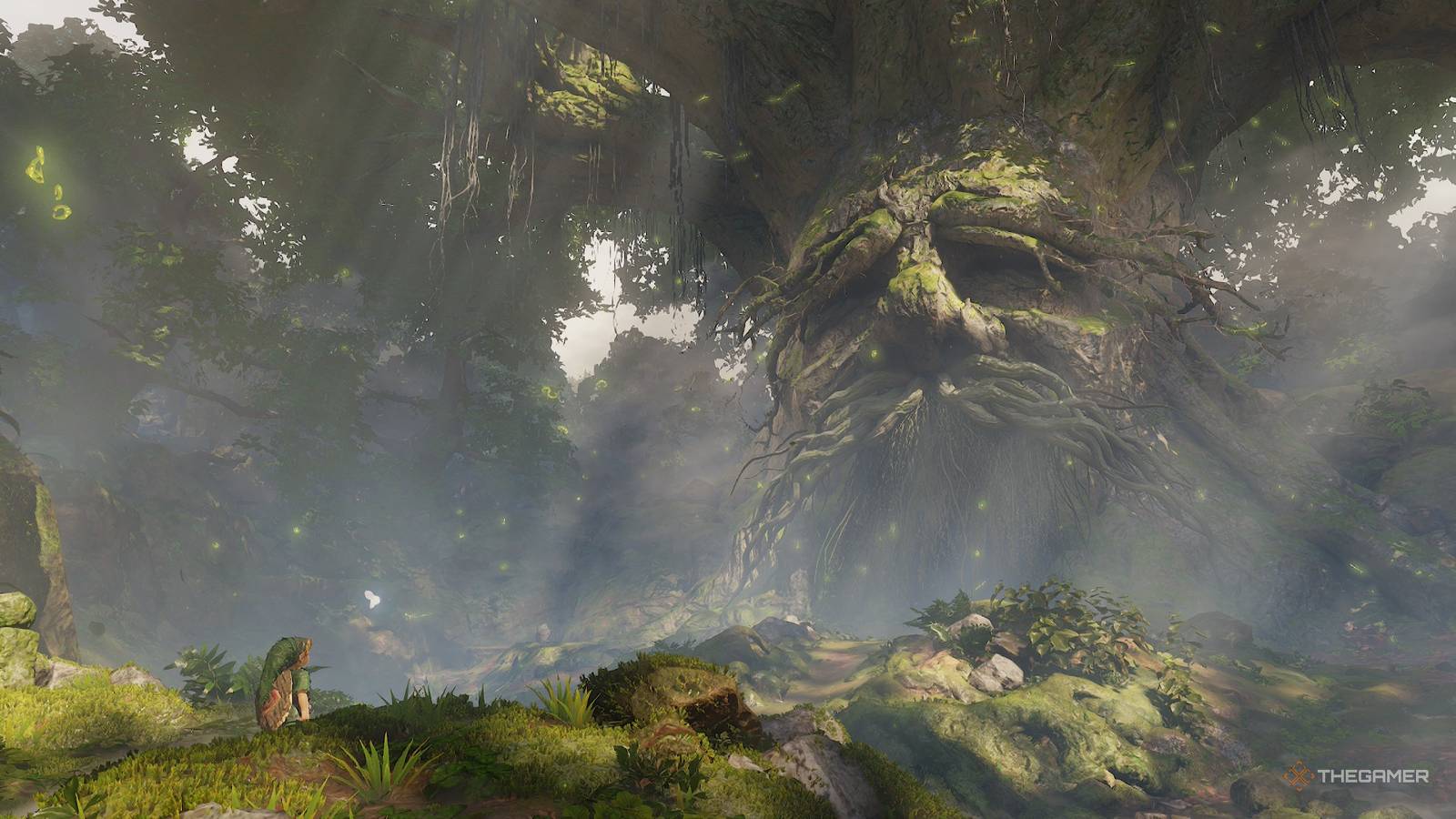
I was seven years old when The Legend of Zelda: Ocarina of Time was first released. My father got it for me that Christmas, along with the strategy guide, and I spent nearly the entire weekend glued to the small television set in my bedroom. From the moment I stepped out of Link’s home in Kokiri Forest, I was enthralled with this fantastical world of monsters, magic, and adventure. It’s the first game I ever beat alongside my father, and it’s an experience I will always cherish deeply. Over the coming weeks, you will undoubtedly hear similar stories. How one game released in 1998 fundamentally changed the lives of so many people and the industry as a whole. It pushed the medium beyond what we ever imagined was possible, cementing its place as one of the greatest video games of all time. Now, nearly 30 years later, Nintendo has set out to remake what many would consider a perfect game. I was certainly skeptical going into this review that such a feat was even possible, or, quite frankly, necessary, but I emerged 30 hours later feeling as if I'd relived that holiday weekend for the first time all over again. What's New Is Old Again Much like the land of Hyrule itself, this remake is a mix of the familiar and new. Everything is largely as you remember it from the N64 version, but updated and just altered enough to feel refreshingly different. It’s so much more than just an immense graphical upgrade (more on that later), as there are various balance and gameplay adjustments throughout. For example, some of the Gold Skulltula and Piece of Heart collectibles have been moved to new locations to fit the updated levels. The Bombchu Bowling mini-game’s hazards have been changed to be a little more forgiving, and there are now small visual indicators to help you traverse the Lost Woods beyond just listening to whether the music gets louder or softer when you approach a specific entrance. These are just a small collection of the numerous instances where Nintendo made adjustments to fit their new, fully realized version of Hyrule. Almost all of the dungeons have been touched up in one way or another. Whether it be streamlining puzzles, the removal of a few keys needed to open certain doors, or some additional rewards you can discover if you’re willing to thoroughly explore, and I’m betting most of you are. However, their lock-and-key design has gone mostly unchanged. You will still largely rely on one to two newly introduced tools to complete each dungeon. From shooting ghosts in paintings with the Fairy Bow to seeing hidden walls and platforms with the Lenses of Truth, these act as grandiose showcases of everything these new items can do. It’s superb design, and there’s a reason that it became a mainstay gameplay experience in this franchise. Boss fights all feel much better in the remake, as their increased health forces you to engage with their mechanics instead of just brute-forcing your way through them. This is especially true for a lot of the earlier bosses, many of which you could easily bulldoze unintentionally in the original Ocarina. Morpha, the Water Temple boss, even got some updated moves to make this enemy much more involved and threatening than its N64 counterpart. Of course, the two biggest changes anyone who has played the original will notice are that you can now jump and turn the camera. While this doesn’t sound terribly exciting, this new freedom of movement is reflected in the game. You’ll now encounter more sections that lean on your platforming skills, which does help to make this mechanic feel a bit more meaningful beyond just adding it for the sake of convenience. Turning the camera freely is another addition that might seem incredibly silly to even mention, but back in 1998, that feature wasn’t even an option. This simple mechanic gives exploring the lands of Hyrule a level of needed fluidity and allows Nintendo to really make use of their updated locations. Same Game, New Look Unsurprisingly, the most striking and biggest draw for the Ocarina of Time remake is the complete graphical overhaul. This isn’t like the 3DS version, which still maintained the same visual style and look of the N64 original. Instead, Nintendo has done a full top-to-bottom update of basically everything in the game. This includes better lighting, models, textures, visual effects, and animations. It’s a truly gorgeous game to behold and one that feels like a technical showcase for the Switch 2. Nintendo has traditionally leaned into more stylized experiences because of hardware limitations. With the Switch 2, Nintendo is clearly free to really push their games graphically beyond what we usually associate with them. A major visual overhaul, yet none of the art direction is lost in this shift. Take Zora’s Domain. This is the home of an aquatic race known as the Zora, who live in a massive cavern filled with water. In the N64 version, you mostly need to rely on your imagination and squint a bit to really picture this as these people’s home. In the remake, this place feels truly lived in. Gorgeous scale-like tile work runs along the massive columns; there’s moss growing near the ceiling that gives the place a sense of life, and just small details such as the floor of the shop being a bit flooded really make you believe this is where a race of fish-people live. You can see this level of love and care throughout the entire game. Nintendo has taken Ocarina of Time’s incredible art direction and pushed it to the limit. The Shadow Temple is now unsettling and creepy, Kokiri Forest is dense with vegetation, and Hyrule Castle Town is bustling with life. All of these changes translate to the various characters and monsters you will encounter. Everyone still maintains their distinct visual identity and is instantly recognizable, but enhanced and made to really fit this updated look. This is especially true for the enemy designs, as many look infinitely more menacing or visually striking. Some of my favorites include the ghostly Poes, skeleton warrior Stalfos, and the horrific Dead Hands. It’s not just visuals that got updated, as legendary composer Koji Kondo has returned to score the remake. Ocarina of Time’s music is just as fundamental to its identity as its visuals and mechanics. Kondo wisely maintains the original compositions of the game’s soundtrack, leaning more towards updated recordings of his work on the N64 version. The result is a beautiful score that effortlessly switches between compositions as you explore, fight, and discover the world. Kondo and the audio team do an excellent job blending these songs as the player engages with the world. Tracks fade in and out as you get into fights, open treasure chests, or just solve a puzzle. It’s a seamless, auditory transition that really helps you immerse yourself in this world. Ocarina of Time’s remake also boasts quite a few fully voiced cutscenes that have improved cinematography, pacing, and deliver a great sense of urgency to your adventure. While much of the writing from the original game is intact, Nintendo has taken this opportunity to enhance some key sections of the game to give them more flair and gravitas. One example is Ganondorf having a few extra lines when you first acquire the Master Sword, which really drives home the malice and indifference he shows for those he views as inferior to himself. These cinematics do a wonderful job of further conveying Ocarina of Time’s story in a way that just wasn’t possible in the ‘90s. They’re one of my favorite aspects of the new game, and the whole cast does such a great job bringing these characters to life. While the meat and potatoes is just the remake itself, Nintendo has added a couple of brand new features to this game. The first and biggest is the Hall of Fallen Foes. A massive museum displaying all of your previously defeated enemies, allowing you to examine their models, read about their weaknesses, and even challenge the bosses to rematches. It’s a nice addition that really feels like Nintendo flexing how good all of their enemy designs are. However, it’s more of a novelty than anything truly substantial. While that doesn’t mean it’s not a welcome addition, as the ability to fight the bosses one after another in a single attempt is a nice distraction, it’s certainly not the main selling point for picking up this remake. Additionally, players can come across Business Scrub Seeds, which allow you to summon a Deku Scrub vendor anywhere in the world. This is mainly so you can top up specific items like arrows, magic pots, or even hearts. Veterans of this series won’t get a lot out of this, but for those who are experiencing Ocarina of Time for the first time, it can certainly alleviate some potential frustrations. Finally, there are Fairy Thoughts, which are magical engravings you will find all over Hyrule. Upon interacting with one, you will often be given a very simple brain teaser, such as playing the right song on your ocarina in front of the Fairy Thought. This will almost always result in you getting your health and magic fully restored. There are some fun uses for this, such as a Fairy Thought in the future timeline making reference to something you can do in the past for a reward. But these instances are fairly scarce, and it’s the one thing I wish Nintendo really expanded on more. They’re a neat idea, but mostly feel like they are there to help newer players who might need some extra help. Nintendo’s remake feels like a triumphant celebration of what made it so special while wisely modernizing small aspects to make for a more enjoyable experience. There’s no doubt that not everyone will love the graphical and artistic updates to this world, but it’s what seven-year-old me imagined the game looked like when I closed my eyes at night. A beautiful, engrossing fantasy adventure that maintains its thrilling combat encounters, clever puzzles, and unique charm. This is the definitive way to experience Ocarina of Time, and know that I envy you if this will be your first time ever playing it. Enjoy it. Few games have ever reached, or will ever reach, the heights it has. Fittingly, The Legend of Zelda: Ocarina of Time transcends time and maintains its seat as one of the best video games in the world. Systems Released November 5, 2026 ESRB Everyone 10+ / Animated Blood, Fantasy Violence Developer(s) Nintendo Publisher(s) Nintendo Genre(s) RPG, Action, Adventure Pros & Cons Gorgeous visual and auditory updates Updated gameplay balance, puzzles, and level layouts Improved cutscenes and voice acting further enhance the story Hall of Fallen Foes is a fun addition for those seeking to push their skills further Fairy Thoughts feel like a missed opportunity for additional puzzles or storytelling
The Legend Of Zelda: Ocarina Of Time Is Still One Of The Greatest Games Ever Made
Full Article
Original Source
Read the full article at Thegamer →KhanList aggregates and links to publicly available news content. We do not host full articles from third-party sources. Always verify important information with original sources.