
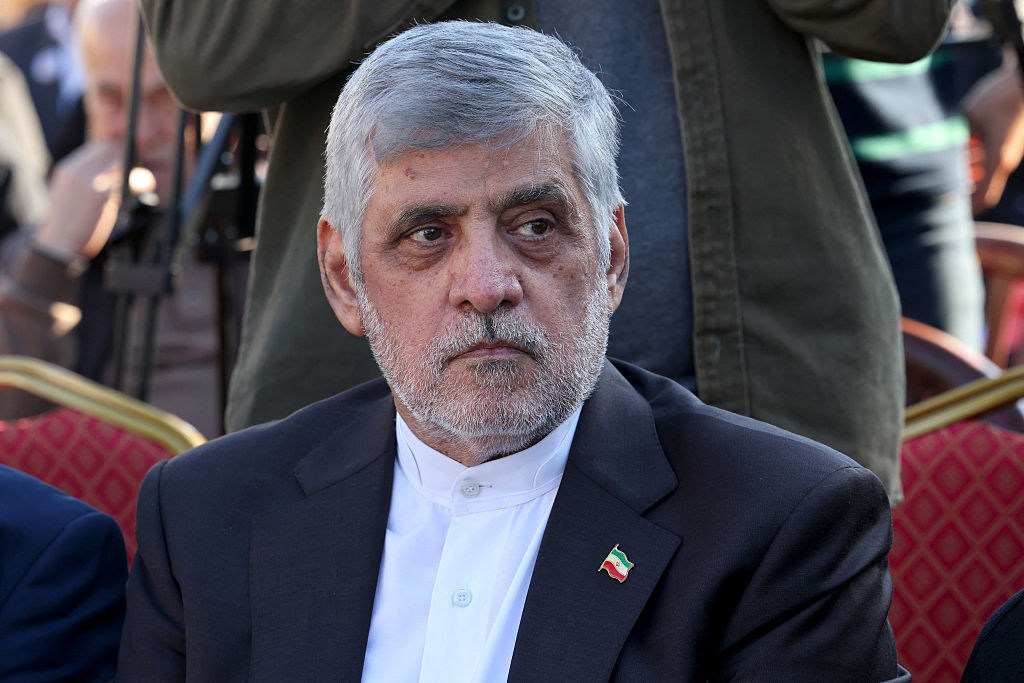
Lebanon ordered Iran’s ambassador-designate out in March. Five months later, he remains in Beirut — with at least six more months of legal residence. Mohammad Reza Sheibani was rejected for political interference, but Tehran disregarded the decision with backing from Hezbollah and Parliament Speaker Nabih Berri. Lebanon’s political system ultimately compromised, allowing him to remain while Tehran continued treating him as its ambassador as he conducted political business from Beirut. General Security has now regularized his stay as an Iranian citizen without diplomatic status. The United States sanctioned Sheibani in May for providing material support to Hezbollah. Sheibani’s case is not an anomaly. Lebanon repeatedly takes clear decisions only for its fragmented political and institutional system to narrow, delay, or circumvent implementation. That fragmentation also means no single Lebanese voice — not even an avowedly sovereigntist one — can be assumed to speak for what Lebanon will ultimately do. In Lebanon, There Are No Decisions — Only Compromises Lebanese Foreign Minister Youssef Raggi wrote on X on August 20 that he “rule[d] out any renewal of [Sheibani’s] visa,” then just four days later General Security renewed his residency. Raggi said there was “no room for interpretation,” Sheibani’s designation as persona non grata was Lebanon’s “final and binding sovereign decision,” “not subject to exceptions, reinterpretation, circumvention, or any attempt to regularize his status,” and therefore “require[d] him to leave Lebanon.” That decision had faced domestic resistance since March. Hezbollah and Berri opposed Sheibani’s removal; Hezbollah and Amal ministers boycotted an executive branch Council of Ministers of Lebanon, or Cabinet, meeting in protest; and an Iranian diplomatic source said Sheibani would remain at both parties’ request while Tehran said he would continue his diplomatic work. Lebanon’s political system eventually produced an accommodation. President Joseph Aoun reportedly sent General Security chief Hassan Choucair to Berri with a proposed solution: preserve Lebanon’s refusal to recognize Sheibani diplomatically while allowing him to remain as a resident. The Foreign Ministry could thus maintain that its sovereign decision remained intact while another state institution, through political compromise, produced a different outcome. Beirut’s Hezbollah Policy Follows the Same Pattern This pattern is particularly evident when enforcement risks confronting Hezbollah or Iranian interests. Decisions announced as categorical become negotiable or diluted in implementation. Lebanon’s March 2 Cabinet decision categorically banned all Hezbollah military and security activity, ordered the group to surrender its weapons, and directed security forces to enforce the decision immediately. But Aoun has since insisted that implementation proceed through bilateral dialogue with Hezbollah, “away from force,” without a deadline. Nearly six months later, Hezbollah still categorically rejects disarmament, including the bargain contained in the U.S.-brokered June 26 Framework Agreement between Israel and Lebanon linking it to Israeli withdrawal. Implementation remains limited to preliminary steps in the first pilot zones, while Lebanon and Israel have yet to agree on third-party verification. Circular 170 issued by Banque du Liban — the central bank of Lebanon — bars regulated financial institutions from dealing with Al-Qard al-Hassan (AQAH), Hezbollah’s quasi-bank, and other sanctioned or unlicensed entities. The Interior Ministry later withheld AQAH’s annual certification, but its underlying ilm wa khabar — the registration notice under which it operates — remains in force; withdrawal requires a Cabinet decision. The Cabinet, which includes Hezbollah and Amal, has not acted. Justice Minister Adel Nassar said in June the issue had not even been presented to Cabinet, opting instead for a prosecutorial investigation. AQAH therefore remains legally extant and operational. U.S. Should Pressure Lebanon To Expel Sheibani The U.S. Treasury Department has sanctioned individuals embedded in Lebanese state institutions who facilitate Hezbollah and Iranian activity, including officials in General Security and LAF intelligence. Washington should apply the same principle to officials responsible for extending Sheibani’s visa. Allowing a U.S.-sanctioned Iranian to remain in Lebanon undermines the Lebanese state’s own decision and enables his continued presence in support of Hezbollah. Treasury should investigate who authorized the extension and whether they knowingly provided services to allow Sheibani to continue operating in Lebanon.David Daoud is a senior fellow at the Foundation for Defense of Democracies (FDD) focused on Israel, Hezbollah, and Lebanon affairs. Ahmad Sharawi is a senior research analyst at FDD focused on Syria and Iranian intervention in Arab affairs and the Levant. For more analysis from the authors, please subscribe HERE. Follow FDD on X @FDD. Follow David on X @DavidADaoud. Follow Ahmad on X @AhmadA_Sharawi. FDD is a Washington, DC-based, nonpartisan research institute focusing on national security and foreign policy.
The Lebanese Government Ordered Iran’s Would-Be Ambassador Out. Then Another Part Let Him Stay.
Full Article
Original Source
Read the full article at Fdd →KhanList aggregates and links to publicly available news content. We do not host full articles from third-party sources. Always verify important information with original sources.