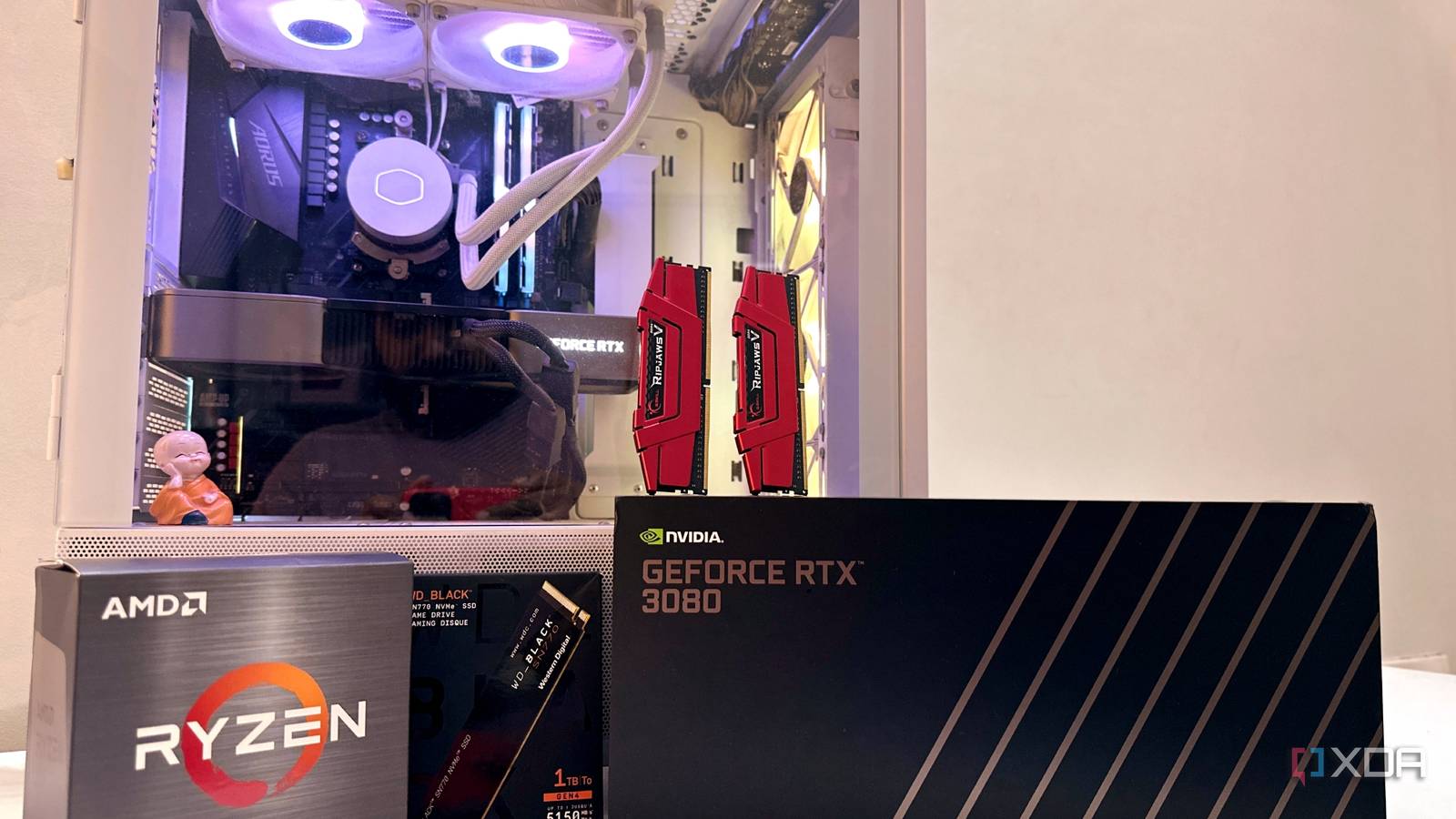
Published Aug 6, 2026, 5:30 PM EDT Gaming has been Samarveer’s greatest passion, and the Literature graduate in him takes immense joy in dissecting games for their themes, messages, and impact. Samarveer holds a deep appreciation of gaming, and considers the platform to be the most immersive and impactful across all media. He can be found engaging with gaming communities online, always ready to debate the finer points of ray tracing or itching to write an 8-page collegiate thesis on any game that impacts him emotionally. Summary Soldered RAM and integrated chips end easy upgrades for thinner, faster, more efficient PCs. Desktops are following suit as LPDDR and AI needs push soldered memory into tower-class machines. Cloud gaming and sealed designs turn PCs into appliances, shrinking the era of DIY upgrades. The most memorable PC I've had was the one I bought in 2013, and it stayed with me till 2023, until I built my new PC from scratch. Over the course of a decade, this PC went through three GPUs, two CPUs, and even a motherboard upgrade, evolving with the times (and, of course, my bank balance). This PC was never really finished, and it almost felt like a sibling that grew up with me in the same house. The promise of such an experience is now disappearing. As soldered RAM slowly but surely paves its path toward becoming the industry standard, it's also reshaping personal computing. The modular PCs we've all grown up with are threatening to disappear, owing to thinner designs, integrated hardware, and even cloud-powered services. PCs aren't meant to stay the same Every upgrade tells a story Buying a PC, for the most part, has always felt like the beginning of a long project. You'd stretch your budget for the best processor you can afford at the moment, maybe settle for less RAM, with the promise to yourself that you'd double it when the next payday hits. Better parts followed in the form of a better GPU, more storage, and other additions to give the PC a second, third, or even fourth wind beneath its wings. In fact, this freedom wasn't reserved for just enthusiasts, either. For decades, even everyday users have swapped out hard drives for SSDs, added more RAM to their laptops, and upgraded their Wi-Fi cards to keep their old devices kicking around for longer than they should. Every single improvement effectively delayed the need for an expensive replacement. Sadly, it seems that today's computers are on track to abandon that philosophy. More than ever, the hardware you choose on day one becomes the hardware you will live with until the day you replace it with the entire machine. Whether we noticed it happening or not, we've slowly traded computers that evolved with us for computers that arrive finished. Soldered RAM isn't entirely the villain here Physics seems to be calling the shots Although its memory is soldered, the Lenovo ThinkPad X1 Carbon Gen 9 still lets users upgrade a few other components. As AI workloads demand increasingly fast memory, OEMs have begun soldering memory to chipsets. It does enable them to deliver thinner designs, lower power consumption figures, shorter signal bandwidth, and shorter signal bandwidths — all good things on the face of it. All major players seem to be doing this, too, with Intel's Lunar Lake, Apple's M-series chips and Qualcomm's Snapdragon X processors all pushing memory closer to, or directly onto the processor package, making upgrades impossible. And yet, the trade-off, on the face of it, is immensely rewarding, After all, shorter electrical pathways mean lower latency, better power efficiency, less heat, and battery life that today's ultrabooks and AI-powered laptops simply couldn't deliver with traditional SO-DIMM slots. It all just comes at the cost of never being able to swap or expand the RAM. The sheer physics of PC-building are clearly unfeeling toward nostalgia. Every generation squeezes out more performance into less space, and the era of endlessly upgradeable computers is becoming increasingly difficult to engineer. Desktops won't stay immune forever AI could very well rewrite the rules of desktop memory I know it's pretty easy to dismiss soldered RAM as a laptop-only problem, but desktop PCs are already showing early signs of the same shift. Mini PCs and all-in-one systems have begun embracing soldered LPDDR memory thanks to its lower power draw and shorter signal paths deliver the bandwidth that is increasingly required in modern integrated GPUs and AI accelerators. As such, those same engineering constraints are beginning to influence desktop-class hardware as well. Take Framework's first Desktop device, for example. The brand built their reputation on repairable and upgradeable computers, but the company paired AMD's Ryzen AI Max processor with soldered LPDDR5X memory because a modular solution simply couldn't provide the 256GB/s memory bandwidth the chip was designed to use. Even Framework admitted it spent months exploring alternatives before accepting the trade-off. Desktop processors today are always chasing higher AI performance and increasingly powerful integrated graphics. It won't be long before the same technical compromises that have reshaped laptops reach the desktop. For the first time in decades, upgradability is no longer guaranteed. The PC is transforming into an appliance The age of endlessly upgradeable computers is fading away Desktop PCs remain one of the last places where you can still choose your own adventure. You can upgrade the graphics card, double the RAM, swap in a faster SSD (all for egregious prices in 2026) or even replace the processor years later. That's becoming increasingly rare in consumer electronics, where phones, tablets, and laptops have steadily traded modularity for slimmer, more efficient designs. It's even more worrying that this change in industry trends doesn't stop at hardware alone. Cloud gaming services like Xbox Cloud Gaming and Nvidia GeForce Now are clearly proving that even high-end gaming doesn't necessarily require a $2,000 box under the desk. When powerful hardware becomes something you can stream instead of outright paying for, upgrading individual components starts to feel less essential. The traditional PC isn't dying out tomorrow itself, but the general industry direction has never been clearer. Of course, the alarm bells are ringing, but that doesn't mean the traditional PC is dying out tomorrow itself — you can pry my hardware components out of my cold, dead hands, thank you very much. The one thing that will never change is that enthusiasts will always build custom rigs, and upgradeable desktops aren't going to disappear out of existence overnight. However, the direction of travel has never been clearer. This current generation is very well the last generation of truly upgradeable PCs, and they give us what future PCs won't ever offer us again, which is the freedom to decide what our hardware could become. Kingston Fury Beast DDR5 Brand Kingston Size 16GB, 32GB, 64GB Technology DDR5 Speed ~6,000 MT/s RGB No Kingston's Fury Beast DDR5 memory comes in many flavors, from lower-end 4800MHz to high-end 6000MHz. The next era of "personal" computing For decades, "personal computer" meant more than the software running on it. It meant ownership, choice, and the freedom to open the side panel whenever your needs changed. Now more than ever, that definition is evolving, and rapidly so. It's sad that future generations might never know the excitement of squeezing another few years out of aging hardware because their computer will simply arrive as complete, sealed experiences from day one. Progress rarely asks for permission before leaving old habits behind. Maybe that's the inevitable price of faster, quieter, and more efficient machines. But if you still have a PC waiting for its next graphics card, RAM upgrade, or storage expansion, enjoy it. Years from now, opening a PC to make it better may feel just as nostalgic as it feels to swap floppy disks or burn DVDs, serving as a reminder that personal computers were once every bit as personal on the inside as they were on the outside.
The last generation of fully upgradeable PCs is being built right now
Full Article
Original Source
Read the full article at Xda-developers →KhanList aggregates and links to publicly available news content. We do not host full articles from third-party sources. Always verify important information with original sources.