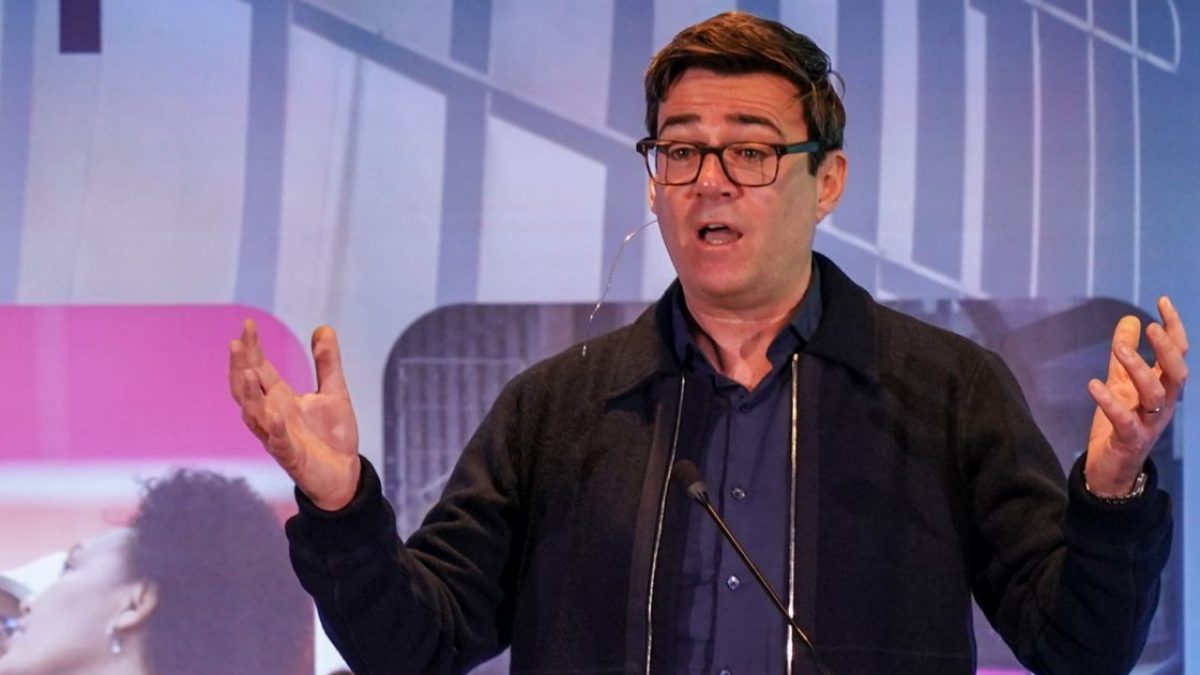
Devolved mayors and strategic authorities in England will be given a portion of income tax revenue from their regions under plans unveiled by Andy Burnham. The reform, part of the Prime Minister’s goal to make devolution a key aspect of his administration, will allow metro mayors to access their own money pots rather than having to ask central government for grants. Strategic authorities will also be able to reserve some money generated by business rates, while regional leaders will have greater remit over areas like transport and housing. Devolved mayors have been campaigning for such powers for years, and are now looking at which projects they could fund off their own backs, with many major infrastructure projects set for a boost. It is not yet known what the exact settlement might look like, as Chancellor John Healey will announce this in the autumn Budget, but mayors are expected to start seeing a portion of income tax revenue from April 2028. One proposed model for fiscal devolution comes from think-tank Re:State, which recently published a blueprint for No 10 North. Simon Kaye, Re:State’s director of policy and research, said authorities “will be ploughing it into a lot of transport connectivity”. This could mean local authorities will finally complete rail projects that have long struggled to get off the ground with a level of separation from Westminster control – “you could see that getting fixed by the income tax devolution”, Kaye added. He explained this would not mean central government giving regional authorities any extra money. Rather, mayors will look to try and maximise the return on investment for these projects. HS2 extension Mayor of the West Midlands Richard Parker said he has “very ambitious plans” for how to spend the money from income tax. As one of the devolved mayors who has long campaigned for such a reform, he said he wants to get to work “the sooner the better”. “I’ve got a big commitment to public transport,” he told The i Paper. “We’re bringing the buses back into public control and I want to do all I can to keep fares for children as low as possible.” In a pre-election interview, Burnham told The i Paper that he would like to see the idea of a new railway line between Birmingham and Manchester revived, following Rishi Sunak’s decision to cancel the northern leg of HS2 in 2023. Parker also touched on the thinking behind this possible scheme, saying: “There is a real focus on what we can do to build that line. Demand and capacity on the existing West Coast Mainline is at its limit. “So we do need to look at other options to connect the two cities. I think the Prime Minister previously has talked about using land value capture and other mechanisms to drive that scheme forward and that’s something I fully support.” Northern Powerhouse Rail Labour has already committed at least £45bn to Northern Powerhouse Rail (NPR) – a plan that would see improvements to infrastructure running east to west across the North. The i Paper revealed in January that HS2 Ltd, the arms-length business currently building the high-speed railway between London and Birmingham, has been tasked with carrying out early work on NPR. No changes to their remit have been made as yet, but there is an expectation they would be the ones to develop a new railway line if plans are resurrected. Henri Murison, chief executive of the Northern Powerhouse Partnership, said one of the areas which could be looked at under the new system could be the stretch between Crewe and Manchester – part of the longer branch from Birmingham. He welcomed the announcement, saying: “It means that local infrastructure decisions are in the hands of local people.” The fact that projects like this possible NPR extension would “not need central government approval in quite the same way” would make the process faster, cheaper, and better suited to locals, he said. A HS2 tunnel construction site. Some of the abandoned elements of the project could be revived with new funding (Photo: Ben Stansall/AFP) A 2024 report, commissioned by a consortium of private businesses and backed by Burnham and Parker, said a new rail link between Birmingham and Manchester could be built for as little as 60 per cent of the cost of HS2. This would be achieved by lowering the speed from HS2’s original aim of 224mph to 185mph, using cheaper ballasted track instead of slab track, and with existing infrastructure. Leeds tram Kaye argued the income tax revenue could provide “kind of seed funding” to finally push through projects which have been “blocked for years”. The long-awaited tram linking Leeds and Bradford has already cost £2.5bn and has been embroiled in delays and cost rows. Projects like this, experts argued, could be lifted out of the quagmire with the new money, which means local projects have more local control. Kaye said this with the caveat, though, that central government “devolves enough of a share” to regional authorities – “not just a top-up”. Murison also pointed to the Leeds tramway as “a big ticket thing” which would be an obvious candidate to benefit from targeted investment. “People are obviously impatient. The problem is that it’s the government’s money. That adds quite a lot of time to the process,” he said. When the devolved powers kick in, this could be transformative for the efficiency of similar projects. While regional governments may not receive more money than they did before, he said the difference will still be major. Having a pot of their own money means “you can borrow against that income stream and spending power is dramatically increased”. He added investment in major infrastructure projects like these promotes “more jobs, more office space, income tax goes up… It isn’t just the tram you get, it’s the investment that comes before it happens.” West London Orbital Several projects are being weighed up and campaigned for in the UK capital, which is the area likely to get the largest amount of money from income tax. Crossrail 2, the successor to the Elizabeth Line, which would link the south-west and north-east of the city, is the biggest potential project. But its estimated £40bn cost would likely be deemed too much, even with income tax revenue. James Ford, a former transport advisor to Boris Johnson as Mayor of London, pointed out that City Hall has long bankrolled transport projects in London, rather than begging central government for money. This means things may not change quite so drastically, though Ford did say the reforms could help get smaller projects over the line. The West London Orbital, which would link Hounslow and Hendon, is an ideal candidate for such a project. Ford added: “The West London Orbital is estimated to be about £600m, which is small change in transport terms. “It connects to 10 different lines and connections. It benefits more people, compared to two stations on the current DLR extension.” He added you can get “more bang for your buck” on the west London project because there’s “a lot of rail already there” – the proposed scheme would utilise many pre-existing lines and stations, including freight routes.
The key projects that could be unlocked by Burnham’s income tax plan
Full Article
Original Source
Read the full article at Inews →KhanList aggregates and links to publicly available news content. We do not host full articles from third-party sources. Always verify important information with original sources.