
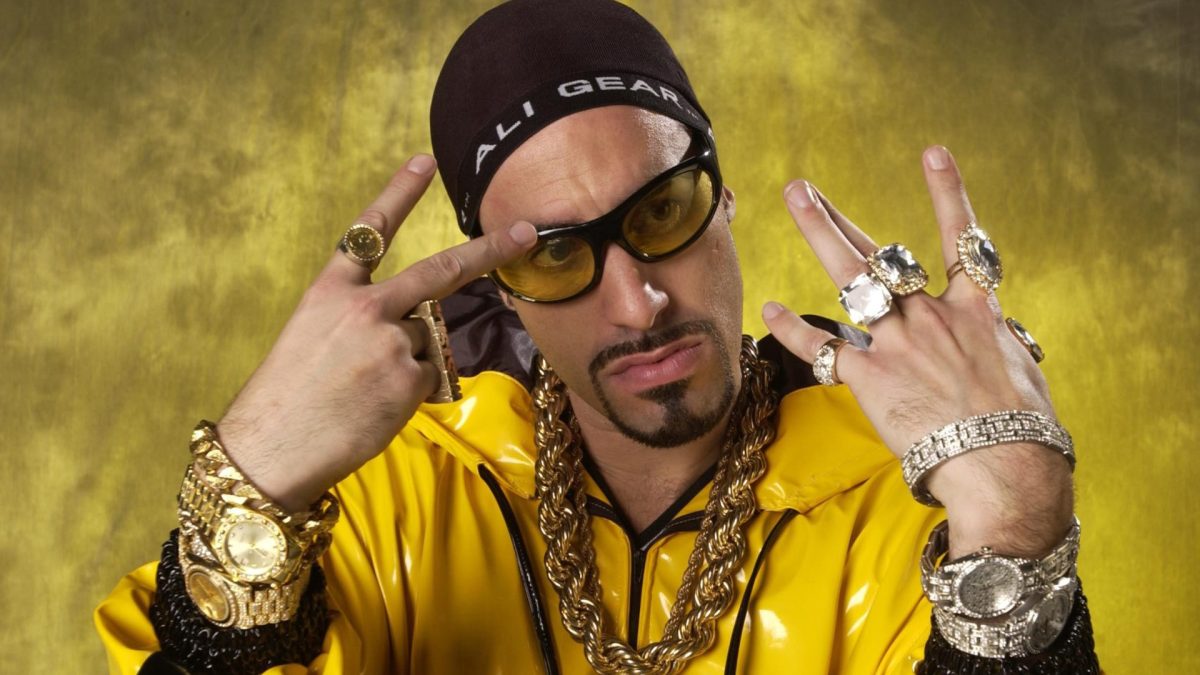
Ali G, Sacha Baron Cohen’s tragic comedy alter ego, was born into a different era of comedy. Along with other brands of classic British comedy blackface, such as the fever dream past of Little Britain and Bo’ Selecta!, his humour came of age during the golden age of British multiculturalism, when everyone thought they were in on the joke and the comment section was conspicuously absent from public life. Baron Cohen’s work has rather predictably not aged well, and while his peers in the industry are desperately trying to bury the overtly racist caricatures of their comedy pasts, Baron Cohen appears to be doubling down. His latest offering Ali G: Who Iz I? recycles racist tropes, employs tired tactics and appears to be one long egotistical exercise in defending his own tone-deaf comedy. Evidently, a new generation of cinemagoers are not having it. News of the film’s release earlier this year was met with loud digital backlash. Campaigns aimed at lobbying cinemas to boycott the film attracted over 35,000 emails. This rising chorus of protest joins a breeding discontent of his churlish style of humour at home, and a long-held sentiment against it abroad. Baron Cohen has achieved the rare feat of angering an entire nation with his stigmatising portrayals of Muslims and Islam through Borat, a Kazakh character who contains all the Islamophobic tropes you might be able to fit into an hour and a half of lazy, character-led comedy. He won a Golden Globe for Best Comedy Performance for his efforts.It’s almost tempting not to blame Baron Cohen, who was catapulted to a household name pedigree of fame in the network comedy scene of the early 2000s. Ali G jazz-handed on to the stage in 1998 via The 11 O’Clock Show, before the eponymous Da Ali G Show was commissioned by Channel 4. It featured a trio of characters played by Baron Cohen who would interview unsuspecting members of the public, and celebrities, putting them in increasingly uncompromising scenarios. Early anonymity meant Baron Cohen was able to draw a slew of public figures into his Gonzo-style comedy, famously including Donald Trump, Buzz Aldrin and Tony Benn. He later attracted a catalogue that read like the who’s who of late 90s celebrity, including the Beckhams and Mohamed al-Fayed, drawn to the tongue-in-cheek notoriety afforded by his zeitgeist comedy. Their willing participation gave Baron Cohen and his comedy a new kind of credibility. Once again, he won a host of awards for his sketch show, including two Baftas. All of which begs the question, how can a humour that was the subject of such applause then be so reviled now? David and Victoria Beckham while filming for their interview with Ali G. Celebrity participation in his sketches gave Baron Cohen a new kind of credibility, writes Bint Rehan (Photo: Comic Relief/Getty) Baron Cohen’s comedy depends upon an arsenal of characters – all from marginalised communities – which he satirises with a bold facedness that’s typical of a time when comedy was a one-way street, and shock-value was conflated with humour. Ali G, a white-seeming (brown-alluding) caricature of a man from Staines who engages in street culture and urban slang, has made ethnic minority communities queasy since its very inception. While Baron Cohen ostensibly appears to be mocking the pretensions of white street culture, Ali G becomes a vehicle through which we flatten, stereotype and mock both racialised communities and white working-class culture itself. Through Baron Cohen’s comedy, the black British community is projected as a crude monolith, Muslims as backward, brutish – and both as inarticulate and stupid. While the original gag was said to highlight racist attitudes towards these communities using Baron Cohen’s whiteness as mediator between audience and said culture, his skits became legitimate means to further reinforce stereotypes and cause more ridicule and harm. Rather than question the very attitudes we have towards non-majority communities, Baron Cohen’s supposed satire has given wider licence to mimic them. “Is it cos I is black” loses its supposed ironic context when it is shouted in the street, and comedically distorted accents, and tired, pastoral-themed jokes aimed at Muslims, are given a social pass. It has created a false sense of mass, cultural familiarity that emboldens racist attitudes, rather than questions them. Baron Cohen’s comedy projects the black British community as a crude monolith, writes Bint Rehan (Photo: Amazon MGM Studios) Baron Cohen has made a successful career out of mocking minorities because he is white, and has cynically used Ali G’s own whiteness to provide cover for his post-modern minstrel sketches. Ali G got a decades-long pass to uninspiringly parrot racism under the guise of questioning it – the end result was always just shockingly poor, racist skits that appealed to white middle-class audiences only. Ali G had no relevance to the communities he claimed to be representing and of which I was part as a young Muslim in an inner London school. There was this overwhelming sense that his characters wilfully ignored the very identities they were designed to represent, or at least ostensibly advocate for. This latest dreaded release picks up the dated Ali G narrative from where it left off, literally and figuratively. The plot is premised, unironically, on a washed-up celebrity unable to face the reality of his own cultural obsolescence and trying to regain his former glory. The hackneyed format of skits, heavy on the toilet humour, is brought up to speed with the inclusion of TikTok as his media of choice and cynically placed cultural touch points such as that Will Smith slap and clumsy references to late-stage social media culture wars. Ali G with Jamaican reggae musician Shaggy, in 2002. Baron Cohen has made a successful career out of mocking minorities because he is white, writes Bint Rehan (Photo: Tim Roney/Getty) While the film appears to be building up to a sophisticated point about the woke-left and conservative right having the same reactionary politics, Baron Cohen’s hypocrisy and cultural blind spots prevent it from developing any kind of coherent argument. Particularly as the film is focused primarily on exonerating Ali G of cultural appropriation. Naturally, he is the victim of our misunderstanding, and not the other way round. We are now in a climate where vulgar stereotypes are no longer amusing or acceptable. Outside the dark corners of Reddit and X, the internet has given us more radical ideas about humour only being used to punch up, and not down, than ever before, and this renders Baron Cohen’s pastiche of minority communities vapid and irrelevant. Ali G’s crude and over the top attempt at patois as urban street code, and even his exaggerated style of street wear reflect how out of touch he is with the very cultures his comedy is designed to exploit. Following the film’s release, to very mixed reviews, the size and tone of Baron Cohen’s press tour suggests the penny may be finally dropping. The age-old digital adage that you can either be racist or funny certainly rings true in the case of Ali G – and in this instance it looks like Baron Cohen didn’t choose funny.
The joke is over for Ali G
Full Article
Original Source
Read the full article at Inews →KhanList aggregates and links to publicly available news content. We do not host full articles from third-party sources. Always verify important information with original sources.