
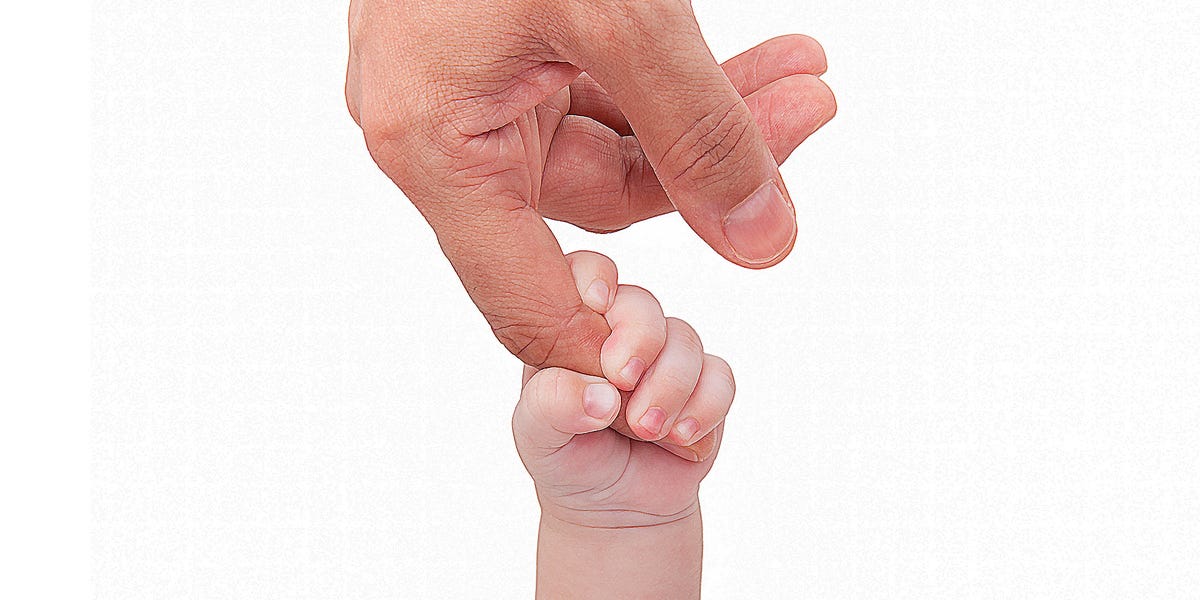
6 min readDear Eva,You roared into our world this winter, seven pounds, two ounces, and with your mother’s eyes, bright blue and shaped like jumbo almonds, searching for something good. Whenever you were awake in the hospital, I stared straight into them, not picturing who you’d be quite yet, just marveling at what you already were, breathing and real. Then as soon as you fell asleep, I’d grab my phone to announce you, to family and friends, to anyone I could think of, really, telling them, This is my daughter, she’s real, she breathes.When the responses rolled in, many said that when you’re older, Eva, when you understand fear and anxiety, when you can laugh at the universe’s perverse sense of humor, I’d have quite the story to tell you. It is, after all, the first thing I fell in love with. Telling stories. In second grade, I would stay in from recess to fill up my journal, which was dark blue with staples down the spine, which I remember because I went through a half dozen of them in one school year. A decade later, when I saw my first byline in Syracuse’s student paper, atop a profile of the club-rugby captain, that was it. I wanted to do that over and over. I wanted to do it for the rest of my life.You were born as I was doubting whether it would be possible, but I’m getting ahead of myself. We’ll get back to that.AuthorThe author filed his story about the Nationals’ World Series win from the stadium tunnel. His daughter’s arrival meant his dogged focus on work would have to change.After graduating, I drove cross-country to work for the Los Angeles Times, my old Jeep Wrangler wheezing through the last few hundred miles. I was there nine months and, on the advice of a veteran sports columnist, didn’t spend a second on the beach. One night, late to cover a star pitcher’s rehab appearance, I sped through the carpool lane without a passenger, collecting a $400 ticket. After UCLA games at the Rose Bowl, I would stay late, well past midnight, to transcribe every last interview for the paper’s beat writer. An old security guard called me the Closer.I left L. A. when The Washington Post hired me to cover high school sports, which I did with the same single-minded obsession, all the way down to the local lacrosse rankings. I was young, just 22, but I think I knew what I had. The big-name politics reporters taped their CNN hits near my desk. My byline was often printed a few inches from my heroes’, then hand-delivered to doorsteps across the region. It was my dream job.After a promotion, I was on the ice in Vegas when the Capitals won the Stanley Cup, then on the field in Houston when the Nationals won the World Series. My Nationals coverage led to a book deal. The publisher wanted a 90,000-word manuscript in less than three months. I wrote a thousand words a day that winter, burrowed away from the world—except this one night, when I was pulled out to the bar and planned to leave within an hour. But then I met your mom there, sipping a beer with a bag over her shoulder, as if she was about to split too. And then, Eva, we couldn’t stop talking about the books we’d read that year, which we both kept in neat lists on our phones. And now you exist.For months, I hunted for a job while holding you. You napped in my lap as I sent (mostly) unanswered emails.There were, of course, some steps in between. But we reached a point, as boring as it will eventually sound to you, when everything in our lives was exactly where it was supposed to be, like when the last book fits snugly on the shelf.I had relocated my job from D. C. to St. Louis, where I’d cover college sports for the Post, where we planned to raise a family—to raise you—just a short drive from your Nan and Tom Tom. Money was good, the lower state taxes sprinkling another dinner out on top of every paycheck. Over big pours of wine, we mused about opening a bookstore, about how Mom would run it and make baked goods to sell at the register.And then, Eva, when we had packed our bags for the hospital, when we were just 16 days from meeting you, I received an email at 7:58 a.m., before I had finished my first cup of coffee. The subject line: Your Role Is Eliminated by Today’s Workforce Reductions.And then we were crying in the bathroom.You’ll learn, should you eventually choose to share your life with someone, how many heart-twisting conversations happen between the sink and toilet, right when you’re dabbing the toothpaste off your chin. Like this one, for example, when your mom looked at me, her eyes full of tears, her body just exhausted from growing you, and asked: Why haven’t you read any of the baby books?AuthorAt that point, I had been unemployed for no more than 48 hours. But we had braced for layoffs for weeks, for months of Mom’s pregnancy, even, and I wasn’t always great at balancing my grief and anxiety with the excitement of your impending arrival. Okay, to be totally honest, Eva, I was really, really bad at it, especially when you were almost here. I felt like I’d lost the only person I could picture as your dad. A man who, in spite of his tunnel vision, had built the life he’d always wanted: a fulfilling job, a supportive wife, full bookshelves, and a screened-in porch to read on.A man who never wondered how he’d support his family. A man who thought he was whole.Instead, I was a complete mess. I thought about the swing set I wanted to buy you, the places I wanted to take you, then imagined us tightening up, all because I couldn’t find work. Late one night, while we waited for your due date, I mistyped my bank password so many times I was locked out of my account. The next afternoon, I broke down sobbing in the grocery store. And the baby books stayed stacked on my bedside table, accumulating, each of them unopened.This article appeared in the September 2026 issue of Esquire subscribeWhy couldn’t I just read them? I was, I think, too busy worrying about the future to prepare for it. I was terrified of failing as a parent because I was no longer me. But then you were born, Eva, two weeks after I was laid off. And it took one moment, when you first looked at us and stuck out your tiny tongue, for me to realize that the person I’d wanted you to meet had been hopelessly incomplete. Where I worked never had anything to do with whether I was ready to be your dad, to protect you or make your bottle with one arm at 3:00 a.m. I had told so many stories yet didn’t understand my own.That doesn’t mean everything was suddenly perfect. For months, I hunted for a job while holding you. While you napped in my lap, I sent (mostly) unanswered emails, then immediately regretted not counting the spit bubbles on your chin. My tunnel vision, I swore, would fix the problem, except there you were, squeezing my finger, forcing me to widen my lens.Eva, you taught me the first lesson I want to pass down: that while I hope you find a passion as I have, you will always be so much more than any job.As I write this, I’m working again, writing about sports and politics. And though I’m still me, though I still feel, deep down, like that reporter who had to be forklifted from the press box, it’s different. I’m different. To be clear, I’m scared all the time, but it’s less about whether I’ll be telling stories in three years, five years, a decade, and more about whether I’m supporting your head the right way, about whether I’ll miss your first steps while staring at my phone. When sources ask how I am, I talk about you, about how you’re sleeping in your crib, before blabbing about my next story. I’m really trying not to text at the dinner table.Steady paychecks have already made it easier to forget the stress of before and right after you were born. I also imagine that time will blur the worst moments out of our brains. But I don’t want to ever forget what changed when I lost my dream job and then you were here, just like that, breathing and real. And I don’t want you to forget either, which is why I wrote it all down.With all the love in the universe,Dad
The Job That Loves You Back
Full Article
Original Source
Read the full article at Esquire →KhanList aggregates and links to publicly available news content. We do not host full articles from third-party sources. Always verify important information with original sources.