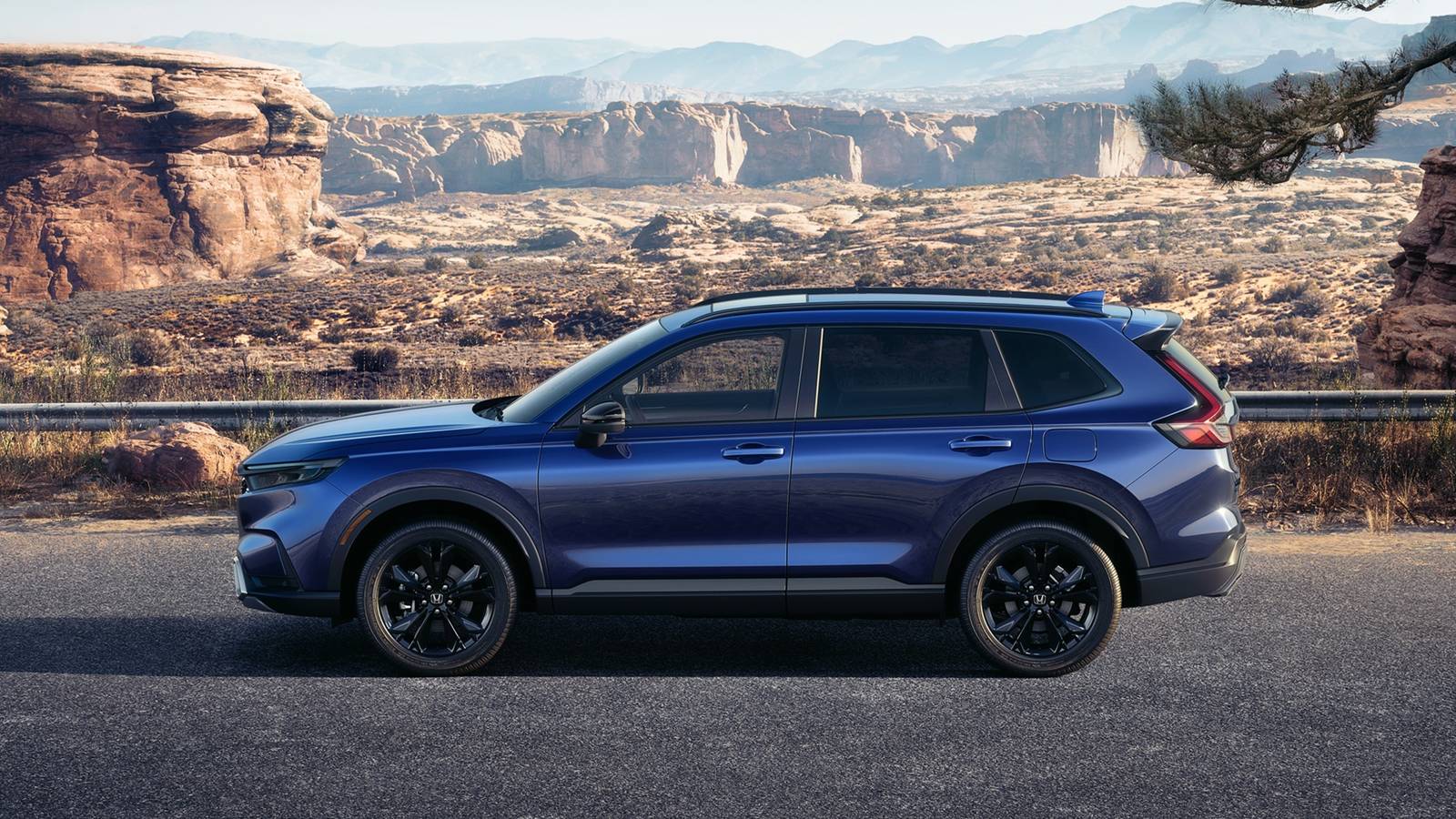
Published Jul 31, 2026, 11:15 AM EDT Adam Gray, a seasoned automotive journalist and content creator from the UK, joined the How-To Geek editorial team in January 2025. As an automotive journalist for How-To Geek, Adam breaks first-to-report news on the latest in automotive tech, as well as penning automotive features and reviews. Adam is also a contributor to one of How-To Geek's sister sites, TopSpeed, where he uses his media accrediation with manufacturers' press offices to gain access to the latest vehicles for subsequent review. Prior to joining How-To Geek, Adam worked on a freelance basis, contributing automotive content to a variety of business and lifestyle publications. His experience also includes time spent serving as senior editorial & auction content manager for SBX Cars, automotive content writer for Supercar Blondie, motoring editor for Portfolio North, and motoring editor - North East for Reach plc. When he's not putting the latest vehicle through its paces or testing out its tech, Adam can be found at his local ice rink playing ice hockey or at the Riverside Stadium supporting his beloved Middlesbrough FC. Adam also enjoys spending quality time with his three children: Ellie, Oscar, and Heidi. Hybrid SUVs have become the go-to choice for buyers who want better fuel economy without changing the way they drive. They deliver meaningful savings at the pump while avoiding the charging concerns that still accompany many fully electric vehicles. That popularity has transformed the compact SUV segment into one of the most competitive corners of the market. Nearly every major manufacturer now offers a hybrid crossover, giving buyers more choice than ever before. Among the strongest all-rounders is the 2026 Honda CR-V Hybrid. With impressive efficiency, a well-developed hybrid powertrain, competitive ownership costs, and Honda's reputation for reliability, it makes a convincing case for being worth every dollar of its asking price. The Honda CR-V Hybrid gets the fundamentals right Efficient, capable, and easy to live with Credit: Honda The 2026 Honda CR-V Hybrid pairs a naturally aspirated 2.0-liter four-cylinder engine with two permanent-magnet electric motors, producing a combined 204 horsepower and 247 lb-ft of torque. Buyers can choose between front-wheel drive and all-wheel drive, with both versions using Honda's direct-drive eCVT. Performance is more than adequate for everyday driving. Honda quotes a 0–60 mph time of around 8.0 seconds for the front-wheel-drive model and 7.6 seconds for the all-wheel-drive version, while top speed is limited to 111 mph. Base Trim Engine 2L I4 Hybrid Base Trim Transmission CVT Base Trim Drivetrain Front-Wheel Drive Base Trim Horsepower 145 HP @6100 RPM Base Trim Torque 138 lb.-ft. @ 4500 RPM Base Trim Fuel Economy (city/highway/combined) 43/36/40 MPG Base Trim Battery Type Lead acid battery Make Honda Model CR-V Hybrid Unlike some rival hybrid systems, Honda uses the same combined power output regardless of drivetrain. Instead of employing a dedicated rear electric motor, the all-wheel-drive CR-V Hybrid sends power to the rear axle through a conventional driveline, resulting in consistent performance across the lineup. The result is a powertrain that prioritizes smoothness and efficiency over outright speed. It delivers enough performance for daily driving while maintaining the fuel economy expected from one of the segment's leading hybrid SUVs. Efficiency doesn't come at the expense of practicality Strong fuel economy and impressive driving range Credit: Honda The CR-V Hybrid uses a 1.1-kWh lithium-ion battery pack to support its gasoline engine, helping the front-wheel-drive model achieve an EPA-estimated 40 mpg in the city, 34 mpg on the highway, and 37 mpg combined. All-wheel-drive models return 37 mpg city, 34 mpg highway, and the same 37 mpg combined rating. Combined with a 14-gallon fuel tank, those figures translate to an estimated driving range of up to 560 miles for front-wheel-drive models and around 518 miles for all-wheel-drive versions. That gives the CR-V Hybrid the ability to cover long distances between fuel stops while remaining efficient in everyday city driving. Honda also uses variations of this hybrid system in the Civic Hybrid and Accord Hybrid, but the CR-V has become the brand's most popular electrified model. Its blend of SUV practicality, passenger space, and efficiency has helped it appeal to buyers who want more versatility than a traditional sedan can offer. The CR-V Hybrid demonstrates that buyers no longer have to sacrifice everyday usability to gain meaningful fuel savings. It combines the benefits of a compact SUV with the efficiency expected from a modern hybrid. Reliability helps justify the price A dependable reputation backed by strong ownership data Credit: Honda The CR-V has built a strong reputation for reliability over multiple generations, and the current model continues that trend. J.D. Power gives the CR-V an 84/100 Quality & Reliability score, while Consumer Reports awards it an overall score of 84/100, supported by a 93/100 road-test rating and a 4/5 owner satisfaction score. According to iSeeCars, the average CR-V is expected to last around 169,626 miles, or roughly 13.9 years, and has a 30.4 percent chance of reaching 200,000 miles. The publication also ranks it among the most reliable crossover SUVs and most reliable small SUVs currently available. Like any modern vehicle, the CR-V Hybrid hasn't been completely free of issues. Honda has issued recalls covering a leaking fuel pump and a faulty steering gear spring, although both repairs are carried out at no cost to owners. Those isolated recalls do little to diminish the CR-V Hybrid's broader reputation. Strong reliability scores and long-term durability remain key reasons why it continues to attract buyers looking for an SUV they can keep for many years. Ownership costs remain competitive Running costs help strengthen the value proposition Credit: Honda The CR-V Hybrid doesn't just promise strong fuel economy—it also keeps long-term ownership costs in check. According to CarEdge, the CR-V's five-year ownership cost is estimated at $36,935, only slightly higher than the Toyota RAV4 despite its competitive equipment levels. Maintenance costs also compare favorably with the rest of the segment. CarEdge estimates the CR-V will cost around $7,636 to maintain over its first 10 years, while the probability of requiring a major repair during that period sits at 21.74 percent—both figures lower than the average for similar SUVs. Honda backs the CR-V Hybrid with a three-year/36,000-mile limited warranty, a five-year/60,000-mile powertrain warranty, and an eight-year/100,000-mile warranty for the hybrid battery. Buyers also receive three years or 36,000 miles of roadside assistance, with extended warranty plans available for those planning to keep the SUV beyond the factory coverage. Together, those factors help reinforce the CR-V Hybrid's value beyond its purchase price. Competitive ownership costs and comprehensive hybrid battery coverage make it an attractive long-term proposition for buyers intending to hold onto their SUV. Honda offers plenty of value across the lineup Every trim comes well-equipped The 2026 CR-V Hybrid starts at $35,630 for the Sport Hybrid and rises to $42,550 for the range-topping Sport Touring with standard all-wheel drive. While it isn't the cheapest compact SUV on the market, Honda includes a generous list of standard equipment across the lineup. Even the entry-level Sport Hybrid comes with heated front seats, dual-zone climate control, a six-speaker audio system, and Honda's touchscreen infotainment system. All-wheel drive is available on the Sport and Sport-L trims, while the Sport Touring is exclusively offered with all-wheel drive. Moving up to the Sport-L adds leather upholstery, a wireless smartphone charger, an eight-speaker audio system, and a larger 9.0-inch touchscreen. The flagship Sport Touring further upgrades the cabin with a Bose premium audio system, power-adjustable front seats with memory settings, and a heated steering wheel. Honda also offers a range of optional appearance and accessory packages, including the HPD styling package and various all-weather accessories. Combined with its standard equipment and competitive pricing, the CR-V Hybrid presents a strong overall value proposition within the compact hybrid SUV segment. The Honda CR-V Hybrid earns its asking price A well-rounded hybrid SUV with few compromises Credit: Honda The compact hybrid SUV segment has never been more competitive, but the Honda CR-V Hybrid continues to stand out by excelling in the areas that matter most. It combines strong fuel economy, everyday practicality, competitive ownership costs, and a reputation for reliability into a package that appeals to a broad range of buyers. It isn't the least expensive option in the segment, nor does it offer the most generous warranty coverage. However, its efficient hybrid powertrain, well-equipped trim lineup, and proven long-term dependability help justify the premium over many conventional compact SUVs. For buyers looking for a hybrid SUV that balances efficiency, comfort, practicality, and long-term value, the 2026 CR-V Hybrid makes a compelling case. It may not be the cheapest choice on the market, but it delivers enough across every key category to feel worth every dollar.
The Japanese hybrid SUV that's worth every dollar
Full Article
Original Source
Read the full article at Howtogeek →KhanList aggregates and links to publicly available news content. We do not host full articles from third-party sources. Always verify important information with original sources.