
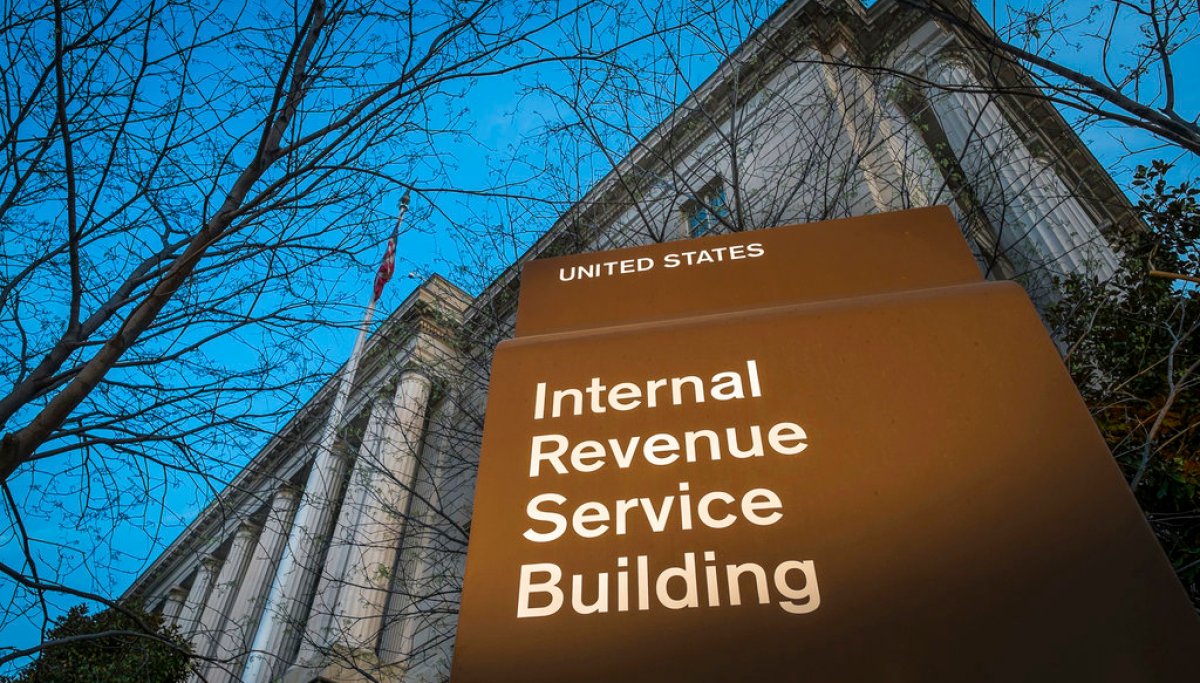
In my financial services career, I have learned one rule that never bends: You pay claims to the beneficiaries named in the document, not to whoever shows up with a plausible story. A trustee who ignores that distinction loses a license, a client, and occasionally a freedom. Washington has run a piece of the tax code on the opposite theory for 30 years, and this month it finally noticed.On Aug. 19, Treasury and the IRS proposed a rule clarifying that the refundable portion of four tax credits, the earned income tax credit, the child tax credit, the American opportunity tax credit, and the adoption credit, counts as a federal public benefit under a law Congress already passed in 1996. Under that statute, the Personal Responsibility and Work Opportunity Reconciliation Act, only citizens, nationals, and a defined list of qualified aliens may collect a federal public benefit. Treasury did not invent a new restriction. It started enforcing a dormant one already on the books.The mechanics matter here. A filer who owes tax can still use these credits to shrink the bill. The proposed regulation only reaches the piece that exceeds what a filer owes, and gets mailed back as cash. Get the eligibility standard right and the credit stands. Get it wrong and, going forward, a filer would have to certify citizenship, national status, or qualified-alien status under penalty of perjury before collecting the check. For joint filers, one qualifying spouse is enough. Treasury estimates that 200,000 to 700,000 filers could lose eligibility for the refund, out of roughly 29 million taxpayers who claim these credits nationally. Projected savings run as high as $2.6 billion in 2026 alone. That is real money, and it has been walking out the door for three decades because an agency decided a benefit meant something narrower than the statute said. The range in the estimate is wide because eligibility depends on immigration category, filing status, income, and which credit a filer claims, not because anyone is guessing at the underlying arithmetic.None of this is exotic by the standards of federal benefit programs. Food assistance and Medicaid have required identity and status verification for years without anyone calling it cruelty. The tax code carved out an exception for refundable credits not because Congress meant to, but because nobody made the IRS treat a refund check the way it treats every other federal check. A trust document does not stop meaning what it says just because the trustee finds it inconvenient to enforce, and a statute does not stop applying because an agency spent 30 years declining to read it closely.I sit as a designated expert witness on fiduciary duty, which mostly means I get paid to explain, under oath, why a trustee cannot treat a trust document as a suggestion. If I advised a family office to disburse funds to beneficiaries the governing instrument specifically excluded, opposing counsel would not need me on the stand. They would send me a subpoena. The federal government ran the tax-credit refund system on close to that theory for 30 years and called it compassion instead of a breach.To be sure, the line PRWORA draws is narrower than simply here legally, and that will sting some honest taxpayers. DACA recipients, temporary protected status holders, and many H-1B visa holders pay federal income tax and file straight returns, but none of them fits PRWORA’s qualified-alien category, a list built for green card holders, refugees, and a short roster of others. An engineer on an H-1B who has paid into the system for a decade will not enjoy losing a refund check to a category drawn for statuses that barely existed when the statute passed. That is a fair complaint, but it belongs in front of Congress, which wrote the qualified-alien list, not in front of an IRS examiner enforcing it. Treasury did not choose who counts as a qualified alien. Congress did, in 1996, and nobody has amended the list since. If lawmakers think three decades of technological and immigration change warrant a broader category, they know where the amendment process is. Blaming the agency finally reading the statute for the statute’s own gaps gets the complaint backward.FLORIDA MAN VOTED FOR 20 YEARS UNDER A STOLEN NAME. STILL THINK SAVE AMERICA ACT IS PARANOIA?Litigation is coming, and it may win on narrower grounds. Challengers will argue under the Administrative Procedure Act that Treasury has not adequately explained why a refund check is a benefit while the underlying credit is not, and courts, not press releases, will settle that question. Treasury is leaning on a Justice Department legal opinion concluding that refund amounts exceeding tax liability are functionally a cash benefit, which is a serious argument, not an improvised one. There is a 45-day comment period and a public hearing set for October 14, and the rule would not take effect before 2026 returns filed in 2027 at the earliest. The underlying principle should not need a lawsuit to survive. A refund is money the government sends back to someone. Deciding who is entitled to receive it is not a radical position. It is what the statute has said since Bill Clinton signed it.Every trustee I have ever advised understood a version of this instinctively: The money belongs to the beneficiaries named on the page, not to whoever files the most convincing paperwork. Congress named its beneficiaries in 1996. It only took Washington 30 years, a comment period ending in October, and a hearing on the calendar to remember it had.Jay Rogers is a financial professional with more than 30 years of experience in private equity, private credit, hedge funds, and wealth management. He has a Bachelor of Science in criminal justice from Northeastern University and has completed postgraduate studies at UCLA, the University of Pennsylvania, and Harvard. He writes about issues in finance, constitutional law, national security, human nature, and public policy.
The IRS finally read a 30-year-old law it forgot existed
Full Article
Original Source
Read the full article at Washingtonexaminer →KhanList aggregates and links to publicly available news content. We do not host full articles from third-party sources. Always verify important information with original sources.