
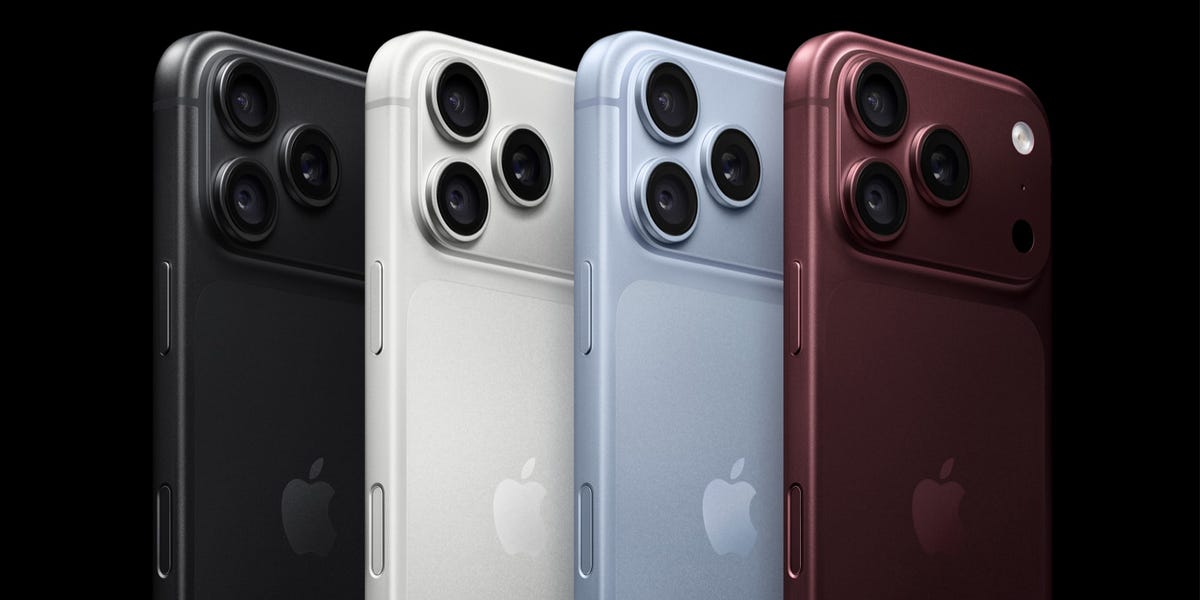
Every product was carefully curated by an Esquire editor. We may earn a commission from these links. Here’s how we test products and why you should trust us.Apple5 min readLet’s be honest, you probably buy your phone based on the camera. Everyone does. Apple knows this; Samsung knows this; Google knows this. That’s why every year, once all the flagships release, we compare them. That said, you still get inundated with marketing material about the latest and greatest in software and hardware.This year, that marketing push focused heavily on AI, and it’ll continue to be like this for the foreseeable future. When I was in Cupertino for Apple’s keynote, Siri AI commanded a ton of air time—almost as much as the biggest drop in decades, the iPhone Duo. And while it would be cynical of me to call either Siri AI or the iPhone Duo a gimmick—total transparency, I don’t think either is—I think the Pro and Pro Max line are what we should focus on if we’re talking bestsellers. These will be the holiday behemoths they always are.But what I love about this year’s upgrades is that they’re not exactly splashy. That is not to say they’re iterative or not worthy of note. I think Apple has the Pro recipe—better materials, better performance, better cameras—and it’s at a point of reduction. Every year, it all gets a step better. The general public is not begging for the bleeding edge of tech. The world is better when Apple takes big swings like it has done with the Duo, but most people want the best possible camera to take the best possible pictures of their kids.The iPhone 18 Pro and Pro Max hit that out of the park.This is seen most obviously in a small feature that shutterbug Apple buyers have been asking for a long time. You can finally manually adjust the aperture when taking photos or video.Aperture is the physical opening of a camera lens when it takes a picture. A wider opening lets in more light and creates a shallower depth of field, keeping your subject sharp while blurring the background. A narrower opening lets in less light but keeps more of the scene in focus.Until now, that kind of manual aperture control has been virtually impossible on a phone because it requires the lens to physically open and close inside an incredibly small camera module. Apple has solved that with six laser-cut blades and a new rotor system, giving you four manual aperture settings: f/1.48, f/1.8, f/2.8, and f/4.0.Those numbers won’t wow anyone who shoots on a full-size camera, but on a phone, they’re a genuine hardware breakthrough. Paired with all of Apple’s computational photography, they unlock something genuinely new on an iPhone. Portrait Mode has long simulated the look of a wide aperture with software. Now the phone can actually change its aperture mechanically.So why should you care about this? If you’re a pro or amateur photographer, you are probably geeked already, and Apple is letting third-party developers use the aperture control hardware—so it’ll be exciting to see what happens. But for a regular Portrait Mode user, think of it as Apple giving you the option, only if you want it, to take some of the training wheels off. You can drop the aperture for bar lighting and motion blur at your friends’ band’s reunion show and feel like a music photographer. You can increase the aperture on a hike to close the lens and do Ansel Adams-style landscapes. (Also to note, Apple has added new filters within its Cinematic Mode; there’s a noir one that makes excellent black and white images.) But it also just works in the background if you leave the settings on autopilot.With this sort of stuff, you have to increase your own mental aperture and try to see the whole picture, fully in focus. This is a flag in the ground for Apple. The hardware geeks in underground labs that no one knows the address of know that f/1.48–f/4.0 is not groundbreaking in the grand scheme of things. But at the minuscule scale Apple is building it, and with the Pro line’s camera-obsessed programming, it puts Apple well ahead of the Android names. Expect to get a wider range of aperture variability year-on-year from here on out.The other tweak I loved happens at an even smaller level than the main camera lens—like at the pixel level of the display. Apple’s Dynamic Island has been a feature of the Pro line since the iPhone 14. Basically, it’s a strip at the top of your phone where you can jump to the most important app you’re currently using or whatever notification comes in on your screen in real time. Helpful, but ultimately not the most life-changing thing.Now, Apple has reduced the physical space of the Dynamic Island by about 25 percent. This is done by actually moving the IR camera (needed for Face ID) behind the display. It’s crazy stuff on a hardware level, but just know that for you it means there’s now more real estate at the top of the phone for an 18 Pro to squeeze functionality out of. You can have up to three icons at once, meaning, for example, you can easily tap into music, maps, and the Apple News article you’re reading straight from the home screen.It’s a small tweak, and technically iterative on the older idea of the Dynamic Island, but it drastically changes the day-to-day interaction you have with your phone. It’s also a great example of the point I’m making with the aperture on the camera. It’s taken Apple four years to get to this point with the Dynamic Island. For you, that’s a lifetime, but I guarantee when the Island hit with the iPhone 14 Pro and Pro Max, this was already on the board.We always want new and flashy, a quick answer to “What’s new this year, and should I upgrade?” In 2026, I think the answer is yes. The camera, the performance I haven’t even touched on (better for gaming, and well over a day’s worth of battery), and that gorgeous wine-color burgundy are worth a trade-in. But what really excites me is where this hints that the Pro line is headed. I’m expecting big camera news over the next half-decade.
The iPhone 18 Pro Camera is a Genuine Breakthrough
Full Article
Original Source
Read the full article at Esquire →KhanList aggregates and links to publicly available news content. We do not host full articles from third-party sources. Always verify important information with original sources.