
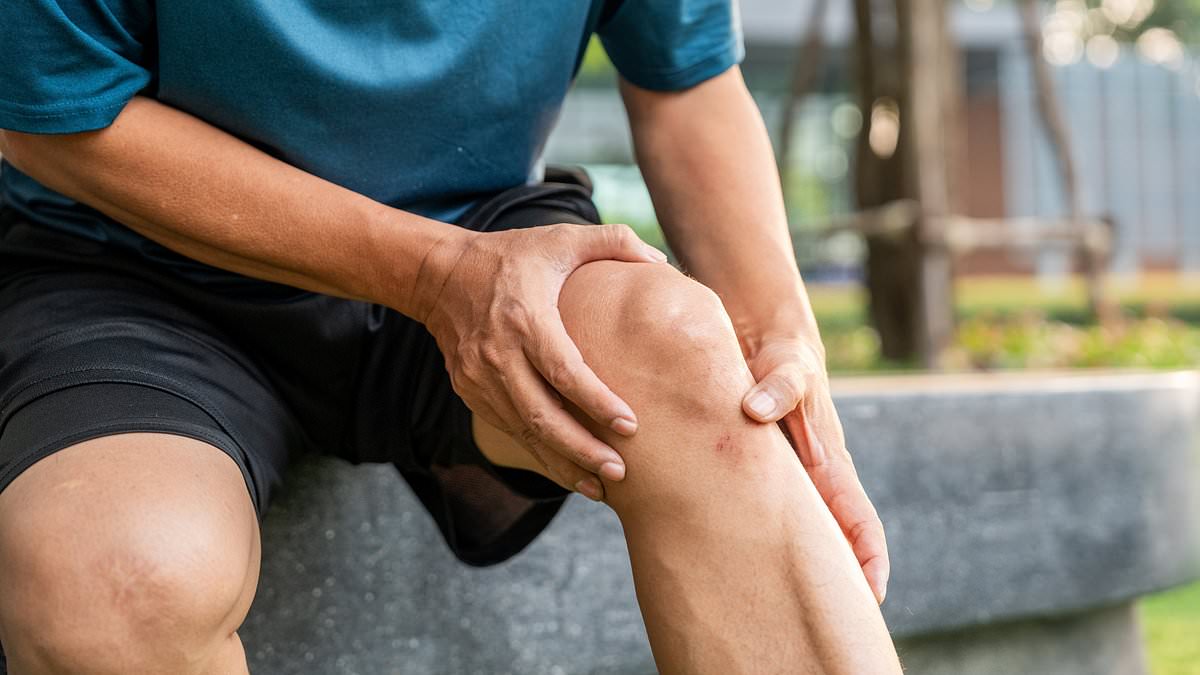
Turmeric supplements may do little to ease arthritis pain, despite their popularity as a natural remedy, a major scientific review has found.Researchers found that people who took supplements containing the spice experienced only small improvements in knee pain compared with those given dummy pills.But there is one drug-free treatment that doctors say really can help ease the discomfort – regular exercise.Curcumin, the natural compound found in turmeric, has long been credited with anti-inflammatory properties, with previous studies suggesting it could help ease joint pain.Osteoarthritis is the most common joint disease in the world and occurs when the protective cartilage on the ends of bones breaks down, causing pain, swelling and stiffness.While treatments such as exercise and medication can help manage symptoms, there is currently no cure.Painkillers such as ibuprofen are commonly used, but taking them long-term can increase the risk of serious complications, including kidney damage, heart attack and stroke.As such, there has been growing interest in curcumin's potential as a natural alternative. Turmeric has long been credited for its anti-inflammatory properties However, a major review involving more than 1,200 people with knee osteoarthritis has found that any benefits may be too small to make a meaningful difference to sufferers.'Overall, the evidence does not demonstrate a clear clinical benefit of turmeric supplements over placebo or standard painkillers,' said Dr Ivan Shirinsky, a rheumatologist and lead author of the Cochrane review.'The balance between potential benefits and harms also remains uncertain and people considering taking the supplements should be informed of the likelihood that any effects on symptoms may be small.'An international group of researchers analysed nine studies involving 1,245 people with knee osteoarthritis, with participants aged between 52 and 62.The studies compared turmeric supplements with common painkillers, including non-steroidal anti-inflammatory drugs (NSAIDs) such as ibuprofen, paracetamol, or dummy pills, over periods ranging from four weeks to three months.The team used a screening tool to assess whether the studies were trustworthy and excluded any that did not meet their confidence thresholds.Four studies compared turmeric supplements with a placebo. Another four looked at the difference between NSAIDs and turmeric, while the remaining study compared turmeric with paracetamol.Participants taking turmeric reported that their pain improved by an average of 0.72 points more than those given a placebo, when asked to rank their pain from zero to ten. Osteoarthritis is the most common type of arthritis in the UKThey also reported marginal improvements in physical function and quality of life, of 3.5 and 2.19 points respectively, when scored out of 100.The researchers concluded that turmeric supplements may result in modest improvements in symptoms, but warned that they could also lead to more adverse events.'Our confidence in the evidence for pain, function, quality of life and treatment success is low,' they said.Dr Shirinsky added: 'I would not routinely recommend turmeric supplements to my patients with knee osteoarthritis. Holland & Barret's supplements contain roughly 15-40mg of curcumin per capsule'However, if a patient asked me about them, I would explain what we know and what remains uncertain about their benefits and potential harms, and help them make an informed decision.'Studies have suggested that high-dose turmeric supplements may increase the risk of kidney stones and bleeding in those taking blood thinners.Concentrated turmeric supplements have also been linked to rare cases of liver damage, particularly in formulations designed to increase the body's absorption of curcumin.The World Health Organisation's expert committee on food additives has established an acceptable daily intake of up to 3mg of curcumin per kilogram of body weight, although this is not a recommended treatment dose for arthritis.What can I do to ease my chronic knee pain?An estimated 5.4 million people in the UK are living with knee osteoarthritis, though the exact causes remain unclear.Genetics, age and sex are all known to play a role, as are injuries earlier in life and hard physical labour.Currently, in the UK, joint replacements can be considered for long-term relief for those with very advanced forms of the disease.However, while there is little sufferers can do to reverse the damage already caused by osteoarthritis, there are steps they can take to manage symptoms and improve mobility.And one of the most effective is regular exercise.Research has found that exercise can significantly reduce pain and improve mobility, reinforcing what doctors have long suspected.This is partly because movement helps circulate fluid through cartilage – the smooth tissue that coats the ends of bones so they can glide against one another – helping to keep joints healthy and mobile.As well as building strength and increasing range of movement, exercise can also help people maintain a healthy weight and lighten the load on painful joints.Strengthening the muscles around the knee, particularly those in the thighs, can also help support the joint and reduce discomfort.In recent years, experts have also recommended certain lifestyle changes to help ease the agony of knee pain.These include low-impact activities such as walking, swimming and cycling, which can help improve fitness without placing excessive strain on affected joints.And while there is no silver bullet for osteoarthritis, some research has suggested that omega-3 fatty acids may have anti-inflammatory effects.However, evidence that omega-3 supplements can meaningfully relieve osteoarthritis symptoms remains limited, and experts generally recommend exercise and weight management over relying on supplements.
The inconvenient truth about turmeric: Supplements may do little to ease arthritis pain, doctors warn - but doctors reveal the one drug-free remedy that really works
Full Article
Original Source
Read the full article at Dailymail →KhanList aggregates and links to publicly available news content. We do not host full articles from third-party sources. Always verify important information with original sources.