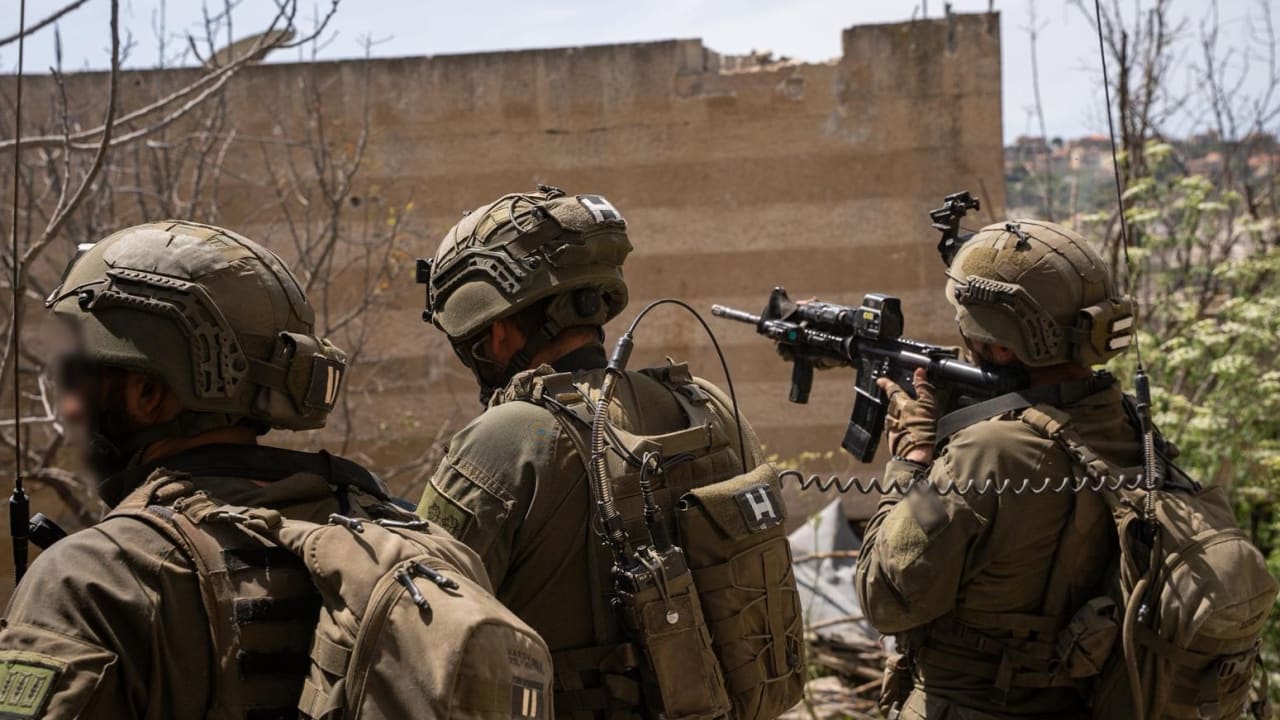
ByARIEL HARKHAMJULY 19, 2026 20:00October 7 did more than expose an intelligence failure; it exposed the exhaustion of Israel’s security doctrine.The IDF had become exceptionally capable at surveillance, interception, and precision strikes, yet increasingly organized around a static proposition: watch the borders, absorb the opening blow, mobilize, and rely on air power and missile defense to restore control.That proposition failed. Sensors became substitutes for presence. Fences became deterrence. Missile defense, indispensable as it is, began to masquerade as strategy. The result was a force tactically sophisticated but strategically reactive.Israel has gradually adopted the logic of a fortress: defend the center, harden the perimeter, and intercept whatever penetrates it.But a fortress cedes the initiative to the besieger. It allows adversaries to choose the timing, direction, and intensity of pressure while Israel bears the recurring cost of defending every border, population center, and piece of critical infrastructure.Israeli military personnel operate after a series of strikes across the Gaza Strip, in southern Israel, October 29, 2025 (credit: REUTERS/AMMAR AWAD)The answer is not simply to reinforce the fortress. It is to break its logic by fighting along the exposed edges of the systems constructed to encircle Israel.Yet Israel’s post-October 7 debate has produced remarkably little doctrinal ambition. There are arguments over commissions of inquiry, force size, procurement, and responsibility.There has been no comparably serious proposal for how Israel should fight in a region transformed by drones, precision missiles, proxy armies, maritime coercion, and the emergence of Turkey as an increasingly hostile regional power.Israel does not merely need a larger version of the prewar IDF. It needs a new operational instrument: a Tzahal Expeditionary Command (TEC).TEC would fill the dangerous gap between special operations and full-scale divisional war. It would be a permanent joint command built to deploy a limited but powerful force beyond Israel’s immediate borders, sustain it under fire, integrate naval, air, intelligence, cyber, and ground capabilities, and impose strategic disruption without requiring occupation or total war.Its purpose would not be imperial expansion. Israel lacks both the scale and the interest for that. Instead, TEC would restore the principle that once stood at the center of Israeli doctrine: the battlefield must be displaced away from the Israeli home front, and the enemy must be forced to defend what it values.TEC would fight on the edges of the threat rather than remain trapped at its center. It would target the peripheral ports, islands, supply routes, launch areas, command nodes, and maritime corridors that allow adversaries to concentrate pressure against Israel from a distance.By forcing those systems to defend their own extremities, TEC would fracture the siege architecture before it could close around Israel.Today, Israel’s adversaries can impose pressure cheaply. Iran operates through distant proxies. The Houthis threaten maritime commerce. Hezbollah and other armed networks exploit civilian terrain. Turkey is building naval power around its “Blue Homeland” doctrine, deepening its influence in Syria and treating rivalry with Israel as a structural feature of the regional order.President Recep Tayyip Erdogan’s rhetoric has become openly accusatory, while Washington is again considering advanced weapons sales to Ankara, including the F-35. Israel cannot construct its security around the assumption that American diplomacy will permanently restrain Turkish power.TEC would answer this challenge through regional maneuver.It would possess organic sea lift, drones, electronic warfare, mobile air defense, precision fires, engineering, intelligence, and logistics. It would train to operate from ships, temporary airfields, islands, and allied territory.Its units would be modular rather than massive, capable of assembling mission-specific task forces for several days or weeks and then withdrawing before tactical success becomes strategic entanglement.The command’s principal target would not be enemy territory as such, but enemy systems: ports, missile corridors, drone infrastructure, command nodes, maritime chokepoints, and logistical hubs.Israel’s current doctrine too often waits for missiles to arrive and then attempts to intercept them at enormous cost. TEC would create the capacity to attack the architecture that launches, supplies, and finances the pressure.Test of seriousnessKharg Island offers a useful test of seriousness. Kharg is Iran’s principal oil-export hub, handling roughly 90% of its crude exports. The question is not whether Israel should casually invade and occupy an Iranian island. That would be strategically reckless.The harder and more revealing question is whether Israel could, during a major regional war, isolate Kharg, temporarily secure critical facilities, and transfer responsibility to an American-led coalition.At present, the honest answer is probably no. Israel could strike Kharg, but striking is not the same as controlling an operational outcome. Such a mission would demand maritime access, protected logistics, engineering, air and missile defense, intelligence fusion, coalition interoperability, and the ability to sustain a force far from home. Those are precisely the capabilities TEC would be designed to create.The value of the Kharg scenario is therefore not that it should become policy, but that it exposes the limits of Israel’s existing force structure. A country able only to destroy distant targets remains dependent on others to shape what follows. A country able to seize, secure, transfer, and withdraw possesses a far more consequential form of strategic leverage.The same logic applies closer to home in the Eastern Mediterranean. TEC would give military substance to Israel’s developing alignment with Greece and Cyprus, whose leaders committed in December 2025 to expanding cooperation on regional security, resilience, maritime affairs, and critical infrastructure.Joint exercises and declarations are not deterrence unless they can generate operational facts.Deployable Israeli battalions able to reinforce threatened positions, protect energy infrastructure, secure sea lanes, conduct evacuation operations, and integrate with American and regional forces would make that partnership militarily credible.This would provide a necessary deterrence layer against Turkey without turning it into a predetermined enemy. Deterrence is not a declaration of war. It is the creation of options that convince a rival that coercion will fail and escalation will carry costs.Turkey’s expanding navy, defense industry, geographic depth, and position inside NATO give it advantages Israel cannot answer through rhetoric or air power alone.TEC would complicate Turkish planning by demonstrating that attempts to compress Israel behind its borders could be answered along Turkey’s own extended maritime and logistical edges, in cooperation with Greece, Cyprus, the United States, and other regional partners.Building such a command would require uncomfortable choices. The navy would have to become more than a defensive service protecting coastlines and gas platforms.Logistics would need to be treated as a combat arm. The IDF would require greater sea lift, transport aircraft, mobile air defenses, unmanned systems, hardened supply networks, and personnel trained for sustained operations beyond familiar terrain.Israel would also need clear political rules governing limited interventions, coalition warfare, transfer of responsibility, and withdrawal. An expeditionary capability without political discipline would invite strategic overreach.The proposal will be attacked as too ambitious for a small state. That objection has things backward: Israel’s small size is precisely why it cannot afford to absorb war indefinitely on its own territory. Geographic narrowness demands operational reach.October 7 demonstrated the bankruptcy of a doctrine built around warning, walls, and interception. Israel now faces a region in which Iran can regenerate, Turkey can project power, and maritime routes can be disrupted by actors thousands of kilometers away.The answer is not another layer on the fence, more helicopters, or another tank division. It is the capacity to move, sustain, disrupt, and withdraw.Israel does not need an expeditionary command because it seeks distant wars. It needs one because distant wars have already adapted to how to reach Israel.This article draws on the author’s broader proposal for the Tzahal Expeditionary Command, published in the latest edition of the INSS journal.Follow us on Google
The IDF is not enough: Israel needs an expeditionary force to fight beyond its borders - opinion
Full Article
📰 Original Source
Read full article at Jpost →KhanList aggregates and links to publicly available news content. We do not host full articles from third-party sources. Always verify important information with original sources.