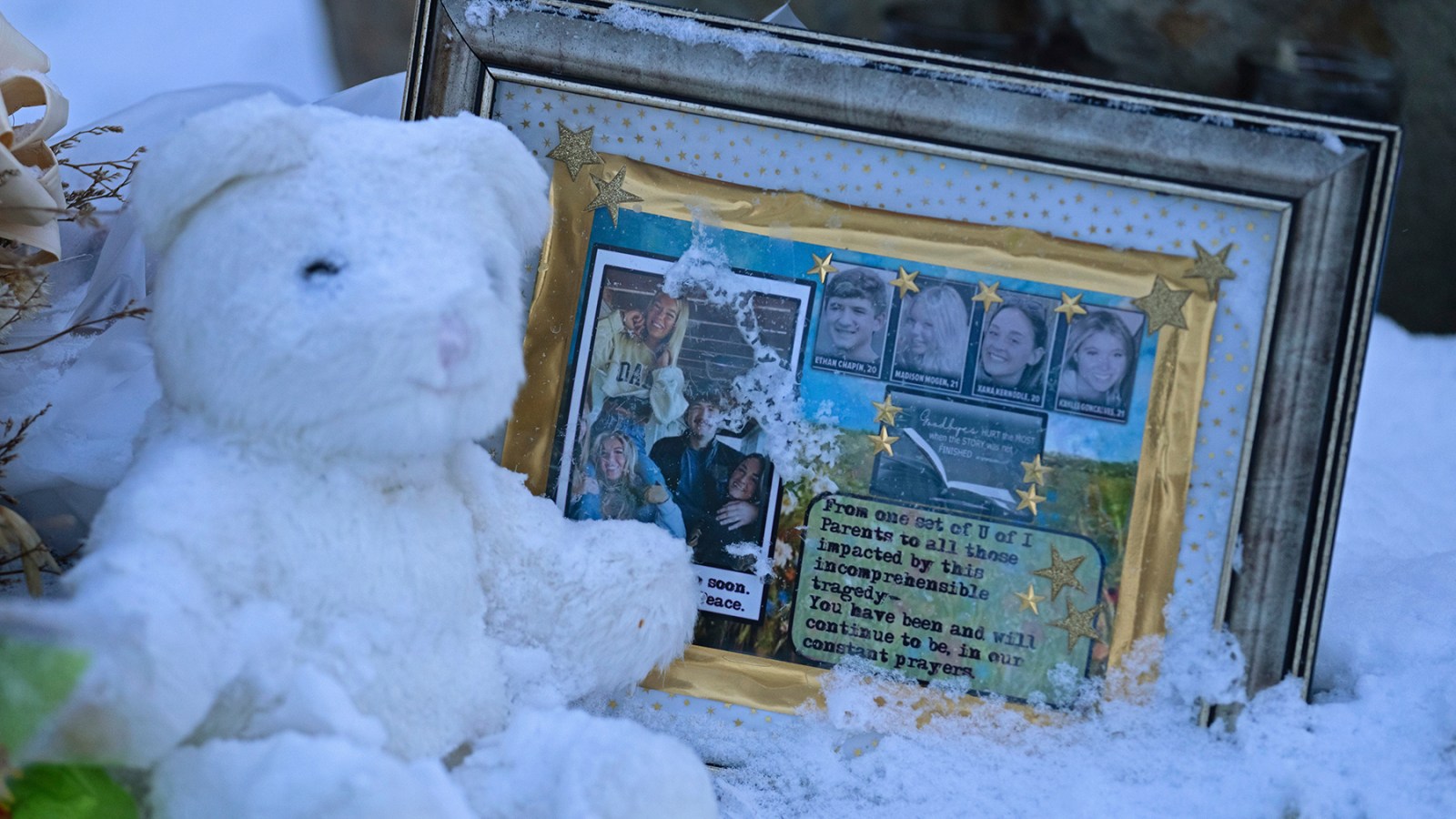
When police entered 1122 King Road on Nov. 13, 2022, first responders told officers that the students who lived there had called emergency services, reporting at least one occupant had passed out. But as they entered one of the bedrooms, the scene inside told an entire different story. “Fuck,” said one unnamed officer. “We’re gonna need everybody.” The community of Moscow, Idaho was rocked when police discovered the bodies of four University of Idaho students. Kaylee Goncalves, 21, Madison Mogen, 21, Xana Kernodle, 20, and Ethan Chapin, 20, were all found stabbed to death in a seemingly random act of brutal violence. It took police months to identify and eventually arrest the main suspect, Bryan Kohberger, a 28-year-old criminology graduate student at the nearby Washington State University. But not before the ongoing investigation and questions about the death of the “Idaho Four,” captured the nation’s — and the internet’s — full attention. Now, director Skye Borgman (Unknown Number: The High School Catfish) is revisiting the monumental case; using never-before-seen police body cams, investigative footage, and new interviews with the victims’ families and friends to paint a picture of the four young adults whose lives were cut short — and the explore the investigative work that led police to their killer. A vigil for the Idaho Four on Nov. 17, 2022, at Boise State University. Sarah A. Miller/Idaho Statesman/Tribune News Service/Getty Images “Making this series became deeply personal to me because I felt a responsibility to keep Kaylee Goncalves, Madison Mogen, Xana Kernodle, and Ethan Chapin at the center of every decision we made,” Borgman told Netflix’s Tudum. “At a time when so much attention has been focused on the case itself, I felt it was important to create something that brings the focus back to who they were, the lives they lived, and the love that still surrounds them.” Here are four things we learned from Netflix’s new three-part docuseries The Idaho Murders: College Nightmare. Editor’s picks Miscommunication between the University of Idaho and the police department meant there were inconsistencies in how families and friends heard the four college students were dead. When police and first responders arrived at 1122 King Road, they immediately labeled the scene a homicide investigation, calling for more officers. But because the home was located next to many off-campus college apartments, more friends quickly gathered into a group outside the house, demanding answers. The docuseries details how Anthony Dahlinger, chief of the Moscow Police Department, contacted school officials to let them know there had been four homicides. According to the University of Idaho Dean of Students, Blaine Eckles, school protocol is to use the campus-wide text alert system. But according to police, Eckles didn’t tell police the alert was going out. Friends of the Idaho Four found out via text that their friends were dead while they were still waiting for answers from the police. Traumatized, they cried while huddled together at the edge of the road. “We would’ve preferred that that information would have been collaborated with us prior to it going out, because on the scene we had four victims,” Dahlinger says in the doc. “We had to not only identify the victims but then start working diligently to get a hold of their next of kin and notify them.” The text blast immediately complicated the flow of information. Xana’s friends called her older sister, Jazzmin Kernodle, and said something was wrong, who in turn called her father, Jeff Kernodle. Jeff had been in town for a football game and had actually tried to call Xana early that morning; but after receiving no answer, he assumed she was asleep and had begun driving home. When he got the call, he turned around and drove to King Road, where police then escorted him to the station and informed him about Xana’s death. Related Content Mogen and Hunt’s parents were told at the police station. Steve and Kristi Goncalves, Kaylee’s parents, originally heard rumours that there had been a shooting at a party. People had been sending them condolences on Facebook for at least an hour before police confirmed their daughter had been one of the victims. Even if the surviving roommates had called 911 when they noticed an intruder, experts say it would not have saved any of the Idaho Four’s lives. Surviving roommates Bethany Funke and Dylan Mortensen heard a commotion around 4 am, but rather than calling police, Mortensen ran to Funke’s room where she spent the rest of the night. In the morning, they called two friends, Emily Alandt and Hunter Johnson, to come check the home. Johnson was one of the first to find the bodies, and then ushered the girls out of the home, telling them to call 9-1-1 and tell them that someone was unconscious. Mortensen told police that during the night, she heard a stranger saying, “It’s okay. I’m going to help you,” in a weird voice. When she opened her door, she saw a man in a black ski mask. The two stared at each other for a moment before she closed her door and locked it. After texting Funke, she ran to Funke’s room. When police revealed Mortensen had seen the suspect, online sleuths, members of the true crime community, and fellow students criticized her heavily for her inaction — something Dahlinger says in the docuseries doesn’t take into account how fear can make people act irrationally. “Shock and trauma do a lot of damage to people,” he said. “It can impair judgment. It can impair thought processes.” But according to Kernodle’s parents, a report from the medical examiner found that the wounds on the four were so catastrophic that Goncalves, Mogen, Kernodle, and Chapin couldn’t have survived even if someone had called the paramedics immediately after the assailant left the house. “It’s hard because you go back and look at all these moments and you wish you could do something different,” Steve said. “Could somebody have been saved? The answer was no.” Bryan Kohberger was obsessed with serial killers — and used criminal justice classes to discuss them. Prior to his arrest, Kohberger was completing a criminology degree at Washington State University. For undergrad, he attended DeSales University in Pennsylvania, where he studied criminal justice. In Washington, Lilly Karaban attended a Minds of a Serial Killer class, taught by serial killer expert Dr. Katherine Ramsland. According to Karaban’s interview in the documentary, Kohberger was one of the most active participants, constantly raising his hands and asking questions — behavior that went against his typical antisocial demeanor. During group projects, Karaban described Kohberger as forceful and sure of his opinion, operating on a “his way or the highway” mentality. “It was like a switch went off in his head in that class. It was like a different person when you’d walk in and see him sitting by himself, to then, when the minute she started class he was actively taking notes on everything,” Karaban said. “ You could tell he was thinking about everything that she was saying.” After his arrest, investigators linked Kohberger to the Reddit account Criminology_Student. Kohberger had allegedly posted in multiple subreddits, asking for formerly incarcerated people to participate in a research survey. The questions inquired about the physiological and physical feelings of committing a crime, how people chose their victims, how they left the crime scenes, and how they felt after. “Looking at the questions now, it almost seemed like preparation for the perfect crime,” said Alivea Goncalves, Kaylee’s sister. From left, Madison Mogen, Kaylee Goncalves, Xana Kernodle and Ethan Chapin Idaho Statesman/Tribune News Service/Getty Images The families of the Idaho Four still have one huge question: Why? While the families of Goncalves, Mogen, Kernoodle, and Chapin were relieved when Kohberger was arrested, his trial was delayed by legal complications. After Kohberger’s legal team claimed they’d be unable to get an unbiased jury, the trial was moved from Moscow to Boise. Opening statements were scheduled for Aug. 18, 2025. Families of the victims were divided on whether the state should seek the death penalty, but before the trial even began, Kohberger accepted a plea deal. In July 2025, he pleaded guilty to all four murders and was sentenced to four consecutive live sentences. The lack of trial also divided the families. “I’ve been fighting for justice for Kaylee and Maddie and the plea deal was something that really, really hurt me. This entire process has not been right. Kaylee paid the price, Maddie paid the price, Xana paid the price, Ethan paid the price, and all of their friends and family paid the price,” said Alivea. “In my opinion, monsters like that should never have options ever again.” Jazzmin Kernodle says in the docuseries that the plea felt like a relief. “[It] did save us a lot of emotional trauma that we would’ve dealt with going through a trial. It could’ve been years long. I’m grateful to get it over with and slowly start to heal.” But the families still don’t know why Kohberger targeted the college students’ home. “Ultimately we never have been able to answer that question that everyone wants answered, which is ‘Why?’ We don’t know why,” said Dahlinger. “We don’t know why these four. We don’t know why this house. I don’t think we’ll ever know.” It’s a question that’s remained on people’s minds — one that could be answered with a new update in the case. On July 27, Kohberger filed a petition to overturn his plea deal, claiming that he is innocent and was coerced into the arrangement by inept lawyers and false promises. Kohberger now wants a trial, even though it could mean putting the death penalty back on the table. Trending Stories The docuseries was completed prior to Kohberger’s petition. (Representatives for Bergman and Netflix did not reply to Rolling Stone’s request for comment on Kohberger’s petition to reopen the case.) But the families of the victims have said this news is an attempt by Kohberger to get back into the spotlight. “If as much energy was put into honoring the victims in this case as trying to set a guilty man free, there would be statutes of the victims on every corner with parks and days honoring their ultimate sacrifice — their lives — at the hands of narcissist,” the Goncalves family said in a public statement. “Regardless of how this turns out, our family is 100 percent ready.”
‘The Idaho Murders: College Nightmare’: 4 Things We Learned
Full Article
Original Source
Read the full article at Rollingstone →KhanList aggregates and links to publicly available news content. We do not host full articles from third-party sources. Always verify important information with original sources.