
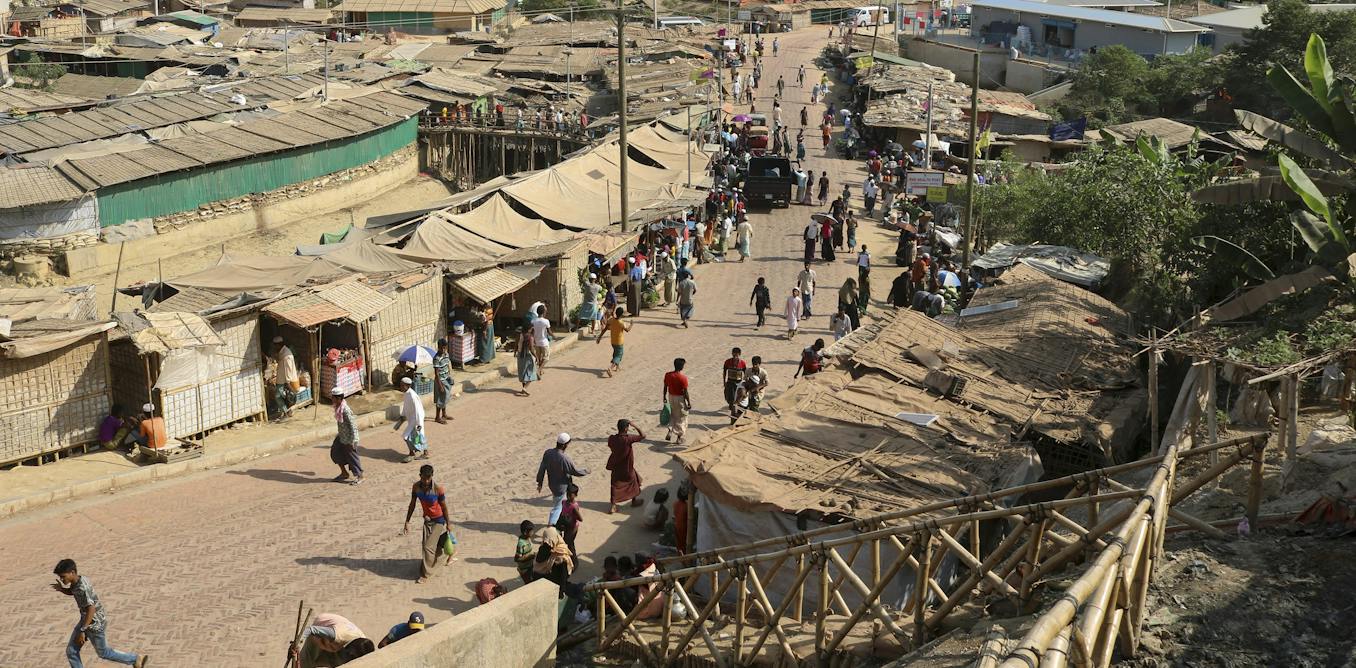
The International Court of Justice is reportedly going to rule in the coming weeks in The Gambia v. Myanmar, the genocide case against Myanmar. In 2019, The Gambia filed an application at the ICJ alleging that Myanmar had violated the United Nations’ 1948 Genocide Convention in its treatment of the Rohingya people. The Rohingya aren’t from The Gambia, and no atrocities against them took place there. But, under international law, any state can file a case with the ICJ if it believes a country has violated the convention. This was confirmed by the court in a 2022 decision against Myanmar’s attempt to block the case on jurisdictional grounds. Who are the Rohingya? The Rohingya are an ethnic minority group that have long lived in the Arakan region of western Myanmar, which today corresponds to the Rakhine state. As Muslims in an overwhelmingly Buddhist country, the Rohingya have often experienced discrimination and persecution. Most notably, in 1982, Myanmar passed a law that removed the Rohingya from a list of ethnic groups eligible for citizenship. As a result, most Rohingya lost their citizenship, and with it, their most basic rights and freedoms. The ICJ case, however, concerns the campaign of violence conducted by the Myanmar military against the Rohingya that began in 2016. Read more: 7 years after genocide, plight of Rohingya refugees in Bangladesh is exacerbated by camp violence What is alleged against Myanmar? Between 2016 and 2017, Myanmar armed forces subjected Rohingya civilians in Rakhine state to extreme violence. Evidence of mass killings, torture, enforced disappearances, sexual assaults and the destruction of entire Rohingya villages are part of the record in The Gambia’s case. More than a million Rohingya have since fled Myanmar into neighbouring countries, notably Bangladesh. A 2019 report from the United Nations Independent International Fact-Finding Mission on Myanmar concluded that the violence amounted to the “gravest crimes under international law.” What the judges of the ICJ have been weighing is evidence that Myanmar has committed genocide according to the definition from the Genocide Convention. Article II defines the crime of genocide as any of a set of acts taken “with intent to destroy, in whole or in part, a national, ethnical, racial, or religious group.” These acts include killing, physical and mental torture, but also other measures like preventing births, removing children from the group or imposing on the group conditions where life cannot be sustained. Myanmar’s human rights violations are undeniable, but obtaining a ruling on the violation of the convention is a much higher bar to clear. In this 2018 photo, a Rohingya refugee looks out from a camp by the fence in the no-man’s land between Myanmar and Bangladesh near Rakhine state. (AP Photo/Min Kyi Thein) What the ICJ must determine Proving intent is the most complicated aspect of the case for the prosecution. This is because the ICJ relies on what is called the “only reasonable inference,” meaning the only reasonable conclusion to draw from the perpetrators’ conduct is that they sought to commit genocide. Myanmar’s assertion that its operations in Rakhine state were part of a counter-terrorism mission makes the intent criteria hard to demonstrate. Even more difficult is proving the violence was a military strategy and not the product of some rogue soldiers, as Myanmar has previously argued. Read more: Unliked: How Facebook is playing a part in the Rohingya genocide What the ICJ will decide is whether Myanmar violated the Genocide Convention, not whether a genocide took place. Most experts already agree a genocide was committed. In 2020, the International Association of Genocide Scholars adopted a resolution recognizing Myanmar’s crimes against the Rohingya as a genocide. If the court finds in favour of The Gambia, it will issue a binding judgment that Myanmar breached its obligations to the Genocide Convention. This establishes Myanmar’s state responsibility. It would not be a criminal conviction against Myanmar or any particular individual linked to the alleged genocide; that power lies with the International Criminal Court. The ruling would likely be accompanied by a set of orders for Myanmar, such as ceasing any activity that violates the Genocide Convention, preserving evidence of the genocide, investigating and punishing those responsible, and pursuing reparations for the victims. Myanmar nationalist Win Ko Ko Latt speaks during a rally to condemn The Gambia’s allegations in Yangon, Myanmar, in January 2026. (AP Photo/Thein Zaw) Justice and recognition But there is no guarantee Myanmar would follow these orders. The ICJ has no independent enforcement mechanism; it relies solely on the states’ willingness to comply with court orders. There is, ultimately, little the court could do to force Myanmar to take accountability and deliver justice if it refuses to do so. Still, the ruling matters. Myanmar has seemingly tried to erase the Rohingya people. First legally, by taking away their citizenship; then physically, through mass killings and forced displacement and by destroying Rohingya villages and burying traces of their existence in Myanmar. A ruling of genocide would make the Rohingya, and the harm to which they were subjected, undeniable. For more than 1.2 million Rohingya who are still confined to refugee camps in Bangladesh, often in highly precarious conditions, a genocide ruling would provide some hope for a resolution. It could strengthen the case for their formal recognition from Myanmar and the restitution of their citizenship rights — two developments necessary for the Rohingya to return to their homeland.
The ICJ prepares a landmark ruling on the Rohingya genocide case against Myanmar
Full Article
Original Source
Read the full article at Theconversation →KhanList aggregates and links to publicly available news content. We do not host full articles from third-party sources. Always verify important information with original sources.