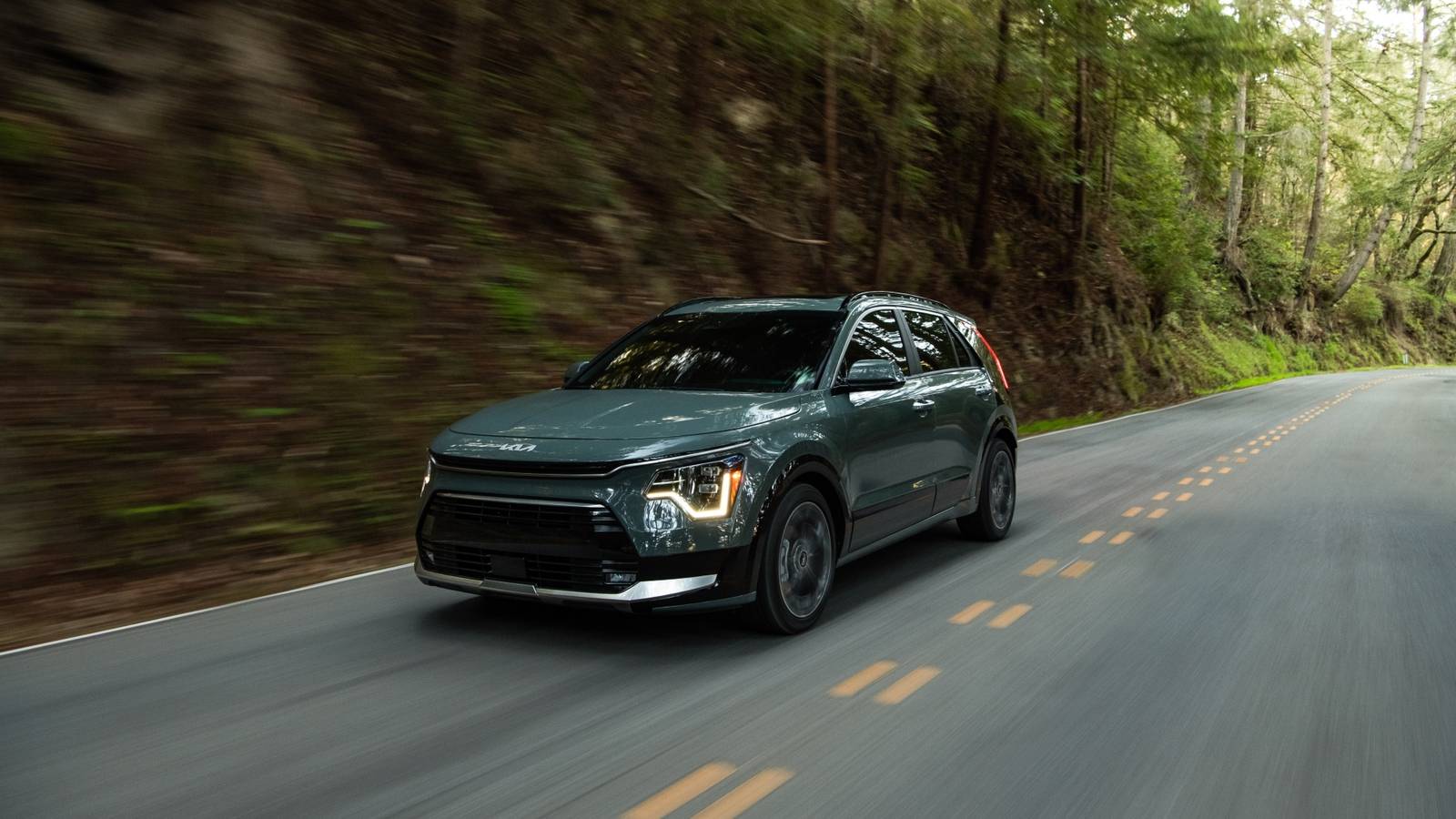
Published Jul 31, 2026, 5:30 PM EDT Adam Gray, a seasoned automotive journalist and content creator from the UK, joined the How-To Geek editorial team in January 2025. As an automotive journalist for How-To Geek, Adam breaks first-to-report news on the latest in automotive tech, as well as penning automotive features and reviews. Adam is also a contributor to one of How-To Geek's sister sites, TopSpeed, where he uses his media accrediation with manufacturers' press offices to gain access to the latest vehicles for subsequent review. Prior to joining How-To Geek, Adam worked on a freelance basis, contributing automotive content to a variety of business and lifestyle publications. His experience also includes time spent serving as senior editorial & auction content manager for SBX Cars, automotive content writer for Supercar Blondie, motoring editor for Portfolio North, and motoring editor - North East for Reach plc. When he's not putting the latest vehicle through its paces or testing out its tech, Adam can be found at his local ice rink playing ice hockey or at the Riverside Stadium supporting his beloved Middlesbrough FC. Adam also enjoys spending quality time with his three children: Ellie, Oscar, and Heidi. Hybrid SUVs have become increasingly efficient, but most earn their reputation by excelling in stop-and-go city driving. Maintaining that efficiency at highway speeds is a much tougher challenge, where the gasoline engine does far more of the work. That makes highway fuel economy one of the best ways to judge how refined a hybrid powertrain really is. The best models can deliver impressive efficiency without sacrificing comfort or practicality on longer trips. One compact hybrid SUV manages exactly that. It delivers the highest highway fuel economy of any non-plug-in hybrid SUV sold for 2026 while remaining one of the most affordable options in its segment. In order to give you the most up-to-date and accurate information possible, the data used to compile this article was sourced from Kia and other authoritative sources, including Edmunds, the EPA, iSeeCars, Kelley Blue Book, and TopSpeed. The 2026 Kia Niro Hybrid sets the benchmark No other non-plug-in hybrid SUV matches its highway efficiency Credit: Kia The 2026 Kia Niro Hybrid delivers the highest highway fuel economy of any non-plug-in hybrid SUV on sale. According to EPA estimates, LX, EX, and SX trims return 54 mpg on the highway, while the SX Touring is rated at 45 mpg. The difference comes down to wheel size rather than changes to the hybrid system. The SX Touring uses larger 18-inch wheels, while the other trims ride on 16-inch wheels that help maximize efficiency. Those smaller-wheel models also achieve an EPA-estimated 53 mpg combined, making the Niro Hybrid one of the most fuel-efficient SUVs available without requiring drivers to plug in. Highway efficiency tells a different story The open road is where most hybrids lose their advantage Credit: Kia Hybrid SUVs usually post their strongest fuel economy figures in city driving, where regenerative braking and electric assistance do most of the work. Highway driving places far greater demand on the gasoline engine, making it more difficult to maintain high efficiency. That's why strong highway fuel economy often reflects the quality of a hybrid system rather than its ability to excel in stop-and-go traffic. Aerodynamic drag increases at higher speeds, while opportunities to recover energy through braking become much less frequent. The Niro Hybrid stands out because it remains exceptionally efficient even under those conditions. Its class-leading highway rating shows that its hybrid powertrain is designed to deliver savings well beyond urban driving. A simple powertrain focused on efficiency Kia prioritizes fuel economy over outright performance Credit: Kia Every 2026 Niro Hybrid uses a 1.6-liter naturally aspirated four-cylinder engine paired with a 32-kW electric motor and a six-speed dual-clutch automatic transmission. Together, they produce a combined 139 horsepower and 195 lb-ft of torque, with power sent exclusively to the front wheels. Unlike many rivals that rely on an eCVT, the Niro Hybrid uses a conventional six-speed dual-clutch transmission. Kia says this setup helps the engine settle into lower, more efficient revs during highway cruising while reducing the engine flare often associated with continuously variable transmissions. Performance is modest, with 0–60 mph taking around 8.9 seconds, but efficiency is clearly the priority. The electric motor provides extra torque during acceleration and passing, while the lightweight drivetrain helps the Niro maximize every gallon of fuel. Lightweight engineering helps maximize range Every pound saved contributes to better fuel economy Credit: Kia The 2026 Niro Hybrid is one of the lightest SUVs in its class, with a curb weight starting at 3,247 pounds. By comparison, the Toyota RAV4 Hybrid weighs between 3,594 and 3,847 pounds depending on specification. Kia reduced weight by using aluminum suspension and body components, advanced high-strength steel in the chassis, and composite materials for parts such as the seat frames and parking brake pedal. The company also integrates the 12-volt battery into the hybrid battery pack, eliminating the need for a separate unit. EPA estimates put the Niro Hybrid's range at up to 588 miles for the LX, EX, and SX trims based on its 11.1-gallon fuel tank. Efficiency isn't the Niro Hybrid's only strength A practical cabin makes it an easy everyday SUV The Niro Hybrid offers generous interior space for a compact SUV, with 41.5 inches of front legroom and 39.8 inches in the rear. Passenger volume totals 105.1 cubic feet, giving it enough room for everyday family use and longer road trips. Cargo space is equally competitive, measuring 22.8 cubic feet behind the rear seats and expanding to 63.7 cubic feet with the rear seats folded. EX, SX, and SX Touring models also include a dual-level cargo floor that creates a flatter load area when the seats are folded. Every trim includes a touchscreen infotainment system, while higher trims upgrade to a 10.25-inch display with built-in navigation and a matching 10.25-inch digital instrument cluster. Features such as multiple USB-C ports and an available Harman Kardon audio system further improve long-distance comfort. Strong value extends beyond the fuel pump Competitive pricing helps strengthen the Niro Hybrid's appeal Credit: Kia The 2026 Niro Hybrid starts at $27,090 for the LX, rising to $35,790 for the SX Touring. Even the range-topping model undercuts many competing hybrid SUVs, including the Toyota RAV4 Hybrid and Honda CR-V Hybrid. Operating costs remain competitive after purchase as well. Edmunds estimates a five-year true cost to own of $31,708 for the base Niro Hybrid, while the SX Touring is estimated at $39,013 over the same period. The Niro Hybrid has also earned praise beyond its fuel economy figures. Kelley Blue Book gives it an owner rating of 4.3 out of 5, while iSeeCars ranks it among the best hybrid subcompact SUVs for affordability, cargo space, and taller drivers. Highway efficiency is where it stands apart One of the smartest hybrid SUVs for long-distance drivers Credit: Kia The 2026 Niro Hybrid proves that fuel economy isn't just about city driving. With an EPA-estimated 54 mpg on the highway in most trims, it outperforms every other non-plug-in hybrid SUV when the miles start adding up. That efficiency is backed by more than impressive numbers. Competitive pricing, low ownership costs, a practical cabin, and generous cargo space make the Niro Hybrid one of the strongest value propositions in the compact SUV segment for buyers who spend as much time on the highway as they do around town.
The hybrid SUV that makes every gallon go farther
Full Article
Original Source
Read the full article at Howtogeek →KhanList aggregates and links to publicly available news content. We do not host full articles from third-party sources. Always verify important information with original sources.