
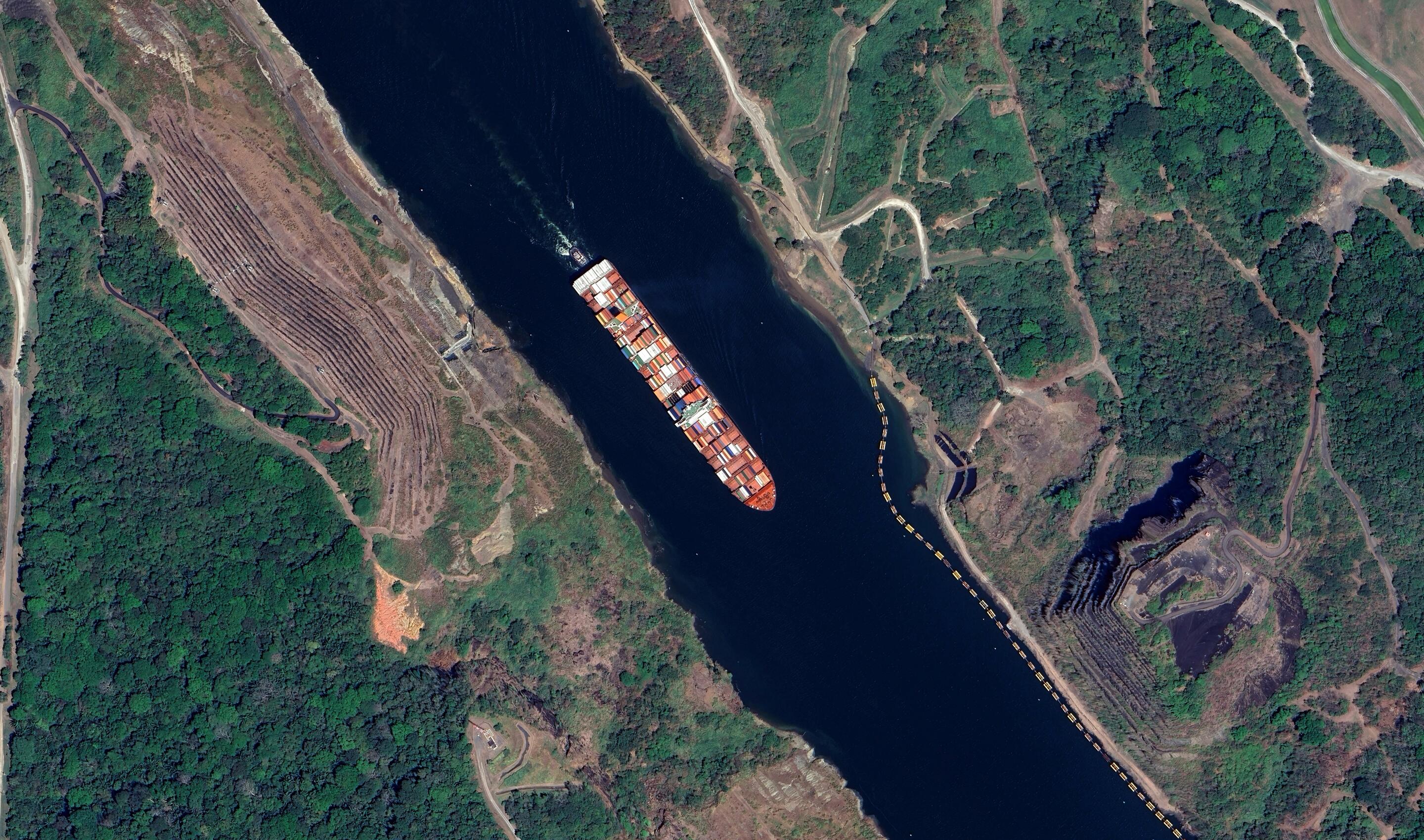
In the game of man versus nature, who are you rooting for?I was in Panama, but I couldn’t get to the Panama Canal. It wasn’t that it was so hard to get to. It was that no one wanted me to get there. There is so much more to adventure in Panama, my guides told me. Everyone visits the Canal. You should visit Bocas del Toro, the gorgeous Atlantic archipelago instead–you’ll hike through jungles searching for sloths, snorkel and kayak Caribbean blue lagoons, surf and scuba dive in crystal-clear oceans, and relax in a paradise you hadn’t realized existed. And it was all true. Bocas del Toro was unbelievably beautiful, extraordinarily adventurous. Adventure awaits in Bocas del ToroRachael Levitt But I’m a weirdo. And my obsessions are more morose. See, I had been reading The Great Divide by Cristina Henríquez, a fictional account of the Canal’s undertaking. And I couldn’t get over the total and utter creepiness around its construction. I’m a big fan of the man-versus-nature trope. And in this one, Mother Nature is the ultimate vengeful murderer. In 1914, just as the Panama Canal was finally opening after decades of failed attempts, violent landslides began trying to destroy it. Decades after the French and then the Americans endeavored to cut through the land to create a canal that would connect the Atlantic and Pacific Oceans, the earth decided to take back what humans had ventured to manipulate. Henriquez writes of the laborers: Continue Reading Article After Our Video Recommended Fodor’s Video “I call it La Boca,” Fransico said.“Call what?”“The canal.”“You call it the Mouth?”“Yes. It is eating us.”A Man, a Plan, a Canal, PanamaThe laborers tasked with construction needed to move a literal mountain to create the Canal. The Continental Divide–the natural ridge that separates North America’s river systems and determines which ocean watersheds flow and empty out to–and its local chain of mountains rise to 300 feet above sea level on the isthmus of Panama. Engineers decided that the Culebra Cut (now called the Gaillard Cut), the narrowest section of land, was the best site to excavate the project and create an artificial valley through some eight miles of mountainous terrain. But the rain and humidity softened the shale into mud and clay, and landslides continuously reclaimed the efforts at the Cut, sometimes moving more earth in a single slide than engineers had excavated in months. The hillsides flowed like liquid, causing engineers to refer to the land as “the hill that walks.” This eventually led to major advances in modern thinking about soil mechanics: it disproved the erroneous idea that earth is static. The building of the Canal taught scientists that soil could behave dynamically—flow, creep, and fail unpredictably depending on water content and pressure.But before scientific thinking could be applied to the landslides, supernatural suspicion set in. And paranormal phenomena are kinda my thing. When my Panamanian guides realized I was determined to visit the Canal, they reluctantly organized a quick visit to the Museo de Canal for me upon my return from sunny, tropical Bocas del Toro. There is so much more to Panama than the Canal, they reminded me. And I totally agreed, there certainly had been. There had been unbelievable meals at three on Latin America’s 50 Best Restaurants 2025 list (Fonda Lo Que Hay, Maito, La Tapa del Coco). There had been world-class museums (Museo de la Mola is a standout). There were sunsets over tropical paradise. But I couldn’t stop thinking about the Sisyphean–and extremely deadly–task of building the Canal, as noted in The Great Divide:It was mid-October, and the men were still working to dig out from the ruinous slide that had bedeviled them recently. There was so little, Miller observed, that was within his control, and the slides, it seemed, were just one more thing. Not even the engineers were able to predict when they would come or why. I love to be reminded that nature does care about human endeavor. It’s delightfully macabre. I needed to know more. A Fraught EffortSo in between snorkeling, surfing, and searching for sloths, I researched the spooky. In the 1880s, when the French had first attempted to build the Canal, thousands of workers died from malaria and yellow fever. Later, during the American effort, workers spoke of hillsides that remembered the dead and swallowed machinery and railcars as punishment for cutting through the Continental Divide. Construction work on the Culebra Cut, 1907By H.C. White Co./Public DomainThe Culebra Cut especially developed a much-feared reputation among the workers. Overnight, equipment would disappear beneath the flowing mud. Years later, while still trying to clear the Cut, workers would discover the parts–unloaders, dirt spreaders, and track shifting machines that were invented specifically for the massive earth-relocation project–while navigating new collapses. They believed that the land was reclaiming itself. Landslides weren’t the only thing to fear. During both the failed French effort in the 1880s and the later American construction phase, workers died from explosions, cave-ins, train accidents, drowning, and landslides. Meanwhile, Panama’s oppressive jungle heat amplified everything. The risk of mosquito-borne illnesses such as malaria and yellow fever, as well as sun exposure, serious injury, and other accidents, led workers to begin referring to the Cut as Hell’s Gorge. According to some accounts, the dead were buried in mass graves or simply rolled into the trench they were constructing and covered over with debris. The HauntingsThe violent deaths understandably spooked the laborers. Afro-Caribbean workers from places like Barbados and Jamaica brought spiritual traditions and syncretic beliefs about restless spirits and cursed ground. And thus, the story that the Cut was “hungry” began to spread. Men described hearing rumbling beneath the earth before collapses–voices or drums from underground. Some refused to work night shifts because they believed the spirits of the humans buried beneath the earth wandered the excavation sites.The sizes of the ships passing through the Canal are monstrous. Photo by Rikin Katyal on UnsplashThe hospitals were places to fear as well. Before the Americans controlled yellow fever, patients with high fevers often experienced delirium and hallucinations. They spoke of hearing the dead calling from mosquito nets at night. At Gorgas Hospital, named for Dr. William Gorgas, who helped eradicate yellow fever, the hauntings were said to be continuous. Many believed that the dead spirits stayed on, crying in pain. One particular ghost, the Crying Child, is a legend about a young boy who died in the hospital. Visitors have reported hearing a child crying, a small figure in a white gown wandering the halls. Others mention ghostly nurses tending to invisible patients. But the ghosts haunt more than the hospitals. Today, paranormal investigators have captured compelling evidence of the Zone’s supernatural activity, from EVP (Electronic Voice Phenomena) recordings of disembodied voices to photographs showing strange, shadowy figures in abandoned buildings. Lux Ferre of The Occut World writes,“One team of investigators claimed to have captured a chilling video of a ghostly soldier standing at attention in an empty barracks, his form flickering in and out of view. Another recorded the sound of a woman singing in an abandoned hospital, though no living person was present.”The Modern MarvelBetween the American and the French efforts, tens of thousands of laborers died trying to build the Panama Canal. Even after its completion, canal workers and ship crews traded stories about phantom whistles, figures walking the locks at night, and voices heard during heavy fog. The Canal no doubt serves as a feat of modern engineering that changed transport across the world, yet it was built atop tens of thousands of poorly documented deaths in a landscape that physically kept trying to erase the project. So when we arrived back in Panama City after a puddle-jumper flight back from our delightful adventures in Bocas del Toro, I was ready to get a glimpse of the work that revolutionized trade and beat back Mother Nature. I needed to see how tiny tugboats and a system of locks could create an unnatural flow of water that could coax the world’s most giant ships across a mountain range. The magnitude of the undertaking seemed unfeasible. And now, knowing the human sacrifice it took to complete the process, made me all the more fascinated. 1. A tugboat pulls in the container ship2. Miraflores Locks 3. Spectators watch a container ship lowerRachael Levitt A trip to the Museo de Canal includes the IMAX experience Panama Canal 3D: A Land Divided, A World United. Narrated by Morgan Freeman, this documentary showcases the massive locks, ship transits, and light history of the modern engineering wonder. Which is all very informative. But the audience was clearly waiting to exit through the gift shop and take our seats right there on the observation deck, where we watched two tiny tugboats toot-toot through the Canal, dragging a monstrous cargo ship behind them. When the container ship stopped, the lock walls and water level rose to the appropriate height to spill into the next chamber, allowing the ship to crawl forward toward the Pacific. An absolute marvel of engineering. But while I couldn’t help but admire the human ingenuity of the Canal, I couldn’t forget the cost of the humans who tried to midwife it into existence–and who might still haunt its presence. Whether those workers truly encountered restless spirits or simply found ways to explain the relentless death and destruction surrounding them, the legends endure. The “hungry” ghosts of the Panama Canal may never have been supernatural at all. They may have been the memories of thousands of forgotten laborers and a landscape that seemed to resist being reshaped. For one of the greatest engineering achievements in human history was also built upon sacrifice—and perhaps some histories are too heavy to remain buried. You can visit the Panama Canal daily from 8 am to 6 p.m. for an affordable and worthwhile price of approximately $17. In the game of man versus nature, who are you rooting for?
The ‘Hungry’ Ghosts of the Panama Canal Almost Stopped the Modern Marvel From Being Built
Full Article
Original Source
Read the full article at Fodors →KhanList aggregates and links to publicly available news content. We do not host full articles from third-party sources. Always verify important information with original sources.