
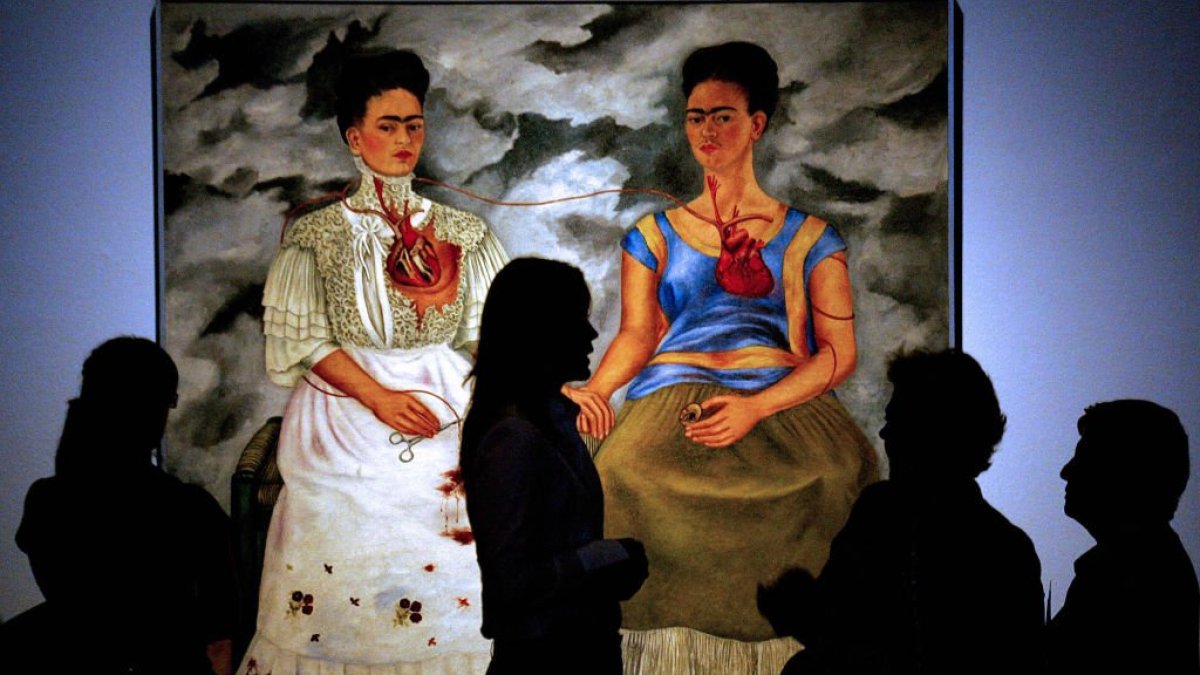
Frida Kahlo: The Making of an Icon at Tate Modern is one of those blockbuster exhibitions that people get excited about. I had been looking forward to seeing it for weeks – the chance to see 30 of the artist’s most iconic works in one place, and to gain some insight into how this Trotskyite, rebellious, revolutionary woman would have felt about how commodified her image has become. And yet, when I visited at the weekend, I blitzed through the rooms in little over 20 minutes. Why? The sensory overload – not from Kahlo’s haunting self-portraits, the indigenous costuming or even the pop art representations of her. It was the people. Now, I’m all for art being for the masses. I love to see children pointing and interacting with art, or people of all ages discussing, debating or even giggling over something. I don’t mind people taking photos, or even posing alongside something. At a recent visit to Frameless, an immersive art experience featuring moving images of familiar masterpieces projected on the walls, floors and ceilings, I loved seeing children frolic among the riotous surrealist images, and the informality of sitting on the floor surrounded by Monet’s waterlilies as the dappled light moved over our faces. Yet there was something different about Frida Kahlo. The noise in the rooms hit me way before the art did, the energy of the crowd feeling more like a school canteen than an art gallery. And when I say school, I’m not throwing shade at the younger generations – the badly behaved kids here were mostly middle-aged. Three women around my age stood less than a foot in front of one of Kahlo’s self-portraits, having a hearty chinwag about anything but the art, while other visitors hovered and craned their necks to see around them. Surely you can save the gossip for the café afterwards?While some have come for the art, many gallery visitors think nothing of talking at volume in front of the paintings (Photo: Jon Kopaloff/Getty) Where’s the consideration for other people? Tickets are £25 per adult, so it’s not a small amount of money to pay out to hear other people’s conversations. It’s not limited to art galleries either. My cinephile friend tells me he now regularly tells people to shush when he goes to watch a film. People will text in the dark in the cinema, not caring that they are sending a shaft of light from their seat to irritate other moviegoers and distract from the light coming from that big rectangle at the front. Where is our trademark British reserve? Why do we suddenly think it’s OK to loudly spout inanities in a group setting? Perhaps this just comes down to our increasing inability to adhere to social etiquette. I’m not suggesting that we should all carry a copy of Debrett’s with us at all times, but social norms are being lost. When did it happen? Did we forget how to behave in social settings during our Covid isolation, or become sick of rules and constraints? Or has social media eroded our attention spans so much that it has become unbearable to even briefly observe a painting in quiet solitude? What I love about an art gallery or theatre outing is that feeling of a shared experience with strangers, a sense of community without having to interact at all, yet recently it feels like our growing individualism has trampled any communal ideals. The Frida Kahlo exhibition seemed to attract particularly lively crowds (Photo: Louisa Gouliamaki/Reuters) Or perhaps it’s not a new phenomenon at all. When the Impressionists first arrived on the scene, gallery-goers would visit simply to hoot in derision at the works. Stravinsky’s dissonant The Rite of Spring provoked jeering and brawling when it debuted in Paris. Even in ancient Greece there were reports of audiences needing to be controlled with sticks. If Kahlo had provoked such an emotional reaction as the Impressionists, I would have been alarmed – but to be ignored seems somehow even worse. I propose some more harsh measures from the staff in our artistic establishments. Just as an alarm beeps if you breach a barrier next to a painting, perhaps we sound a klaxon every time someone mentions their city break to Lisbon, child’s GCSE results or how you’ll never believe what one’s colleague wore to the Christmas party. Venues and staff are learning lessons. Theatres are starting to ban advertising phrases such as “you’ll be dancing in the aisles” and “the best party in town”, and even actors are taking action. Andrew Scott paused his “to be or not to be” soliloquy while performing in Hamlet in 2017 after someone opened a laptop. Rosamund Pike and Cynthia Erivo have intervened after noticing audience members texting or filming. My only hope for our noise-polluted present is that perhaps this behaviour is still reserved for the blockbuster events. Seeking some respite from the cacophony at Tate Modern, I made for the Rothko room, which was almost empty. Sitting in the chapel-like room surrounded by his Seagram Murals, I felt my blood pressure start to settle. Everyone who entered the room observed it in hushed reverence, walking around or sitting in quiet contemplation. It’s free to visit, and a treat – just don’t tell the Frida foghorns about it.
The horrible modern habit ruining art galleries
Full Article
Original Source
Read the full article at Inews →KhanList aggregates and links to publicly available news content. We do not host full articles from third-party sources. Always verify important information with original sources.