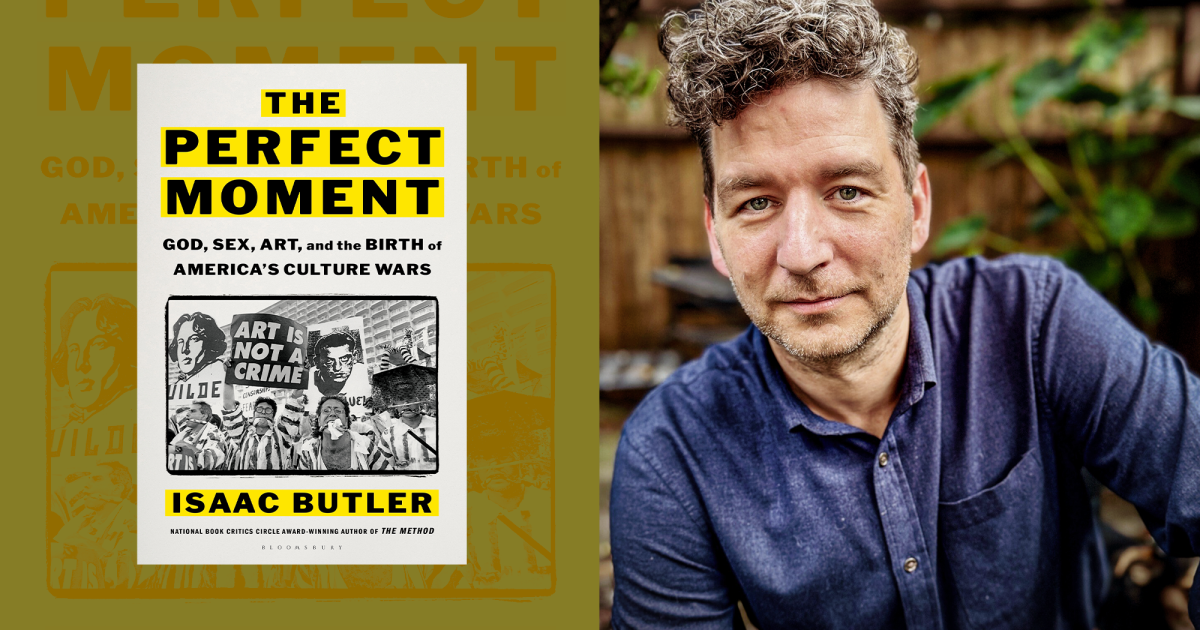
Mother Jones illustration; Heather Weston; Bloomsbury Get your news from a source that’s not owned and controlled by oligarchs. Sign up for the free Mother Jones Daily. In 2020, four major museums were set to showcase the first retrospective of painter Philip Guston’s work in over 15 years. Spanning five decades, the Canadian American’s work responded to injustices in an ever-evolving style of painting. His art includes a series of paintings made during the ’60s that feature a cartoonish hooded Ku Klux Klansmen as a commentary on the social upheaval Guston saw happening around him. This motif made museums nervous, and they decided to take time to contextualize “the powerful message of social and racial justice that is at the center of Philip Guston’s work,” ultimately delaying the retrospective until 2022. Artists, curators, and critics said in an open letter that the decision was made because the museums “fear[ed] controversy” and “lack[ed] faith in the intelligence of their audience.” To author and cultural historian Isaac Butler, the decision to postpone was particularly absurd because Guston was a lifelong anti-racist. But more broadly, according to Butler, art isn’t something people need to be protected from; in fact, sometimes it should provoke us. As he mulled over this art world controversy, he watched the “Don’t Say Gay” bill become law, people lose their jobs over support for DEI, and right-wing figures use free expression to undermine the rights of those who disagreed with them. His rumination and research culminated in The Perfect Moment: God, Sex, Art, and the Birth of America’s Culture Wars. Released in June, the book borrows its name from Robert Mapplethorpe’s posthumous 1989 retrospective, decried by conservatives who claimed a gallery set to display his work was using its National Endowment for the Arts grant to endorse explicit photography. This controversy and the subsequent introduction of an amendment restricting what the NEA could fund marked the official beginning of the war between American art and the “New Right” brewing since the 1970s. The Perfect Moment maps the history of the NEA, the largest arts funder in the US, and archconservatives like Jesse Helms and Pat Buchanan, who used provocative pieces of art to stir the right’s base into a moral panic. Structured like both a two-act play and nonviolent military history, Butler builds a case for how the battle over American contemporary art laid the groundwork for our present moment. This history feels particularly urgent now. Since 2025, artists, institutions, and organizations have been questioning how they will survive after $27 million in NEA grants were canceled due to the Trump administration’s DOGE cuts. In the aftermath, several NEA staffers resigned, numerous creative projects halted, and artists like Amy Sherald and Victor “Marka27” Quiñonez reported museums’ efforts to censor them. The Trump administration’s proposed 2027 budget would permanently wind down operations of the NEA, National Endowment for the Humanities, and Institute of Museum and Library Services. During my conversation with Butler, we discussed the fight for the arts, where the NEA currently stands, the power of provocateurs, and private funding’s growing influence in art. Our conversation has been edited and condensed for clarity. You once said that this story is one “I thought I knew and understood, but I discovered again and again that I didn’t know the half of it.” I was wondering if you could expand a bit on some of those discoveries? The biggest discovery here—the one that led to the title of the book—was simply how many different enormous social forces were intersecting all at once in this story. The three biggies, of course, are the rise of the religious right, the end of the Cold War, and the AIDS crisis. A more disheartening discovery was just how much there was a low-key civil war within the art world. I really thought that the art world was unified about free expression and the NEA. But the large institutions really were far more worried about their own funding and prestige than they were about solidarity with artists and smaller organizations. You finished the book in November 2025. In January, Congress restored 2026 funding to the NEA, NEH, and IMLS. In May, a federal judge ruled that NEH grant cancellations were unconstitutional. But President Donald Trump has now proposed a fiscal budget that would permanently wind down the three agencies. After tracking so much of its history, how do you feel about what’s happening with the NEA now? I think there’s, like, a really good chance that the NEA does not survive the Trump administration and that we’re going to have to figure out a way to build some new mechanism for arts funding, while also taking care to support state arts agencies, because fully half of the NEA budget just immediately goes to state arts councils. So they’re going to be hurting a lot if the NEA goes away, and that is a local fight that we could all be engaged in, whether we live in Wyoming or Los Angeles. What you said about the local fight within arts reminded me of a story in your book about how former New York City Mayor Rudy Giuliani tried to censor the Brooklyn Museum’s 1999 exhibition of Sensation: Young British Artists from the Saatchi Collection for “desecrating religion.” You talked about how it didn’t work because “the arts in New York are big business.” It begs the question of the differences between rural and urban art spaces. The city runs on art, and in New York City, the arts are big, big, big business—like, the arts pull in a lot of money. So the arts have real power here. The arts are never going to have that kind of power in North Dakota; that’s no knock on North Dakota. You can still build power. We should not neglect the rural arts. We should not let those go away just because it’s easy to focus on the cities. They do absolutely vital, important work, both from a social perspective and genuinely from an artistic one. And as the attacks on the NEA grew, the endowment turned even more to funding that stuff, so in a weird way, a lot of the art that’s going to be affected by the NEA going away is actually art in red states, because they don’t have the same support funding on a local level. In the book, you discuss the work of artists like Andres Serrano, Robert Mapplethorpe, and David Wojnarowicz. Could you talk more about the importance of provocateurs in art? One of the things that art can do is transgress or shock us. I think, as a society, we have a very complicated relationship to that idea. Within the context, specifically of my book, transgressive art had a really important value beyond the artistic, because what was going on was the AIDS crisis. What was going on was that people were dying and our society did not give a shit about the fact that they were dying. Their experiences and their lives and their personhood and their worth was being totally discounted by mainstream society. Part of why you provoke as an artist is to make the person who has been provoked ask why it was provocative. There’s sort of cheap provocation—like, I could get up on stage and murder a puppy—but that’s not true provocation, that’s just being an asshole. Art is fundamental to the human condition. It is how we explore it. It is how we express it to other people. It is how we understand it for ourselves. If you look at the art that’s covered in the book, so much of it is about “This is a point of view that you don’t want to look at and I’m going to force you to look at it and figure out how you feel about it.” And then there was another kind of provocation that was done by artists like Annie Sprinkle, that was actually much more generous. Annie Sprinkle used to do this thing in one of her shows where she would invite the audience to look at her cervix. She gave them like a little flashlight and a little speculum and literally sat there with her legs spread; you would come look at her cervix. That’s very provocative, don’t get me wrong, but the point of that provocation was “Why are we so provoked, it’s just the human body, man? Like, let’s enjoy the fact that we have bodies.” And people who were at those events, who I interviewed, were just like, “It was so warm and loving and nurturing and healing.” So in a weird way, that’s a provocation as an act of healing. I would say the other thing is sometimes art is created for personal catharsis. Sometimes in the act of that personal catharsis, you create something that is shocking to someone else, even if that wasn’t the intent. So I think there’s a lot of things that transgressive art can do. In the book, you say, “If art is the dream life of the self, then a nation’s culture is the closest thing it has to a collective unconscious.” What do you think our nation’s relationship with art is saying now unconsciously? Right now, we’re in a very weird place with art. Now what’s going on is this kind of rise of algorithmic art. You are just being fed things that you already like, so there’s no real discovery. I think that is incredibly deleterious to our souls, to only [ingest] art that we like. The auto play at the end of a video on YouTube or Netflix, like that is literally, I think, anti-human. There’s something very oppressive about it. What the algorithms want is a form of addiction because they monetize your attention. So that’s one thing that’s going on that I think is really dangerous. You wrote: “The transformations of the Endowment and the field were part of a sea change in how we conceive of our society, one that is less humane and more governed by the relentless logic of capitalism. Our nation’s soul, which the arts are meant to enrich so that we could be wise stewards of our democracy and control our technology rather than the other way around, has suffered for it.” It’s interesting to think about the importance of art to our humanity, while also considering how elitism within art has exacerbated that communication issue you mentioned. John Frohnmayer, who’s the chair of the NEA for the first half of my book, makes this point when he has his first congressional confirmation hearing. People are like, “Well, the arts are elitist, why are we funding them?” He’s like, “If you want the art more elitist, cut government funding,” and he was absolutely right. They did. In fact, institutional art, the elite arts, got more elitist as a result. I firmly believe in the importance of art to our humanity. And I just think it’s sort of obviously true, and the way we know that it’s obviously true is that human beings have always made art. They made art in the gulag. They made art in Auschwitz. They made art during slavery. You can put people in the worst possible, most degrading, dehumanizing, genocidal circumstance, and they will make art about that experience. So clearly, art is fundamental to the human condition. It is how we explore it. It is how we express it to other people. It is how we understand it for ourselves. So the more impoverished the cultural life of the nation, I genuinely believe the more impoverished on a kind of soul level we are. I’m not saying reading books creates empathy or whatever. I think there’s, like, a cheap way that we talk about it that’s not true. The Nazis loved classical music, so, like, what are we even talking about? But I do think that it is true that art is a necessary part of being a human being and that when we as a nation decide that art is not important or art is just a consumer product or whatever, we are making a decision about what kind of people we want to be, and it’s a very dark one. I found how you describe where art institutions are today with private funding particularly evocative, because it showcases how the arts have been sort of backed into a corner trying to survive. I wondered what you thought the role of the general public is in these conversations, if at all? For example, when buildings are named after corporations or when Lauren Sánchez Bezos is an honorary co-chair at the Met Gala, there seems to be a healthy amount of criticism about the role of private funding in art, but it doesn’t seem like conversations can evolve much beyond outrage and distrust of those art institutions. I mean, the public just doesn’t have a lot of agency when it comes to shaping and persuading large arts institutions. I don’t know if you saw that extraordinary documentary All the Beauty and the Bloodshed about Nan Goldin and her efforts to get the Sackler name removed from arts institutions around the world. She put in a herculean effort with a whole community of people working with her, but the most important thing she had on her side is that she was a famous artist who could withhold her work to punish arts institutions. The major constituents of large nonprofits are not their ticket buyers, but their donors. Ticket revenue accounts for less and less of the annual funding needed to keep these institutions afloat, and so, absent funding from elsewhere—like the state—this is all going to get worse. The nonprofit arts system is, at heart, an idealistic enterprise. Nonprofits have to commit to mission statements, filed with the government, in order to get that status. People work for peanuts for those organizations, usually because they believe in the work and believe in the power of art. I am worried that, absent robust state funding, it will simply be impossible for them to truly serve the greater good because they’re often in such financial precarity. The only other revenue source is ticket prices, and museums and theaters and so on continue to jack those up as well, which makes the art in turn less accessible. It’s a vicious circle.
The History of the NEA Is the History of the Culture Wars
Full Article
Original Source
Read the full article at Motherjones →KhanList aggregates and links to publicly available news content. We do not host full articles from third-party sources. Always verify important information with original sources.