
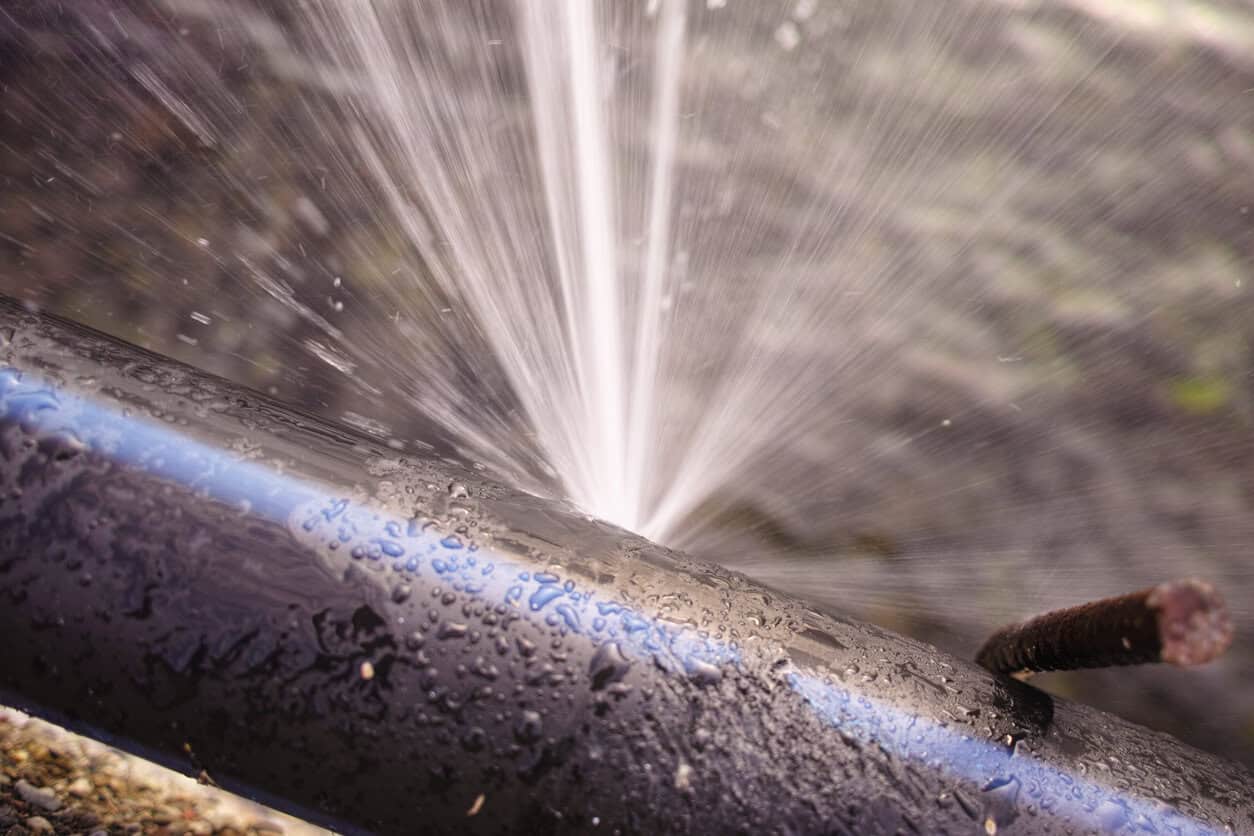
Gauteng loses about 27% of its treated water due to leaking pipes, amounting to 431 billion litres a year, an expert says. A water expert has told me that patching up old asbestos water pipes is no solution as they need to be replaced. This is because the extra strain caused by the repair creates pressure leaks elsewhere. And the worst leaks are not the ones you see, but the hidden ones underground. The jaw-dropping figure is that Gauteng loses about 27% of its treated water due to leaking pipes. That is 431 billion litres a year, roughly the amount of water supplied to Western Cape every year. Stopping this waste is key to alleviating the water crisis, while soaring temperatures that increase demand have left Gauteng residents hit hard by water cutoffs and restrictions. Johannesburg consumes 1 801 million litres per day, which is 445 million litres (33%) above its licensed allocation of 1 356 million litres. Rand Water has warned it cannot keep increasing abstraction from the Vaal River system without risking its long-term stability. It is estimated R7 billion is needed to replace the most critical 2 500km of Joburg’s water pipes, but only 20km was replaced in 2024-25, and 85km was the unachieved target for 2025-26. The backlog looks hopeless, yet the auditor-general reports that Johannesburg lost R10.3 billion worth of water over four years. So why not finance pipe replacement with the savings that new pipes will generate? Well, banks won’t lend if they cannot be assured that corrupt and incompetent contractors will be eliminated. The technical problem is to turn the expected water savings into provable collateral. Smart meters can identify leaks in real time and quantify how much water is wasted before new pipes are installed, and how much is saved afterwards. An independent auditor verifies the savings and an agreed portion of the money saved goes into a protected account to repay the loan. With a digital water ledger, everyone can see how much money has been recovered and where the money goes. Our cities are trapped in a cycle of leaking pipes, wasted water and insufficient investment. Like the fly in an open bottle that keeps hitting the glass in front as it tries to escape, the way out is to look up, think differently and use tomorrow’s water savings to pay for today’s repairs.
The high cost of leaking water pipes
Full Article
Original Source
Read the full article at Citizen →KhanList aggregates and links to publicly available news content. We do not host full articles from third-party sources. Always verify important information with original sources.