
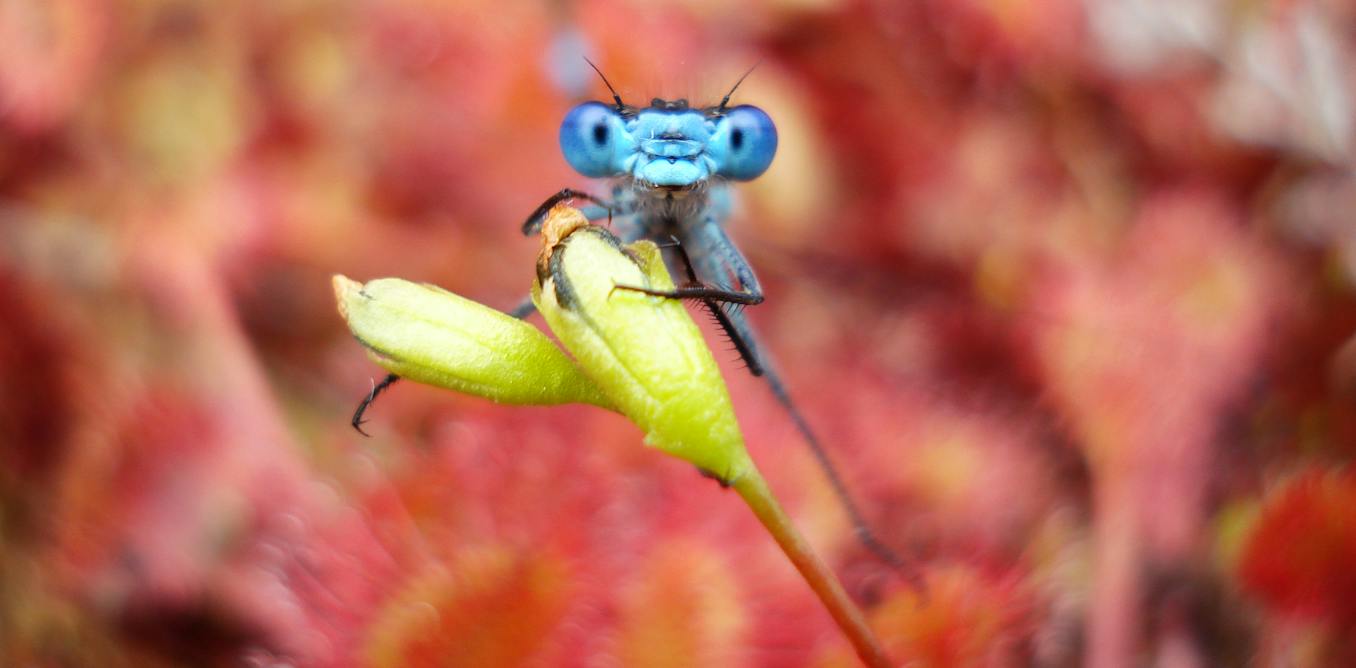
There are at least 14 million insect species on Earth, and they play highly diverse roles in sustaining the natural world. Insects provide many well-known benefits – what scientists often call “ecosystem services.” For example, you can thank a bee or a hoverfly for pollinating wildflowers and agricultural crops, or credit dung beetles for decomposing manure and other waste materials. Reports of rapid declines in insect abundance and biomass over the past decade have raised concerns about potential reductions in pollination, decomposition and other insect-provided services. Researchers have also noted that declines in insects could mean a change in the food supply for insectivores such as birds and bats. Hoverflies are among the world’s most important pollinators. Rob Cooke In response to these concerns, a working group emerged as part of a Research Coordination Network on the Status of Insects, funded by the U.S. National Science Foundation. This international group of 21 researchers, including us, met via Zoom for a year and a half to discuss what declines in insects might mean for vertebrates – from birds to bats to bilbies. What emerged from those discussions was a clear picture – insects are so much more than just food, and vertebrates rely on insects for everything from habitats to protection to health. As ants engineer their environments, other species reap benefits. Rob Cooke Insects create habitat Insects can be ecosystem engineers, meaning they create and maintain habitats for other species. Termites and ants build massive structures below and above ground that are used by many other species. Termite nests, for example, serve as climate-controlled spots for reptiles to lay eggs and for parrots to nest. In dry regions, some frogs live inside ant nests to take advantage of the humid conditions, masking themselves in pheromones to evade detection by their ant hosts. The soil surrounding termite mounds also provides good conditions for species such as naked mole rats and aardvarks to make their burrows. Ant nests concentrate nutrients that enhance plant growth, thereby creating good grazing habitat for species like gazelles. Insects can shape landscapes that herbivores, including gazelles, depend on. Rob Cooke Insects protect other species You probably don’t usually think of something as small as a beetle as a protector, or of a wasp as a bodyguard. But vertebrates rely on insects for defense, even against other vertebrates. For example, horned lizards turn chemicals from ants into a toxic, blood-spurting defense to ward off predators such as big cats. Poisonous frogs similarly get their toxicity from the chemical compounds found in insects they eat, as do some birds and snakes, which store toxins from ants and beetles as part of their defensive strategy. Many birds will deliberately nest near wasp nests so the threat of being stung deters potential predators. Some vertebrates even mimic insects to avoid getting eaten, such as young songbirds in the Amazon that move their heads to look like fuzzy caterpillars – which they resemble – when predators are nearby. Nesting near wasp nests can offer birds protection from predators. Rob Cooke Insects clean and sanitize Many insects, not just dung beetles, remove waste from ecosystems. By decomposing carcasses and dung, insects likely reduce disease transmission among wild vertebrates. For example, by tunneling through and burying dung, they make it an unsuitable place for parasites to live. Certain mosquito species have gotten a bad reputation for transmitting diseases, including malaria, but other insects help control their populations. In their larval stage, dragonflies are fierce aquatic predators that eat mosquito larvae. The ability of insects to spread diseases has even led to conservation success stories. In Australia, when native marsupials such as bilbies were threatened by invasive European rabbits, scientists used mosquitoes to transmit a virus that helped control rabbit populations. This effort resulted in populations of bilbies and other native marsupials rebounding. Researchers have also discovered hundreds of medicinal compounds in insects, and there are likely many more to be found. For instance, chimpanzees will press flying insects into wounds, suggesting that they may have a medicinal effect, though people don’t yet know the exact insect species the chimps use. Insects provide food for other species Of course, insects are really important food supplies. In terms of sheer numbers and biomass, they dominate nearly every terrestrial and freshwater ecosystem. If you added up the weight of all the insects on Earth, they would vastly outweigh all the wild vertebrates and be on par with the total weight of humans and livestock combined. It is no wonder vertebrates eat a tremendous number of insects, and this is true not just of songbirds and bats but even grizzly bears, which eat moths to help bulk up for the winter. Perhaps even more important are all the many indirect effects insects have on the food supply. Small wasps are the only pollinators of fig trees, which provide fruit to over 1,200 vertebrate species. Many other plants also rely on insects as pollinators and have for millions of years, and vertebrates in turn rely on the seeds and fruit those plants produce. The effects of insects can ripple through food webs to species as large as elephants and lions. Rob Cooke Changes in insect communities can also have big impacts on interactions between vertebrates. When an invasive ant disrupted the mutual relationship between a native ant species and an acacia bush, it led more elephants to eat the acacia. The loss of bushes made it harder for lions to ambush zebras, their primary prey, and resulted in a shift toward lions hunting more buffalo, altering the wider ecosystem. Another fascinating example are sloths and their moths. For a long time, it was a bit of a mystery why sloths would make the slow and dangerous journey to the ground to defecate once a week. As it turns out, sloths host a moth species that lives in their fur. The moths provide nutrients to the algae that grows in the sloth fur, which the sloth then eats. The algae also gives sloths a green tinge that helps camouflage them in the forest. The moths reproduce in sloth dung, and thus the sloth returning to the ground allows the moths to complete their life cycle. Sloths and moths have evolved an unusual relationship that benefits both species. Rob Cooke The importance of insect conservation Insect conservation is critical to the future of biodiversity. Insects fill so many roles and perform so many services for human beings and other species, including charismatic vertebrates people know and love, such as sloths and songbirds. As a result, declines in insect abundance and biomass could ripple out and destabilize ecosystems. The examples we brought together in our paper in the journal Nature Reviews Biodiversity are just some of the insect-vertebrate relationships that exist, and there is a vast array of fascinating things that insects do, and do for us, that scientists know very little about. By conserving insects, people are not just conserving the insects themselves but also supporting the many species, including humans, that depend on them.
The hidden ways insects support animal life – from habitat to health – go way beyond being food
Full Article
Original Source
Read the full article at Theconversation →KhanList aggregates and links to publicly available news content. We do not host full articles from third-party sources. Always verify important information with original sources.