
Published Nov 14, 2026, 6:00 PM EST Chris earned a Master’s degree in Defense and Strategic Studies (Highest Honors) from the University of Texas at El Paso. His graduate work concentrated on Global and National Security, Low-Intensity Conflict, Modern Warfare, and US grand strategy. He also undertook extensive regional studies, analyzing how key regions integrate into the broader US security architecture. This rigorous program provided him with a comprehensive understanding of U.S. military operations, global strategy, and weapons systems. Additionally, he gained a strong appreciation for great power competition.—an increasingly central force shaping international relations and conflict for the foreseeable future. Delta Air Lines operates some of the smallest mainline aircraft in the United States (US), including the 109-seat Airbus A220-100 and 110-seat Boeing 717. While most major carriers rely on larger narrowbodies, Delta has maintained a niche for smaller jets within its extensive domestic network, allowing the company to reach markets with more modest passenger demand. Pilot agreements, buying aircraft at affordable rates, and operational flexibility have helped ensure that these planes are viable. However, the 717's gradual retirement raises questions about how Delta will continue reaching out to these destinations and whether its small-aircraft strategy will evolve as the airline adjusts its fleet and domestic operations in the years ahead. Why Delta Operates Such Small Mainline Aircraft Delta Air Lines has an unusual selection of narrowbody aircraft as compared to other major US air carriers. Its mainline fleet includes two jets with approximately 110 seats: the 109-seat Airbus A220-100 and the 110-seat Boeing 717. Delta is the only major US airline to operate mainline aircraft within a particularly small seating arrangement, according to Simple Flying. While other carriers generally rely on larger narrowbodies for their mainline flying, Delta has retained a place for smaller jets, allowing it to serve routes where a larger plane may offer more capacity than needed. Highlighting the difference between mainline and regional operations is important when looking at Delta's fleet. Mainline aircraft are operated directly by the airline, utilizing its own pilots and cabin crew. Regional flights, however, are typically outsourced to partner carriers operating under the Delta Connection brand. These operators generally fly smaller planes, including the Embraer E175 and Bombardier CRJ900. However, the pricing and labor arrangements vary when an airline operates a smaller jet itself rather than relying on a regional partner. As Simple Flying explains in its overview of scope clauses, pilot agreements can significantly influence how airlines divide their flying between mainline and regional operations. Delta's decision to keep jets such as the 717 and A220-100 in its mainline fleet is therefore about more than passenger demand. Its pilot agreement limits the number of aircraft regional partners can operate, while also incentivizing the retention of certain smaller jets in the mainline fleet. This helps to explain why Delta's fleet composition differs from those of its competitors. A comparison by AeroHaber also illustrates how Delta uses the A220 alongside other US operators. How Pilot Scope Clauses Give Delta An Advantage One of the main reasons Delta operates smaller mainline aircraft comes down to an agreement with its pilots known as a scope clause. These provisions are included in collective bargaining agreements and determine how much regional flying an airline can allocate to regional partners. These agreements became increasingly important during the 1990s, when regional flights and routes grew in popularity. As a result, mainline pilots raised serious concerns about airlines shifting more routes to lower-cost regional operators. Aircraft Commerce explains that these restrictions put in place by scope clauses were intended to "protect the pilots of the major airlines." Under the scope clauses used by many major US airlines, Simple Flying reports that regional partners are generally limited to planes with up to 76 seats and a maximum takeoff weight (MTOW) of 86,000 lb (39,009 kg). Delta's agreement, on the other hand, includes an additional provision that gives the airline more room to expand its regional fleet. Airbus A220-100 Specifications Overall length 114.8 feet (35.0 meters) Fuselage max diameter 11.5 feet (3.5 meters) Wingspan 115.2 feet (35.1 meters) Height 37.7 feet (11.5 meters) Range 3,618 miles (6,700 km) Max take-off weight 140,434 lb (63,700 kg) Max zero fuel weight 115,963 lb (52,600 kg) Max fuel capacity 5,762 US gal (21,805 liters) Maximum passenger seating 135 seats Typical two-class seating 100-120 seats Cranky Flier states that Delta can operate up to 153 regional planes with 71 to 76 seats. It can add another 70 aircraft in that category if it operates an eligible small narrowbody in its mainline fleet. Delta met that requirement by introducing the reliable Boeing 717, and later the Airbus A220-100. Further, Cranky Flier explains, the agreement gives Delta a larger regional aircraft allowance than it would otherwise not have. United Airlines has a similar provision in its pilot agreement, but it has not introduced an eligible small narrowbody into its mainline fleet, which would allow it to gain an expanded regional fleet allowance. American Airlines negotiated a different arrangement, allowing a larger number of regional planes with up to 65 seats, alongside separate restrictions for larger regional jets. The agreements are not identical, but Delta's provision gives it a particular reason to retain smaller aircraft in its mainline fleet. Why Delta's Small Aircraft Make Financial and Operational Sense Operating smaller planes with mainline crews can be expensive, but Delta found ways to make its Boeing 717 and Airbus A220-100 fleets work. The terms under which it purchased the aircraft were an important part of that equation. In 2012, Delta stated that it reached an agreement with Southwest Airlines and Boeing Capital to lease or sublease 88 Boeing 717s previously operated by AirTran Airways. This gave Delta access to a sizable fleet without having to purchase an entirely new aircraft type. Delta had intended to use the 717s to replace smaller regional jets. In its announcement, the airline said the jets would "primarily replace small 50-seat regional jets on a capacity-neutral basis." Then-CEO Richard Anderson also said the 717s would provide "a significant improvement in economic efficiency relative to the aircraft they are replacing." The arrangement gave Delta a way to bring smaller aircraft into its mainline operation while improving the economics of some existing routes. The Airbus A220-100 offered another opportunity. Delta placed its initial order for 75 aircraft in 2016, when the jet was still known as the Bombardier C Series. During the ensuing trade dispute between Boeing and Bombardier, Boeing alleged that Bombardier had offered the aircraft to Delta for approximately $19.6 million (£14.61m) each, well below the reported production cost. That figure originated from Boeing, rather than a publicly listed contract price, but it illustrates the highly competitive pricing at the center of the dispute. The two aircraft also perform different jobs within Delta's wide-ranging network. The 717 is primarily used on shorter, high-frequency routes, while the A220-100 is better suited to longer domestic services. According to The Points Guy, the A220-100 frequently operates routes of around 900 miles (1,450 km), including markets popular with business travelers that were previously served by the CRJ700, CRJ900, and Embraer E175. Further, Delta equipped the aircraft with spacious 18.6-inch (47.24 cm)-wide economy seats, providing a wider seating arrangement than many competing narrowbodies. Between the terms of purchase and the different roles the aircraft fill, Delta has been able to make a relatively small mainline fleet work across a range of domestic routes. Why Delta's Small-Aircraft Strategy May Be Changing Delta's strategy could look different as the airline continues retiring its Boeing 717 fleet. The aircraft has played an outsized role in Delta's domestic network for more than a decade, particularly on shorter routes where its capacity makes it a practical replacement for smaller regional jets. With the 717 gradually exiting stage left, Delta will need to decide how best to maintain its presence in those markets. The airline is not necessarily throwing in the towel on smaller mainline aircraft, however. Its A220-100, A220-300, and Airbus A319 provide other options for routes previously served by the 717. Age is also becoming a factor in the 717's future. Delta's 2025 annual filing listed 80 Boeing 717s in its fleet at the end of the year, with an average age of 24.3 years. In June 2026, Air Data News indicated that Delta planned to retire six planes earlier than expected as they approached major maintenance inspections. The 717 is no longer in production, and its Rolls-Royce BR715 engines are unique to the aircraft. Keeping an aging fleet in service under those circumstances can become increasingly difficult and prohibitively expensive. Replacing the 717s may not necessarily be a straightforward one-for-one swap. Although the A220-100 is newer and has greater range, its capacity and operating characteristics are different. Delta could use a combination of A220 variants and A319s, putting larger aircraft on some routes while reducing frequencies in markets that cannot support the additional seats. View From The Wing summarized the possible changes: "Replacing 717s would probably mean some larger A220-300s, some reassignment of comparable A220-100s and Airbus A319s, and fewer frequencies in some markets." Delta's use of smaller mainline aircraft is likely to change as the 717 fleet leaves service, but there is still a place for jets below the capacity of its larger narrowbodies. The A220 family and A319 give the airline further options for serving destinations that may not need a larger aircraft, although they cannot replicate the 717's role on every route. How Delta deploys those aircraft will determine whether it can maintain the same level of flexibility across its domestic network. How Delta's Small-Aircraft Strategy Could Evolve Delta Air Lines' use of smaller mainline aircraft demonstrates how fleet planning involves more than simply matching passenger demand with aircraft capacity. Pilot scope clauses, favorable acquisition agreements, and the ability to serve markets with smaller jets have all played into the airline's distinctive approach. The Boeing 717 and Airbus A220-100 have allowed Delta to maintain flexibility across routes that may not require larger narrowbody planes. However, as the 717 gradually makes its exit from the fleet, Delta's strategy is likely to evolve. The A220 family and A319 will continue to provide smaller-capacity options, although replacing the 717 will not always be straightforward. Ultimately, Delta's ability to balance aircraft economics, labor agreements, and passenger demand will shape its future domestic fleet strategy.
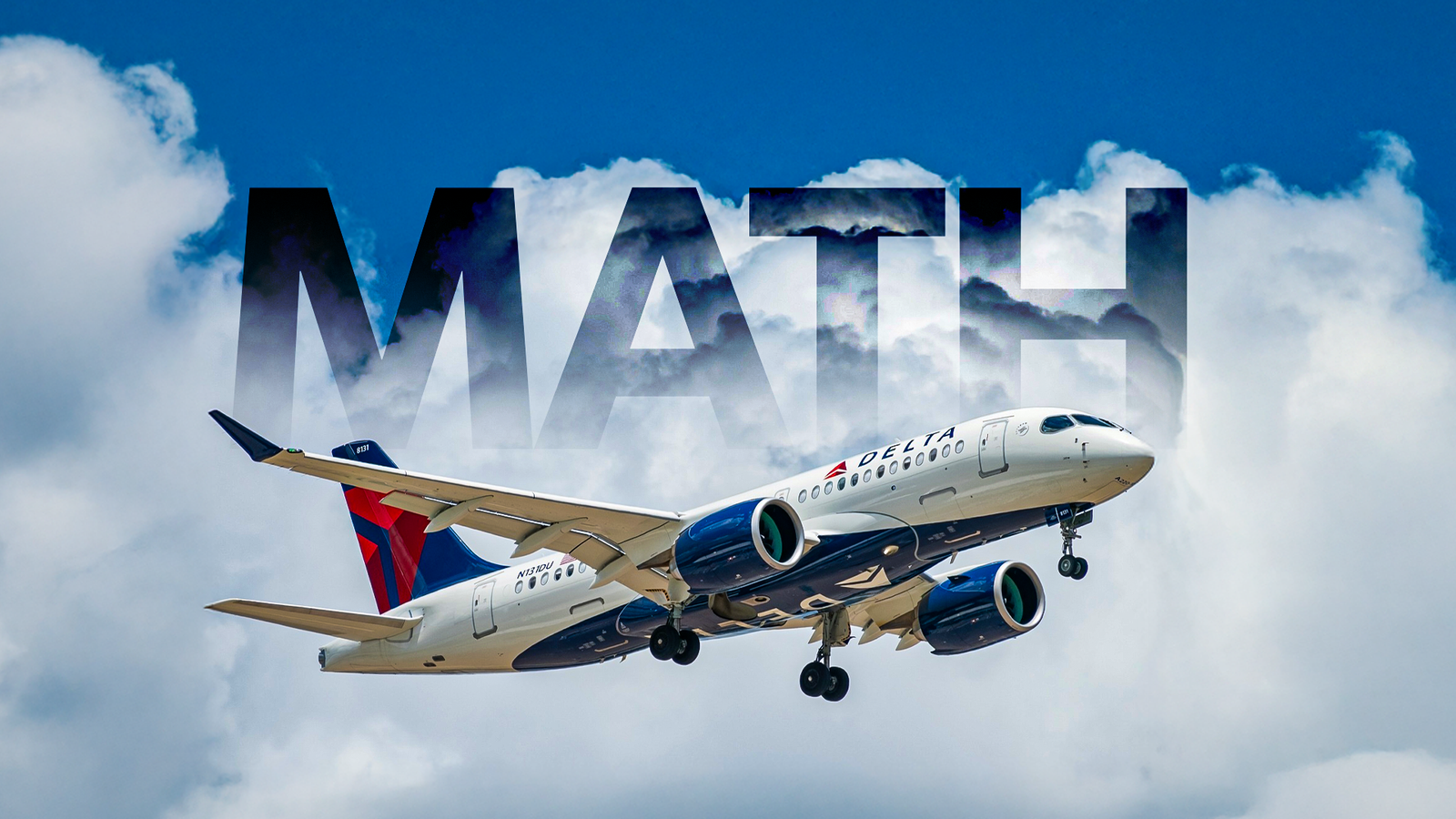
The Hidden Math Behind Delta Air Lines Being The Only US Carrier Flying Mainline Jets With Under 110 Seats
Full Article
Original Source
Read the full article at Simpleflying →KhanList aggregates and links to publicly available news content. We do not host full articles from third-party sources. Always verify important information with original sources.