
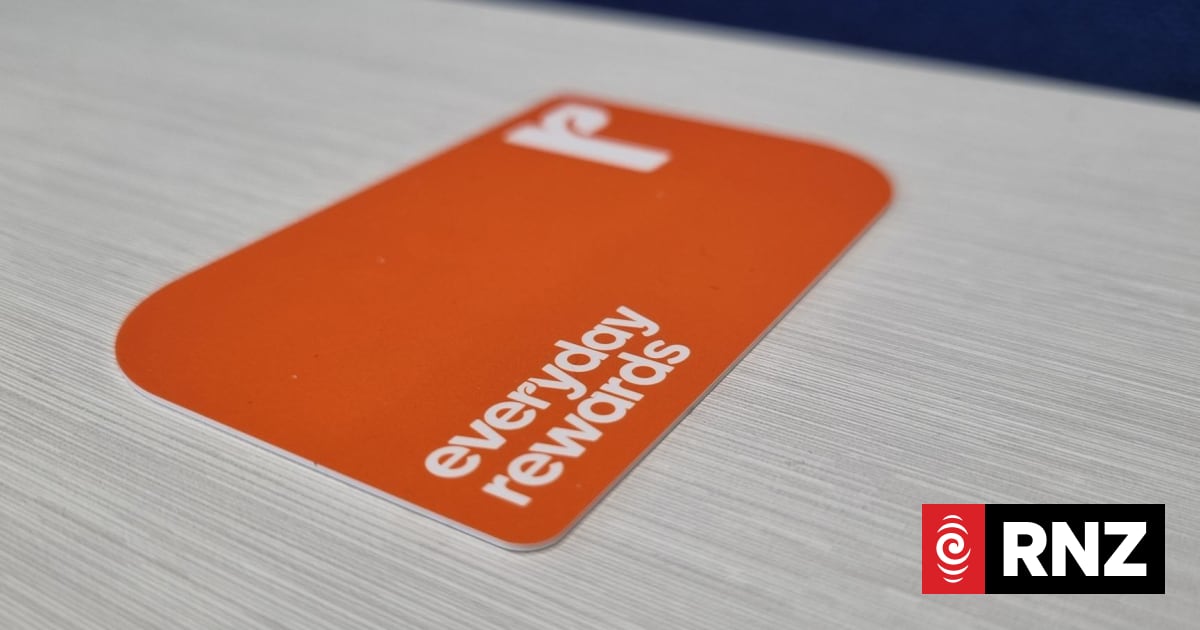
Shoppers using loyalty programmes are benefiting retailers more than themselves, new research says.It comes as Bunnings launches its first rewards programme, offering a $5 reward for every $500 spent.Edith Cowan University professor of marketing and service science Sanjit Roy said the loyalty market globally was expected to grow in value from US$17.38 billion (NZD$29.49 billion) in 2026 to US$51.65 billion (NZD$87.63) by 2034.He recently produced research based on 800 supermarket customers, to better understand their interactions with loyalty programmes."Many customers don't have the time to do mental cost-benefit analysis. What am I getting and what am I giving up? Retailers know this, so they'll prompt you at the till before you pay, either at self-serve checkout or by a customer serviceperson asking: do you want to scan your rewards card? Retailers know how to reinforce our habit," Roy said."But as customers we are losing more than we are gaining. If we earn one point for every dollar spent, and every 2000 points we receive a $10 voucher - is it worth handing over our personal data when discounts and promotions aren't being personalised or tailored to our buying habits as a reward for our loyalty? Therefore, is it worth signing up for the loyalty programmes?"In New Zealand, the Woolworths Everyday Rewards programme offers a $15 voucher for every 2000 points.Roy said loyalty programmes were likely to become more sophisticated over time as retailers made more use of the data they collected about shoppers."We live in a data-driven economy and every time we use these loyalty rewards cards, or we are a member of any loyalty programme, what we give up is our personal information."Every time we go to a shopping trip and we scan our card, whatever we buy, including the types of items, everything gets recorded."I think in this data-driven world, the AI-enabled economy, the retailers have all the tools to examine and analyse consumers' buying pattern and accordingly target."I think they can do a lot more than they are doing at the moment... they could design loyalty programmes which are actually beneficial for customers, at the moment that's not the case at least in the supermarket sector."He said rather than making people wait for rewards, as at present, shops could target specials to customers according to their needs."If I'm a young parent and I need nappies and somebody has tracked my purchase behaviour I don't have to wait for 2000 points... somebody has analysed my previous purchase pattern and says 'okay, probably you are running out of nappies, and here is a discount if you come and buy your nappies at this point in time. It's creating instant gratification that may lead customers to engage more and more with the loyalty programme."Consumer NZ has previously warned that supermarkets could use data from loyalty programmes to bump up prices in places where they felt customers would pay.Roy said the schemes would benefit supermarkets more than customers."It's an open truth."Companies always have the upperhand."He said his research showed customers needed to trust retailers to properly engage with loyalty schemes."Customers know they're just a datapoint. Supermarket retailers should focus on advancing their offering by establishing a personalised dialogue with customers and making their loyalty benefits more human-centric. Creating a personalised dialogue is a precursor to building trust."Sign up for Money with Susan Edmunds, a weekly newsletter covering all the things that affect how we make and spend money.
The hidden costs of loyalty programmes
Full Article
Original Source
Read the full article at Rnz →KhanList aggregates and links to publicly available news content. We do not host full articles from third-party sources. Always verify important information with original sources.