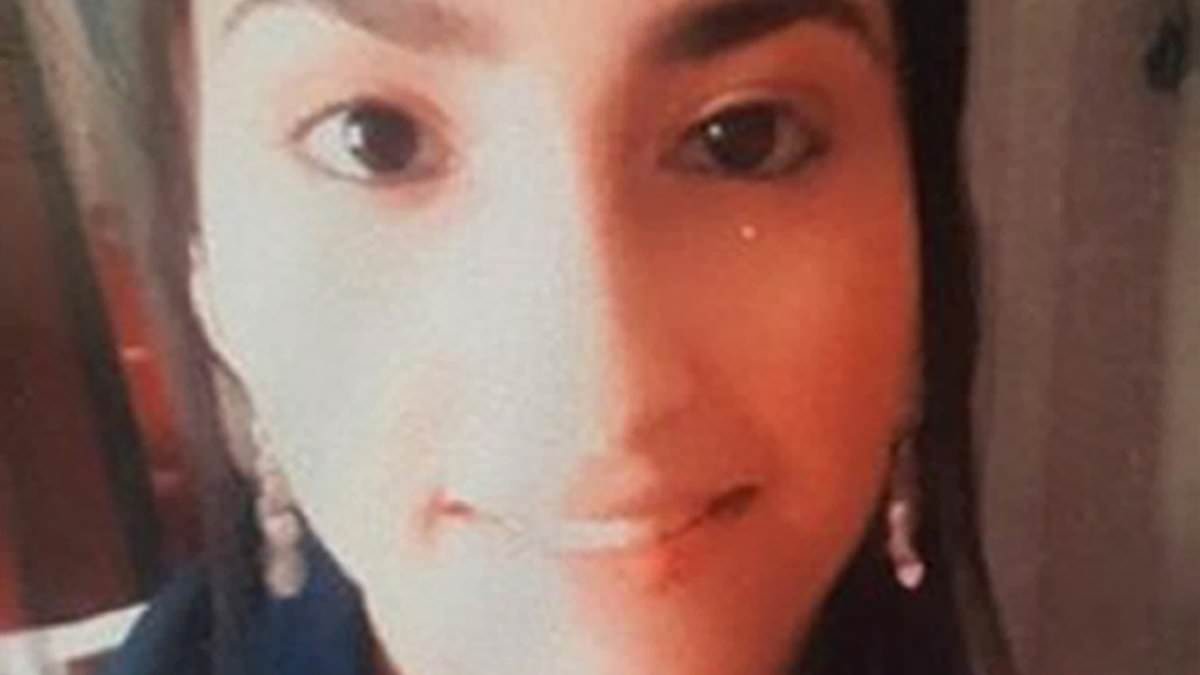
Somaiya Begum was enjoying a well-earned lazy afternoon, curled up on the sofa in her uncle’s terraced home, on the day she went missing.It had been a gruelling academic year for the talented biomedical science student, but her hard work had paid off. She had scored some of the highest marks in her class at Leeds Beckett University.But it wasn’t just the strain of her studies that Somaiya had been forced to contend with, she was living with her uncle and grandmother on a crime-ridden street in a rundown area of Bradford out of necessity, not choice.In fact, it was something far more sinister than keeping down the cost of her bills – she was in fear for her life.Four years previously, aged just 16, her parents tried to force her into a marriage with her older cousin in Pakistan. Somaiya was terrified and refused, causing a huge rift within her family.She called the police who notified social services, and a court-ordered Forced Marriage Protection Order was put in place, stopping her parents from taking her out of the country and blocking any further attempts to marry her off.Thankfully, Somaiya’s uncle Dawood Khan offered her sanctuary in his small house, just a short walk from her family home, while she carried on with her education.Despite her ordeal, Somaiya had a lot to look forward to and a successful career undoubtedly awaited her.But little did she know, as she relaxed on that hot summer day in June 2022, that her bright future would be tragically snuffed out in the most horrifying of ways - by her own family. Somaiya Begum was murdered by her uncle Mohammed Taroos Khan on June 25, 2022 Somaiya had moved in with her other uncle Dawood Khan on Binnie Street (pictured) after her parents had attempted to force her into a marriage against her wishes when she turned 16For family friends, living near the two-up two-down home on Binnie Street, the memory of her harrowing death is still too painful to bear, especially as they remember the glaring warning signs over the years.'We've known Somaiya since she was a little baby. She was a very pretty, very nice, joyous girl', one neighbour tells The Crime Desk, their face falling instantly when they discuss the tragedy.'When she was 16, I was outside hanging my clothes and I saw police coming into their house. Suddenly, police just got her and her three siblings and they were taken away.'Then once she moved in with her uncle she began going to college, she went to Leeds Beckett University. She was a smart girl.'There was a change in how she dressed after leaving her parents. She was still fully covered but she wouldn't wear those long abayas, she would wear jeans and like long dresses and things, and she would still wear her scarf always.'One of Somaiya's uncles, before the police even found her body, told one of our neighbours that "he's a crazy head, it's my brother, he's done this".'The uncle in question was Mohammed Taroos Khan, the eldest brother of Dawood and Somaiya's father Yaseen.He had forced himself into his brother’s home on that June afternoon while Dawood was asleep in his loft bedroom. Neighbours heard Somaiya and Taroos argue before he stormed out issuing a deadly threat. He would return minutes later to act on it.Recalling the incident, another woman, who knew Somaiya’s family when she was growing up, adds: 'Those few days still flood before my eyes now, we literally all cried for Somaiya.'I always think about what she must have been thinking in her last moments when she was killed. She must have thought "why is there nobody here to save me, what did I do to deserve this, in a future life, in a past life?"''That day when she was murdered it was really hot, I still remember it was that really hot summer of 2022, and I had left the front door open.'We heard a commotion and couldn't hear exactly what was said, until he stormed out of the front door and threatened "You watch what I'm going to do to you, I'm going to kill you".'He shouldn't have been there. There was a restraining order against him visiting that address.''Somaiya tried to reason with him but he zoomed off in his van and returned again later,' the friend adds.'After that we didn't hear anything, we didn't know that he had come back and killed her until police came round to our houses.'They said that Somaiya had gone missing, but it seemed like they knew she had been killed.' Taroos had a restraining order against visiting the Binnie Street address after previously abusing his own daughter and threatening to 'chop her up' CCTV footage revealed Taroos dragging Somaiya's body out of a shipping container to later dump at a nearby wasteland just minutes from the local police stationWhen Dawood had awoke from his post-work afternoon nap and made his way downstairs, at first, he assumed his niece was in her bedroom, but it was empty.In the living room, her laptop and earphones remained scattered across the sofa where they had been when he had last spoken to his niece in the early afternoon, but still there was no sign of Somaiya.When his brother Taroos turned up at the house swinging the front door open, despite it usually being locked, Dawood grew suspicious. According to Dawood, Taroos had not visited the house in a decade.Taroos told him he had come over to visit his mother - and a confused Dawood allowed him in, brought over tea to his mother, and left the two alone.But increasingly he became worried at Somaiya's disappearance and hours later asked neighbours to share doorbell footage. He saw that Somaiya had not left the house since she returned home from her job as a part-time carer just after midnight the previous day.Dawood reported Somaiya missing to police, but tragically it wasn't until an agonising 11 days later that the brutal truth behind her disappearance finally began to emerge.Treated as though she was 'garbage', her decomposed body was found wrapped in a carpet and dumped in waste land among heaps of rubbish on the outskirts of Bradford, just a seven-minute drive from the house.Her face was covered in maggots and a 10.7cm metal spike was found embedded in the right side of her chest, puncturing her lung.Shocking CCTV footage later showed Taroos Khan dragging a 'long and light coloured' rug containing Somaiya's body out of a shipping container, where he had first hid her body, and into his Mitsubishi Space Wagon, before dumping it at the waste land.To those who live in the area, there is no doubt that the murder was linked to the concept of 'honour'.Somaiya's refusal to marry her cousin in Pakistan, and her actions in calling the police on her parents for attempting to force her into marriage, were perceived as a 'betrayal' and seen as bringing 'shame' on her entire family.Her family had 'promised' her to a cousin in Pakistan, and it was said the fallout led to what they believed was a loss of 'honour' in their hometown, with Yaseen Khan even missing out on business deals.At the time of her murder, it had been four years since Somaiya's refusal of the marriage, but for her family time was no healer and they raged at the decision, as one friend explains to The Crime Desk: 'That [time] means nothing to them. For the family, it was a loss of face.'Somaiya's family came from the 'Pathan' community, a specific ethnic group from north-western Pakistan and other parts of south Asia for whom perceived 'honour' and 'keeping their word' is seen as hugely important.'It was 100 per cent over this idea of "honour",' says the former friend.'Some families in the Pathan community will do anything for their "izzat", meaning honour. They will do anything and not spare anyone.'If you see from the beginning, from the moment Somaiya called police and social services got involved and took her and her siblings, since then Somaiya was the odd one out. She was not a good child in their eyes.'In their mind, in their hearts, everybody here knows what happened, why she got killed. Police conducted an extensive 11-day search for Somaiya's body after she was reported missing on June 25 by her uncle Dawood'The court didn't understand properly, or maybe they didn't want to label it as that, but we all know.'Taroos Khan was sentenced to life in prison with a minimum of 25 years for Somaiya's murder in 2023.In his remarks at his sentencing, Mr Justice Garnham KC stated there was 'no clear motive' and rejected any 'speculation' that the murder was 'part of some appalling family agreement' or that what Taroos had carried out was an 'honour' killing.He stated that Taroos did not share the 'same views' as his brother Yaseen.This was despite the court hearing that Khan had a restraining order preventing him from attending his brother’s address after his daughter Kynath Begum was forced to flee to the address following a violent attack on her and threats he had made to 'chop her up', after claiming he had heard she was 'going out with multiple men'.Ms Begum had told the trial: 'I've never had a good relationship with him. Whenever he would come round he just had this ideology of how we should be and he's always been very sexist.'Just obviously like women can't wear certain things and can't do certain things and men are superior.'But while the courts were reluctant to be drawn on the obvious motive for the senseless murder of Somaiya – for others it was clear as day.Afrah Qassim is the CEO and founder of Savera UK, a charity working with The Crime Desk to raise awareness about 'honour'-based abuse.Speaking on the National Day of Memory for Victims of 'Honour'-based Abuse, which falls on July 14, Ms Qassim says there is 'no doubt' in her mind that Somaiya was killed to restore the 'honour' of her family.'From my understanding she is already subject to a Forced Marriage Protection Order, so she has already done something that is considered "shameful",' she explains.'I think they were trying to be clever over how they did it.'There is already a huge factor that she had asked for help and that there was a protection order in place for her.'She never really got very far from her family. She would still have been very, very much under their control in where she could go and what she could do, because she would have been seen by community members.'Families who hold these extreme beliefs, they will do whatever they can to play the system.'And because our system doesn't have the best understanding of the complexity and the different layers of "honour"-based abuse, cases of "honour" killings or motives of "honour" are going missed.'According to Savera UK, cases such as Somaiya's are not being recognised for what they are because 'honour' is not being considered an 'aggravating factor'.It is estimated that at least 12 'honour' killings take place in the UK every year and hundreds more are subjected to 'honour'-based abuse (HBA) - but many cases are still not correctly identified.While increased attention was brought to the subject in the early 2000s, amid a growing realisation that the dangerous practice was spreading unchecked, it continues to be carried out in the shadows, and Somaiya's murder is a clear reminder that the practice has not been eradicated.'Honour' killing victims are, in the most cases, young girls and women who are seen to have damaged the family 'honour'. A shipping container at Carter Gate Works, just minutes from the Binnie Street address, was searched by police. It is understood Taroos had used it as his home and had temporarily hidden Somaiya's body in there before later dumping it in a waste landThis can be for behaving in a 'western' manner or wishing to be with a partner that their family refuses, but can also happen for other reasons, such as choosing a career path that isn't seen to be of 'high' status, questioning your sexuality or gender identity, or going against any values that the family or community believe.The practice does not only take place in one particular culture or religion, but has been seen to be used by controlling perpetrators of any background.Savera UK has been campaigning against HBA and 'honour' killings for over 15 years, both through supporting survivors and by pushing for widescale training in public services to help spot signs of HBA and harmful practices.Ms Qassim added: 'Clearly there is a motive of "honour" and the signs are there.'This is why "honour" should be assessed as an "aggravating" factor when it comes to sentencing.'From my position and looking at all the signs, I would call it an "honour" killing. I don't understand why people, or courts specifically, are fearful to call it that.'For me it's about recognition for victims by calling it what it is.' Savera UK is a leading charity working to end ‘honour’-based abuse (HBA) and other harmful practices, including forced marriage, spiritual abuse and conversion ‘therapy’. It provides lifesaving and life-changing services for survivors and those at risk, regardless of age, culture, ethnicity, disability, sexuality, or gender, and help and advice for professionals, training and education, research and campaign work.National helpline: 0800 107 0726 (10am – 4pm, Monday – Friday)Get help online: https://www.saverauk.co.uk/I-need-help/If you are at immediate risk, please ring 999
The heartbreaking story of the talented young woman murdered by her own family... and the chilling threat of her killer hours before she died
Full Article
📰 Original Source
Read full article at Dailymail →KhanList aggregates and links to publicly available news content. We do not host full articles from third-party sources. Always verify important information with original sources.