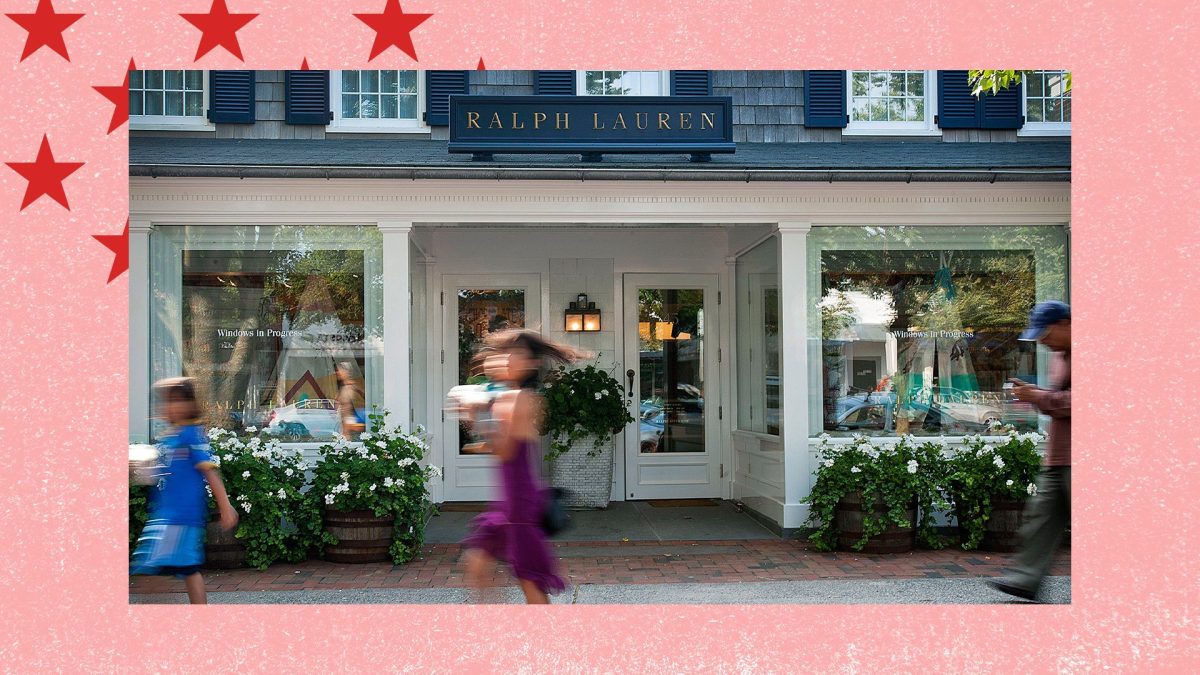
Welcome to Trump’s America, The i Paper’s World Insight series presenting the sharpest, deepest thinking on an era-defining shift in history and politics, investigating how Donald Trump and his administration have changed the US and the world – and where we go from here. • America can’t afford to retire• The US is becoming impossible to live in• I told Trump over dinner he didn’t have my loyalty – it sealed my fate• This is how the world will look after Trump• I’ve seen what ICE has done to Minnesota. Farage wants to import that to the UK• The men who want to stop women voting• Trump isn’t damaging America. He’s reinventing it The queue outside Ralph Lauren snakes on to Main Street before lunchtime. Across the road, every table at Sant Ambroeus is already occupied, despite its lobster rolls nudging $60 (£45). A Bentley slows behind a line of Range Rovers while, overhead, a helicopter cuts across the clear blue sky on its way to one of the nearby private landing pads. On the surface, it looks like any other summer day in the Hamptons, 80 miles from New York City. Designer bags, impossible restaurant reservations and multimillion-dollar homes hidden behind perfectly trimmed hedges. But in 2026, the scene feels harder to ignore. At a time when millions of Americans are worrying about grocery bills, mortgage rates and the rising cost of everyday life, one of the country’s wealthiest enclaves appears to be living in a very different reality. The contrast has become particularly striking during Donald Trump’s second presidency. His return to the White House came with a promise to restore American prosperity, rebuild domestic industry and put the country’s economy first. For some Americans, particularly those with investments, property and businesses, there is a renewed sense of confidence. For others, the recovery feels much further away. Nowhere is that divide more visible than the Hamptons, the seaside communities known as a summer destination for affluent New York City residents. The signs of wealth are everywhere. Restaurants charging Manhattan prices are fully booked days in advance and estate agents display waterfront homes with asking prices stretching into eight figures. Wellness studios, private clubs and exclusive events continue to attract customers seemingly unaffected by wider economic uncertainty. Madison, a 27-year-old waitress who has worked four summers in the Hamptons, says the contrast between the national economic mood and what she sees every night could not be starker. “Everyone keeps talking about how bad the economy is, but you wouldn’t know it from inside the restaurant,” she says. “Last Saturday we had a family wait nearly two hours for a table, then spend well over $600 (£450) on dinner. Nobody mentioned the prices. They were just happy they’d managed to get a table.” The Hamptons is a bubble, where property prices stretch into eight figures, and the workers who power the enclave have to commute long distances from more affordable areas (Photo: J Conrad Williams Jr/Getty) For decades, the Hamptons has been shorthand for American success, attracting everyone from Wall Street executives to Hollywood figures and technology entrepreneurs. This summer, it is a clear illustration of how the country’s economic struggles have not reached many of its richest people. Fashion platform Lyst recently reported that three American luxury labels – Ralph Lauren, Coach and The Row – featured among the world’s hottest brands, in a notable shift from five years ago when no US businesses appeared in the ranking’s top 10. Since returning to office, Trump has continued to promote an economic agenda built around lower taxes, deregulation and protecting American industry. His supporters argue that extending elements of the 2017 Tax Cuts and Jobs Act, reducing barriers for businesses and encouraging investment has helped create the kind of confidence visible in places like the Hamptons. Critics see a different picture: They argue that policies favouring markets and corporations have done more for those who already own assets. Patrick Reid, a currency expert, visiting lecturer at the University of Cambridge and co-founder of The Adamis Principle, says the widening wealth gap is being driven by the fact that rising markets disproportionately benefit those who already own assets. “Strong capital inflows into US equities have created more wealth at the higher end, particularly for people who already had money invested,” he says. “For households relying mainly on wages, persistent inflation and higher borrowing costs have made the recovery feel very different.” Shorts Although inflation has fallen from the highs seen after the pandemic, many everyday costs remain well above where they were several years ago, with the war in Iran driving up oil prices. Housing affordability is a major concern, borrowing is expensive and many Americans have become more cautious about how they spend. The result is an economy that appears to be moving at two different speeds. Reid believes those differences have become particularly visible during Trump 2.0. “The administration’s emphasis on tax policy, deregulation and encouraging investment has tended to favour capital over labour,” he says. “For people who own businesses, property or investment portfolios, that has helped fuel confidence. Those whose incomes depend primarily on wages haven’t benefited to the same extent, which makes the divide feel even more pronounced.” Companies serving America’s wealthiest consumers are no longer chasing mass appeal, but focusing on exclusivity, creating products and experiences aimed at customers looking for more than just expensive handbags and cars. The Hamptons offers a window into how differently Americans are experiencing this moment of heightened volatility under Trump. Homeowners whose properties have gained millions of dollars in value live within miles of workers commuting long distances because they cannot afford to live near the communities they help operate. Madison says that contrast is impossible to ignore. “The Hamptons couldn’t function without the people cleaning the houses, cooking the food and serving in the restaurants, but there’s less and less room for them here,” she says. She recalls one evening when a diner complained his helicopter had been delayed while, just a few feet away, a colleague worried she couldn’t afford to repair her car. “Those conversations were happening about 20ft apart. I remember thinking, that’s probably the Hamptons in a nutshell.” The Hamptons has never claimed to represent ordinary America, but this year, the bubble feels especially revealing. The question is not whether luxury America is doing well. Clearly, it is. The question is whether that prosperity signals broader economic strength under Trump or simply proves that those at the very top remain protected from the pressures affecting everyone else. Either way, the queue outside Ralph Lauren tells a story that reaches far beyond a single shopfront.
The Hamptons is thriving. But America isn’t
Full Article
Original Source
Read the full article at Inews →KhanList aggregates and links to publicly available news content. We do not host full articles from third-party sources. Always verify important information with original sources.