
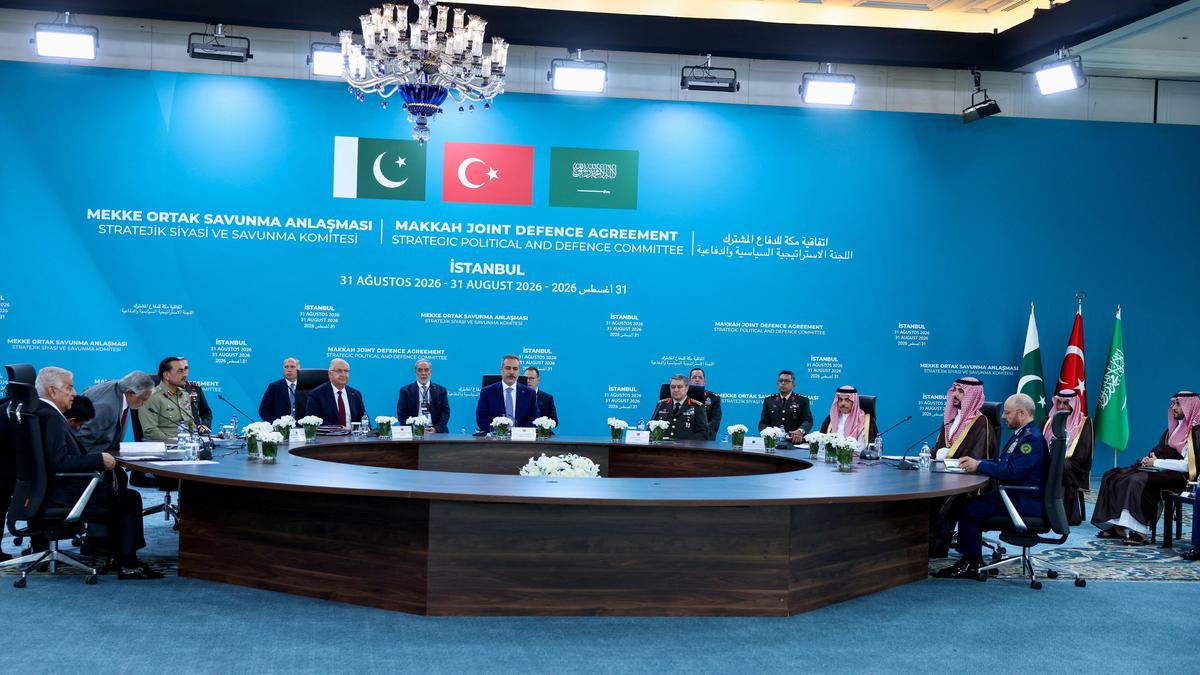
For decades, India’s relationship with West Asia operated under a doctrine of deliberate ambiguity and even of some strategic distance. Delhi treated the “Middle East” primarily as an economic hinterland: a critical source of crude oil, a reliable destination for outbound labour, and a vital conduit for remittances. When regional crises flared, Indian foreign policy defaulted to hedging, balancing relations between competing power centres such as Riyadh, Tehran, Tel Aviv, and Abu Dhabi without tying itself to the security obligations of any single capital. Of late, we called that approach “multi-alignment”.What worked until nowBut while India was careful to be friendly to all, it was not too friendly to any, in an effort not to offend any of the various capitals in the mix. The logic was clear: there was much to be gained from all parties in what was widely seen to be a likely West Asian economic renaissance. The region was seen through a macroeconomic vision that highlighted its convenient geographic features, its immense natural resources of oil and gas, massive capital accumulation, and its receptivity to imported labour and skills, of which India has a surplus. In this framing, the global economic centre of gravity was seen as inexorably shifting away from an aging, debt-burdened West toward a highly dynamic Asia, positioning West Asia as the ultimate maritime and terrestrial bridge between a declining West and a rising East.This defensive and essentially transactional posture served India well in an era when the United States stood as the undisputed guarantor of West Asian security, keeping sea lines of communication open and maintaining regional stability. However, the geopolitical bedrock of West Asia is undergoing a violent structural shift. As Washington recalibrates its global commitments and retreats into an unpredictable “selective engagement” posture, a profound security vacuum has emerged, sparking a scramble among regional states for durable security guarantees. Here, has India been caught napping, continuing a business-as-usual approach that risks early obsolescence?West Asian capitals no longer view distancing, whether called non-alignment or multi-alignment, as a virtue. They are actively seeking alternative, dependable security partners who can offer more than diplomatic platitudes and routine economic cooperation. This structural reality was highlighted by the signing of the Mecca Joint Defence Agreement, bringing together Saudi Arabia, Türkiye, and Pakistan into a collective defence arrangement. While framed as a defensive effort to manage shared vulnerabilities, the pact signals a broader security realignment. By linking Gulf capital with Turkish defence technology and Pakistani military manpower and skill, the agreement creates a powerful new security architecture right at India’s western maritime doorstep.A clear signal of changeFor New Delhi, the Mecca Agreement is not an isolated diplomatic transaction; it is a clear structural signal that West Asia’s security framework is being fundamentally rewritten, often by actors whose strategic interests directly run counter to India’s own long-term objectives. While India’s strategic silence on this development is understandable, it still begs the question: what next? The growing influence of external powers and hostile regional pacts directly threatens India’s trade routes, energy security, and the welfare of millions of Indian citizens living in the Gulf. Is India going to build its own partnerships, or become irrelevant to the region’s security?If India continues to rely on legacy diplomatic processes and transactional commerce, it risks being marginalised in a region essential to its national survival. The challenges are formidable. The eruption of hostilities involving Iran demonstrated that modern, highly integrated economic infrastructure remains profoundly fragile when subjected to grey-zone, asymmetric warfare. State-of-the-art port facilities, energy networks, and logistics corridors proved highly vulnerable to low-cost drones, showing that capital-intensive infrastructure cannot fully compensate for localised security vacuums. Hyper-secure economic enclaves will remain perpetually exposed to the spillover effects of surrounding instability in the region. Since the modern Gulf model relies heavily on foreign corporations and expatriate labour, regional stability is intimately tied to global perception. If security risks cross a certain psychological threshold, the talent and capital that flowed in seamlessly can exit just as rapidly. And when narrow naval chokepoints or overland trade routes face active disruption, global supply chains inevitably stall, revealing that these ambitious trade corridors are only as strong as their most unstable geographic link.Against this critical background, the assumption that trade ties and diaspora diplomacy alone can preserve Indian influence is rapidly unravelling. A region grappling with maritime threats in the Red Sea, drone strikes on critical infrastructure, involvement in conflicts in Iran, Yemen, Sudan, the Strait of Hormuz and now the Bab el-Mandab, requires partners capable of providing tangible security assets. West Asian powers are hungry for hard-power options such as naval patrols, intelligence sharing, defence-industrial collaboration, and credible counter-terrorism capabilities. If India Delhi-dallies over stepping into such a role, others will fill the void, as Türkiye has already demonstrated in Mecca.The hard moves India must makeTo protect its strategic space, New Delhi must contemplate a decisive doctrine change, evolving from a passive beneficiary of regional stability into an active guarantor of it. This requires moving beyond high-level bilateral visits and economic summits to actively project hard power into the western Indian Ocean and the broader West Asian region. India’s immediate focus must be the rapid expansion of naval and maritime security partnerships across key choke points, including the Strait of Hormuz, the Gulf of Oman and the Gulf of Aden, the waters off the Somali coast and the Bab-el-Mandeb. By embedding its naval footprint more deeply through joint maritime patrols, permanent logistics access arrangements, and interoperable surveillance networks with friendly Gulf states, India can establish itself as a, if not the, premier net security provider in its immediate neighbourhood.Furthermore, India must leverage its growing defence manufacturing ecosystem to offer West Asian states a reliable alternative for hardware and technology. Collaborative defence ventures, joint military exercises with real operational teeth, and deep intelligence-sharing mechanisms must replace mere procurement discussions. Developing robust bilateral and “minilateral” security frameworks with partners such as the United Arab Emirates or Israel, and separately even with Saudi Arabia, will allow Delhi to build a counterweight against hostile axes without succumbing to rigid Cold-War style alliances. The goal is not to entangle India in foreign quagmires, but to build a strategic deterrence web that safeguards Indian interests and reassures regional allies.The era of passive presence in West Asia has reached its natural end. The Mecca Agreement serves as a stark reminder that regional security arrangements will coalesce with or without Indian participation. If Delhi wishes to secure its economic destiny, safeguard its energy arteries, and claim its rightful place as a leading global power, it must act with urgency and ambition. Moving decisively beyond routine diplomatic engagement to construct real, hard-power security partnerships in West Asia is no longer just a strategic choice for India. It is an imperative for its national security.Shashi Tharoor is a fourth-term Member of Parliament (Congress) for Thiruvananthapuram, who served nearly three decades at the United Nations, where he rose to the position of Under Secretary-General. He has also been a Minister of State for External Affairs in the Government of India and is the bestselling author, of 29 books, including ‘Pax Indica: India and the World of the 21st century’. He currently chairs the Parliamentary Standing Committee on External Affairs
The Gulf is calling and New Delhi must listen
Full Article
Original Source
Read the full article at Thehindu →KhanList aggregates and links to publicly available news content. We do not host full articles from third-party sources. Always verify important information with original sources.