
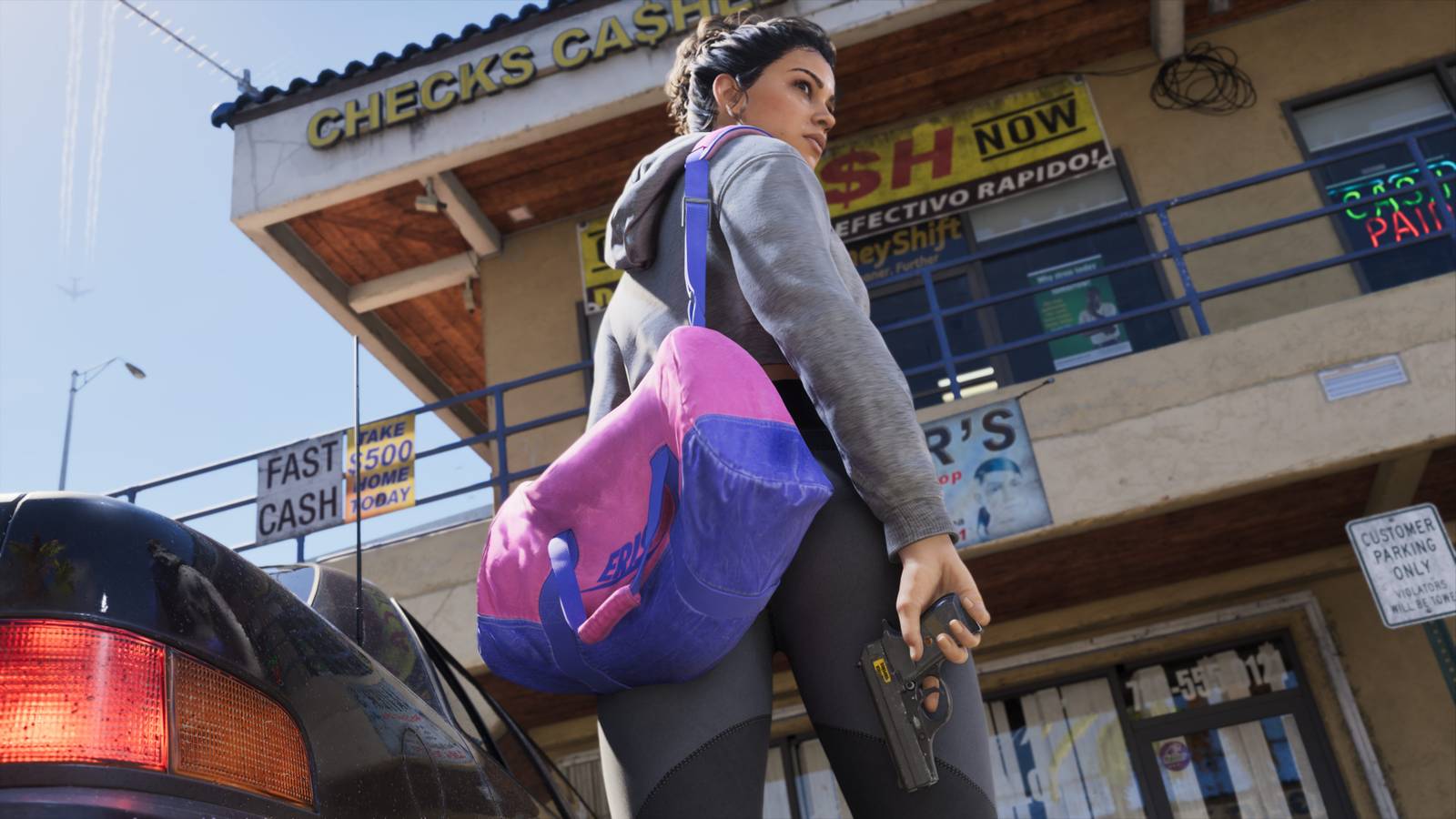
Published Sep 20, 2026, 4:30 AM EDT Yes, the games are in the same universe(s), but each stands alone for a reason The GTA timeline doesn't matter Grand Theft Auto 6Image: Rockstar Games I understand that fans — humans, honestly — have a natural instinct to unify and organize things, especially the things they love. When it comes to stories, we've been trained into it by the commercial business of serialized storytelling, on TV, in comics, in movie sequels. We join them together to make new histories populated by our favorite characters. But this endeavor never made any sense for The Legend of Zelda. Although the series features a few direct sequels (like Breath of the Wild and Tears of the Kingdom), it mostly takes the form of a kind of ritual repetition: endless variations of the same fairy tale, in which a handful of characters appear in new guises and replay their parts. For whatever reason, some people (including some people at Nintendo) needed all this to link together into a contiguous timeline. This is despite the fact that it makes no sense at all. And, for me, the timeline spoils the effect of a world where every game is a new legend, every Link is a new hero, and within each game's universe, all the others exist as a single, vaguely remembered myth. Image: Rockstar Games Grand Theft Auto isn't exactly like this, although it is a little bit like this. Zelda's timeline diverges into three separate tracks, and Rockstar officially splits the GTA timeline into three unrelated eras: the 2D era (the original Grand Theft Auto and its expansions and sequel); the 3D era (GTA 3, Vice City, San Andreas, and their spinoffs); and the HD era (GTA 4, 5, 6, and Online, plus their various expansions and spinoffs). Dividing the eras in this way explains away some discrepancies between the eras, like the protagonists both called Claude in GTA 2 – The Movie and GTA 3 being completely different people. The eras share locations and some other elements (and one character, the radio host Lazlow, who exists in both the 3D and HD universes — and the real world). But their stories are completely unconnected. However, within each GTA era, there is a clear sequence of events, with no real contradiction or overlap between games. There's no problem with these games existing in the same timeline. But there's not much benefit to it, either — or at least, no reason to worry about catching up before diving into GTA 6. Grand Theft Auto 5 saw a six-month delay, but was released just five years after its predecessor.Image: Rockstar Games I brought up The Legend of Zelda for a reason. Zelda and GTA both belong to a strong tradition in video game storytelling and design which is very much not serialized, because that would break the core of the games' fantasy. These games, in common with many role-playing games like The Elder Scrolls series, are all about starting from scratch and building yourself up. It's a necessity to start with blank slates. The games handle this setup in different ways. In Elder Scrolls, you define your own character. In Zelda, Link is an archetype with little backstory, a semi-empty vessel. In GTA, the protagonists have backstories and are richly drawn, but those stories are always careful to locate them at the bottom of the ladder — or retired from the ladder, in the case of GTA 5's Michael — so you can climb alongside them to the top. GTA has always been a satirical but not unenamored take on the American dream, a story of self-actualization with no limits. To realize this, every game needs to start from scratch and be self-contained. GTA Online's lawless carnival of greed is the logical endpoint of this. It is true, though, that the games gain subtly just from existing in a continuity. The worlds feel richer, more lived in. The most obvious examples of this are GTA 4's twinned expansions, The Lost and Damned and The Ballad of Gay Tony, which color in what's happening in the rest of Liberty City, mere streets away from the events of the main game. It's rare for characters to cross over between mainline games, but it does happen: The Lost and Damned's Johnny Klebitz meets a gruesome end in GTA 5. Instead, small cameos and passing references are more common. The best comparison for this very loose kind of world-building — and one I am sure Rockstar Games would be flattered by — is the great crime writer Elmore Leonard (Get Shorty, Rum Punch, Out of Sight). All Leonard's books are standalone, but background characters and sometimes even protagonists pop up unexpectedly in each others' stories, giving them a familiar kind of authenticity. Leonard acolyte Quentin Tarantino borrowed from this approach in some of his movies; Michael Keaton appears as the same FBI agent, Ray Nicolette, in two Leonard adaptations — Tarantino's Jackie Brown and Steven Soderbergh's Out of Sight. This approach, and GTA's, is less of a timeline and more of a collage. It doesn't matter what point you enter into it, or which order you tackle the stories in. Each stands alone. But they're just a little bit stronger together.
The GTA Timeline Is Completely Irrelevant
Full Article
Original Source
Read the full article at Polygon →KhanList aggregates and links to publicly available news content. We do not host full articles from third-party sources. Always verify important information with original sources.