
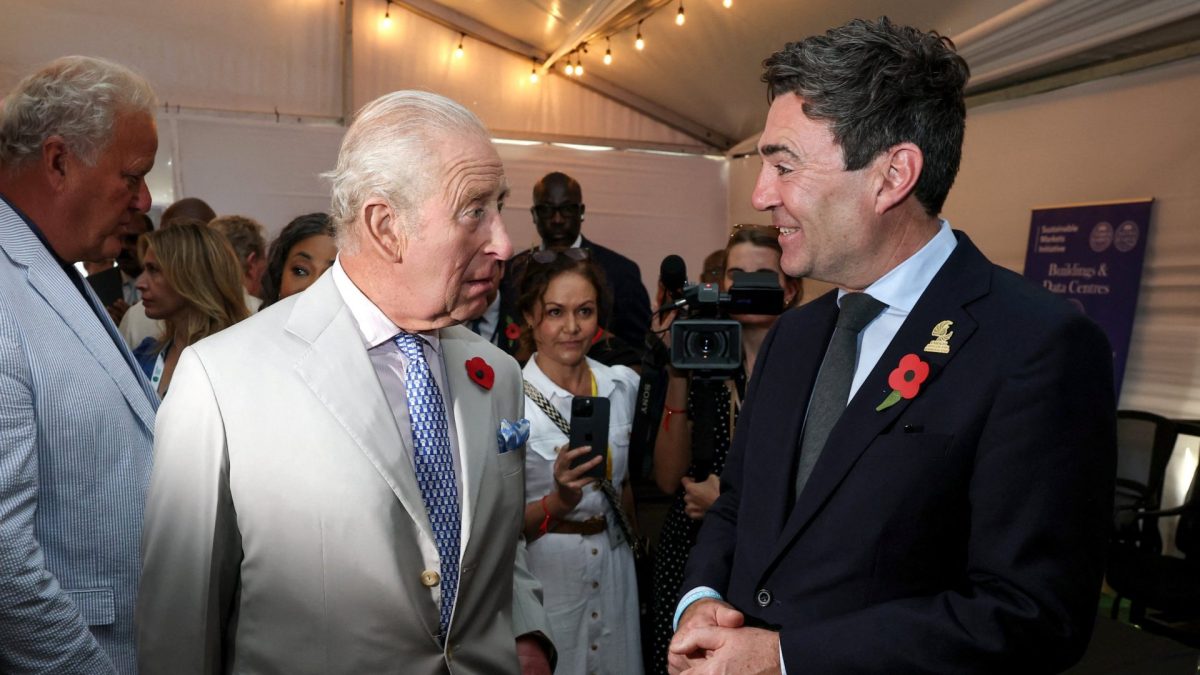
A trip to a sunny Commonwealth nation for the King once spelled no more controversy than donning local costume accessories and taking part in a traditional dance, delivering a warm, set-piece speech with lots of smiles. Those days are gone. When Charles went to Antigua, not only did he get rained on physically – much to his chagrin – but he was also embroiled in a row over the dark history of slavery – and whether the UK owes an apology, and reparations, for its role in that “monstrous injustice”. This shouldn’t have caught Buckingham Palace by surprise. Prince William faced protests over the issue when he visited Jamaica in 2022, and it dominated the last meeting of the Commonwealth Heads of Government Meeting (Chogm) in Samoa in 2024. What might have caught the Palace off guard this time, however, was an unexpected intervention by Andy Burnham ratcheting up the news agenda. The Prime Minister’s offer to open “structured dialogue” with countries affected by the transatlantic slave trade and his openness to a formal apology made headlines as the King’s tour of the Caribbean was already under way. While a royal insider insists Charles was aware of the PM’s announcement in advance, the move risked undermining all the carefully managed choreography of a trip in which the Prime Minister and King are effectively sharing a stage. Some insiders say it also led to hushed backroom recriminations, and claims that Burnham tried to bounce the King into going further than he wanted to on these thorny issues.Burnham ruled out financial reparations but signalled a willingness to discuss the wider question of Britain’s historical responsibility. Whether or not it was the intention, his intervention ramped up the pressure and attention on the King over how he would address the issue. King ‘hates’ being dragged into political rows One senior Whitehall source saying Charles “hated” being dragged into political rows. “He absolutely hates it,” the source added. Burnham’s statement about a possible apology went much further than the King’s forensically prepared speech for Antigua that would have gone back and forth between the Palace and No 10 before being signed off. In it the King told Commonwealth leaders that the slave trade was a “monstrous injustice” that “fills my heart with horror and my soul with the most profound personal sorrow”. This was not much of a move on from Prince William’s expression of “profound sorrow” on that Jamaica visit four years ago. The King went on to say that investment in education, jobs, trade and climate resilience were practical ways of addressing the wrongs of the past – things nations are essentially asking for in the way of reparations. Charles was reportedly frustrated at being caught in the rain without an umbrella during their visit to Antigua and Barbuda. (Photo: Isabel Infantes – Pool / Getty Images) Burnham’s verdict on that speech was emphatic. “Perfect,” he said, speaking at a hotel reception later that day. “Well done.” The Palace has been keen to insist that the King was not blindsided by the intervention and that relations with the Prime Minister remain good. But conversations with multiple sources familiar with the discussions suggest there may have been some differences behind the scenes over the timing, handling and political implications of the announcement. One source offered a particularly revealing assessment of the relationship between the two institutions, suggesting that the difficulties may have stemmed from the fact that the Palace and Government simply operate at different speeds. The Palace typically has a much smaller team. Palace’s ‘double game’ to keep the Commonwealth together “The pace of the Palace is very different to the pace of government,” the source said, suggesting there had been some tensions over the timetabling of the announcement. The King, the source suggested, was playing a “double game” over the issue, arguing that he was reluctant to see further Commonwealth realms sever their constitutional ties with the monarchy during his reign. With countries including Jamaica and Antigua and Barbuda considering moves towards republican status, the source suggested Charles was keen to avoid losing more of the remaining realms “on his watch” and was therefore attempting to “slow them down”. But a senior aide to the King gave an extraordinary briefing to the media on Friday, in which he said the King was “open” to being ousted as head of state. “The King and the Royal family are there to serve the people of these regions for as long as they wish,” they said. “But if they don’t wish it any more, then we really are fully open to that.” Buckingham Palace has also made clear that any formal apology over slavery was a matter for the Government, rather than the monarch. But the proximity of Burnham’s intervention to the King’s speech inevitably raised questions about whether the Government had placed Charles in an uncomfortable position. A happier Charles smiles as he joins in with the celebratory Junkanoo street parade as it begins its route at Parliament Square during his visit to The Bahamas last month as part of the tour. (Photo: Chris Jackson/Getty Images) A source close to the Palace said they had found the entire episode strange because any decision on an apology would be a matter for the Government. “I have found the whole thing odd,” the source said. “I would have expected the Palace not to have a view on this, separate from the government. So, I don’t quite know what has happened.” The source suggested there were two possible explanations. The first was that the Government had reached its position relatively late – leaving the Palace with little time to respond to a change in direction. The King’s speech, they said, would have been written and cleared with Downing Street weeks beforehand. The second explanation is that Burnham was making political commitments which had not yet been agreed with the Foreign Office – leaving the Palace unsure “who to listen to”. Former Home Secretary and Lord Chancellor Jack Straw told Radio 4’s The Week in Westminster on Saturday that he doubted the Government had made things difficult for Charles. Straw said what the monarch says at international summits is “very much the subject of collaboration” between the Palace, Downing Street and, to some extent, the Foreign Office. He suggested the question of an apology would almost certainly have been settled in advance, and said that, in Burnham’s position, he would have told the Palace to leave the matter to the Prime Minister and his Government. King and PM ‘genuinely’ get on Any suggestion that Charles had been taken by surprise was firmly rejected by a senior aide to the King, who took the unprecedented step of talking to a number of royal correspondents in Antigua to set out the Palace’s version of events. The aide told The Times that Buckingham Palace had been informed about Burnham’s proposed intervention before it was published. “I talked to the prime minister myself. We were told the terms in which he was proposing to write his op-ed and he’s perfectly entitled to do that,” the aide said. They also insisted there was “genuinely a good relationship” between the King and the Prime Minister. The aide also offered a revealing insight into how the Government views the monarch’s diplomatic value, describing him as “a great secret weapon”. “I think what we’re seeing is a very clear pattern emerging of the Government asking the King to head into quite politically charged situations, quite challenging situations,” the aide said. The King, they added, “is able to reach the parts that dare I say politicians probably couldn’t quite have reached”. King Charles and Andy Burnham getting on at the Commonwealth Business Forum at the Sticky Wicket Cricket Ground in St. John’s, Antigua and Barbuda, on 2 November (Photo: Chris Jackson / POOL / AFP via Getty Images) The comments underline the extent to which Charles is being relied upon to help maintain Britain’s relationships with countries where the Government’s own diplomatic influence may be more limited. The previous Commonwealth Heads of Government Meeting, held in Samoa in 2024, was particularly difficult for the British delegation. The strength of feeling over the question of the slave trade reportedly caught the British delegation off guard – leaving Starmer to negotiate the wording of the final communique during a leaders’ retreat without his aides. The debate over an apology for Britain’s role in the transatlantic slave trade is far from settled. Labour MP Bell Ribeiro-Addy, who chairs the All-Party Parliamentary Group for Afrikan Reparations and attended the summit in Antigua, welcomed Burnham’s offer of talks but said Britain was still approaching the issue on its own terms. She told Radio 4’s The Week in Westminster that the country appeared to be “hearkening back to empire” by deciding what should be said and whether Britain would apologise, despite the Commonwealth being intended as an association of equal nations. “How can that be right?” she said. For all the talk of a family of nations, the Antigua summit showed how difficult it remains for Britain – and the King – to accept that it no longer gets to set the terms of the relationship.
The growing tensions between Palace and No 10 over slavery row, according to insiders
Full Article
Original Source
Read the full article at Inews →KhanList aggregates and links to publicly available news content. We do not host full articles from third-party sources. Always verify important information with original sources.